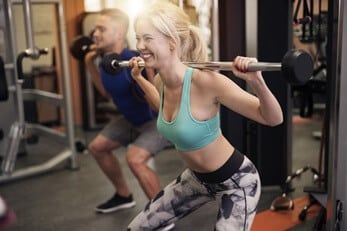
Resistance training is the habit too many women skip during weight loss. Cardio alone burns muscle along with fat, which slows your metabolism and invites regain. Lifting two to three times a week protects lean muscle so your loss comes from fat stores, builds a toned shape without bulk, strengthens bone, and keeps results lasting.
Resistance training for women is extremely important, but not enough women are being proactive about it. Most active women stick to aerobic exercise during their weight loss journey, and they miss the one habit that actually protects their results. The goal should not be to lose weight. The goal should be to lose fat and gain muscle.
Why is resistance training so important for women?
Resistance training matters for women because it changes what you lose. When you only do cardio in a calorie deficit, you shed both body fat and muscle, which slows your metabolism. Lifting tells your body to keep that muscle, so weight loss comes from fat stores and your results last.
Muscle is active tissue. It costs your body energy to maintain it around the clock, so a woman with more lean muscle burns more calories at rest than a woman with less. That is why two people at the same weight can have very different metabolisms. Building and keeping muscle is one of the most reliable ways to support a healthy resting metabolic rate over time. According to the Mayo Clinic, strength training helps you manage weight and improve body composition, and it burns more calories even when you are not in the gym.
This is exactly why our physician-guided medical weight loss program treats muscle as something to protect, not something to sacrifice on the scale.
Does cardio alone cause you to lose muscle?
Yes, cardio alone often causes muscle loss along with fat. When you create a calorie deficit without resistance training, your body breaks down some lean tissue for fuel. Over time that weakens your metabolism and makes regained weight harder to keep off.
Picture two women who both lose 15 pounds. One only runs on the treadmill. The other lifts a few times a week. The runner may drop the same number on the scale, but a chunk of her loss is muscle. The lifter keeps her muscle, so almost all of her loss is fat. A large research review found that resistance training reduced lean mass loss during weight loss compared with dieting alone. That preserved muscle is what keeps your metabolism strong after the diet ends.
So do not become a slave to the treadmill. Cardio has real value for heart health and calorie burn, but on its own it cannot give you the body composition most women are after.
Will lifting weights make women bulky?
No, lifting weights will not make most women bulky. Women produce far less testosterone than men, so building large, bulky muscle is very difficult and never happens by accident. Instead, resistance training creates a tighter, more toned, and more defined shape.
This is one of the most common fears that keeps women out of the weight room, and it is not supported by the evidence. Weightlifting will not make you bulky if you are female, and it can help you appear leaner because muscle takes up less space than the same weight in fat. It is muscle from resistance training that gives you that tight, toned, curvy figure, not aerobic exercise alone.
How does resistance training protect your metabolism?
Resistance training protects your metabolism by signaling your body to hold onto muscle tissue while you lose fat. Muscle is metabolically expensive to maintain, so keeping it keeps your daily calorie burn higher. That is the difference between weight that comes back and weight that stays gone.
When combined with a healthy diet, resistance training ensures gradually lost weight comes from fat stores only. It strengthens and maintains your muscle tissue, which means the weight you lose is gone for good. Resistance training is a preferred method for weight loss goals because it shapes body composition more effectively than cardio can on its own. The lasting metabolic effect is the whole point.
Stronger muscle also improves how your body handles blood sugar and supports the kind of steady, sustainable progress we build across our weight loss services in Tampa. When training, nutrition, and medical support work together, the scale and the mirror finally agree.
How often should women do resistance training?
Most women see strong results with two to three full-body resistance sessions per week. A simple format is three sets of eight to twelve repetitions per exercise, with about a minute of rest between sets. As movements get easier, gradually add weight or reps so your muscles keep adapting.
You do not need a complicated routine to start. Compound movements that work several muscle groups at once give you the most return for your time:
Lower body: squats, lunges, and hip hinges work the largest muscles you have.
Upper body: pushups and rows build strength and improve posture.
Core: planks tie everything together and protect your back.
Beginners can start with body weight, then progress to dumbbells, kettlebells, or resistance bands. If you are new, consider working with a trainer or coach to learn proper form first.
How does resistance training support healthy aging?
Resistance training supports healthy aging by slowing the natural loss of muscle and bone that happens over time. Without strength work, muscle and bone strength decline with age, which raises the risk of weakness, falls, and fractures. Lifting helps you stay strong, mobile, and independent.
The benefits reach well beyond weight. Strength training helps build strong bones and may lower the risk of osteoporosis, and it can ease joint pain and improve everyday function. For women approaching or moving through menopause, when muscle and bone loss tend to speed up, this kind of training becomes even more valuable. Hormone changes are also worth understanding if your progress stalls, which is why women who feel stuck often benefit from a look at hormone imbalance and how it affects body composition alongside their training.
Resistance training is the foundation, and a structured medical plan layers in nutrition and medical guidance so your effort in the gym translates into real, lasting change.
Frequently Asked Questions
Can you lose weight with just resistance training?
You can lose fat and reshape your body with resistance training, but most lasting results come from pairing it with a nutritious diet that creates a modest calorie deficit. Lifting protects muscle and metabolism, while smart nutrition drives the fat loss. Together they outperform either approach used alone.
How many days a week should a woman lift weights?
Two to three full-body sessions per week is a strong starting point for most women. This gives each muscle group enough work to grow stronger while leaving time to recover between sessions. Rest at least one day between training the same muscles so your body can rebuild.
Is resistance training or cardio better for fat loss?
Resistance training is better for preserving muscle and protecting your metabolism, which makes fat loss last. Cardio is excellent for heart health and burning extra calories. The best plan for most women combines both, with strength training as the foundation and cardio added in support.
How long until I see results from resistance training?
Many women notice they feel stronger within a few weeks and see visible changes in tone and how clothes fit within one to two months of consistent training. Building noticeable muscle takes longer, but the metabolic and strength benefits begin almost immediately. Consistency matters far more than intensity early on.
Do I need a gym to start resistance training?
No, you can begin resistance training at home with little or no equipment. Body weight moves like squats, lunges, pushups, and planks build real strength, and inexpensive resistance bands or dumbbells add progression. A gym offers more options, but it is never a requirement to get started.
Resistance training is one of the most powerful tools a woman has to lose fat, protect her metabolism, and stay strong for life. Combine it with a healthy diet and the right medical support, and the weight you lose can finally be gone for good.
Ready to take the next step?
Talk with the AgeRejuvenation team about a Medical Weight Loss plan built around your labs and goals.