Lines form where muscles contract. Botox pauses that contraction with a quick injection that needs no surgery, no anesthesia, and no significant downtime. The treatment uses botulinum toxin type A to relax the facial muscles that create dynamic wrinkles, the creases that come from squinting, smiling, and furrowing. Results appear within days and typically last three to six months, and when placement is precise the effect looks natural rather than frozen.
This guide explains how Botox works, who it suits, and what to expect from treatment. Botox is a quick injectable that relaxes the facial muscles behind dynamic wrinkles, the lines that form from squinting, smiling, and furrowing. Below you will find how the injection smooths lines, the areas it treats, the results timeline, safety and side effects, how it compares to dermal fillers, and what the procedure costs.
What Is Botox?
Answer: Botox is a prescription injectable made from botulinum toxin type A that temporarily relaxes targeted facial muscles, so the overlying skin smooths and dynamic wrinkles such as forehead lines, crow's feet, and frown lines soften. Results usually appear within a few days and last about three to six months.
Botox works by blocking the nerve signals that tell a muscle to contract, rather than adding volume or changing skin structure. The American Academy of Dermatology explains how botulinum toxin smooths dynamic wrinkles by easing the repeated muscle movement that etches lines into the skin. At AgeRejuvenation, Botox is one of our most requested aesthetic services because the experience is predictable: a short in-office injection, no general anesthesia, and providers who understand facial anatomy instead of applying a single template to every face.
How Does Botox Work?
Answer: Botox blocks acetylcholine release at the neuromuscular junction, which stops the targeted muscle from fully contracting. With less contraction, the skin above the muscle relaxes and the dynamic wrinkle it was forming becomes less visible.
The effect is temporary and localized. It only relaxes the specific muscles that are injected, which is why precise placement matters so much. The U.S. Food and Drug Administration documents the FDA approval history of botulinum toxin type A for cosmetic use, confirming it as an approved treatment for moderate to severe facial lines in adults. Botox is most effective on dynamic wrinkles caused by muscle movement, not static lines caused by volume loss, so the first step is identifying which type of line you have.
What Areas Does Botox Treat?
Answer: Botox most often treats forehead lines, crow's feet at the outer corners of the eyes, and frown lines between the brows. It can also subtly adjust brow position and soften other muscle-driven creases of the upper face.
Forehead lines form from repeated brow lifting, and calibrated dosing softens them without freezing normal expression. Crow's feet are among the earliest dynamic wrinkles to appear because we squint so often, especially in sunny climates. Frown lines, sometimes called the elevens, form from concentration and frowning between the brows. Our aesthetic providers evaluate each patient's anatomy and movement patterns before deciding where, and how much, to inject.
How Long Does Botox Last and When Do Results Show?
Answer: Botox results usually become visible within three to five days, settle by about two weeks, and last roughly three to six months. As muscle activity gradually returns, treatments can be repeated to maintain the effect.
Duration varies with the area treated, your metabolism, muscle strength, and dose. Many patients find that with consistent treatment over time the muscle relaxes more readily, so results can feel more durable. There is no obligation to continue: if you stop, your muscles regain full movement and lines return to their previous baseline rather than worsening.
What Are the Benefits of Botox?
Answer: The main benefits of Botox are smoother dynamic wrinkles, a refreshed and rested appearance, a fast in-office treatment, and no surgery or downtime. It can also be used preventatively to slow the formation of deeper lines.
Beyond softening existing creases, Botox can be a preventative tool. For patients in their twenties and thirties, regular treatment reduces the repeated muscle contractions that eventually etch lines into resting skin. Cleveland Clinic notes that botulinum toxin injections are a widely used, minimally invasive cosmetic procedure for reducing the appearance of facial wrinkles. The practical benefit for most patients is simple: a natural, well-rested look they do not have to explain.
Botox vs. Dermal Fillers: What Is the Difference?
Answer: Botox relaxes the muscles that create dynamic wrinkles, while dermal fillers replace lost volume to plump static lines and hollow areas. They address different problems and are often combined in the same visit.
| Feature | Botox | Dermal fillers |
|---|---|---|
| What it does | Relaxes muscle contraction | Restores or adds volume |
| Best for | Dynamic wrinkles from movement | Static lines, hollows, volume loss |
| Common areas | Forehead, crow's feet, frown lines | Cheeks, lips, nasolabial folds |
| When results show | About 3 to 5 days | Immediately to a few days |
| Typical duration | About 3 to 6 months | About 6 to 18 months |
Because the two work on different problems, a provider may recommend one, the other, or both. The right plan depends on whether your concern is muscle movement, lost volume, or a combination, which is why an in-person assessment comes before any treatment decision.
Is Botox Safe? Side Effects and Risks
Answer: When given by qualified, experienced providers, Botox is considered safe for cosmetic use. The most common side effects are mild and temporary, such as bruising, redness, or tenderness at the injection site, and a headache for some patients.
Less common effects can include a temporary droop of the eyelid or brow if the toxin spreads beyond the intended muscle, which is why placement and dosing by a trained provider matter. MedlinePlus describes how botulinum toxin injection is administered and monitored and the precautions that guide its safe use. Our providers calibrate dosage to your facial anatomy to avoid overcorrection, and they review your history and any medications before treatment. Botox is not appropriate during pregnancy or breastfeeding, or for people with certain neuromuscular conditions.
What Happens During a Botox Appointment?
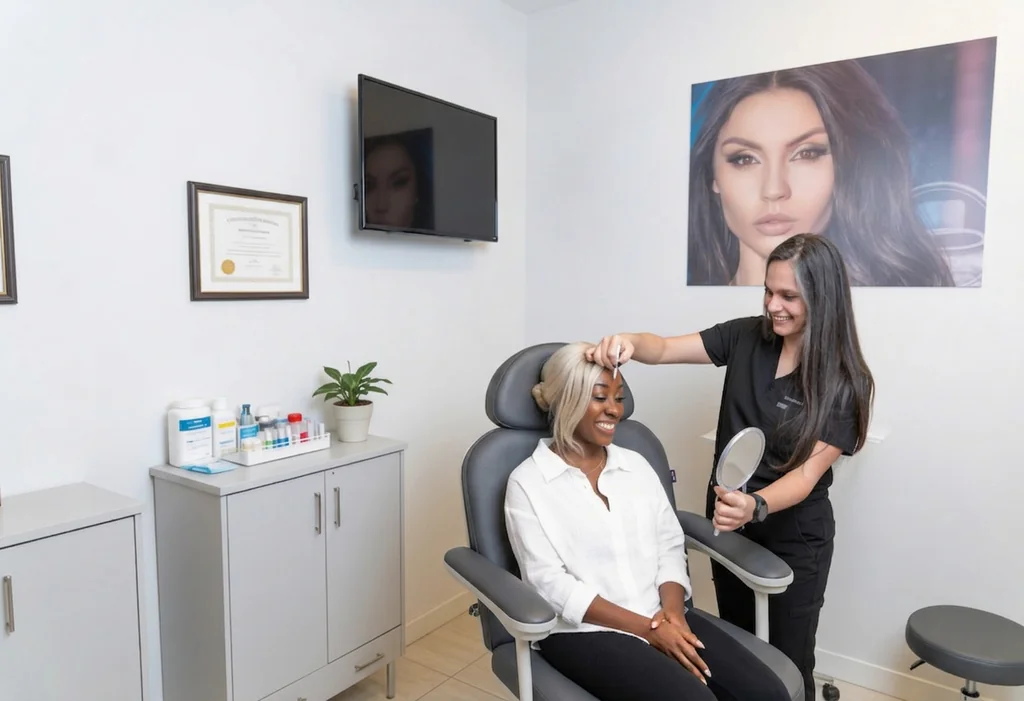
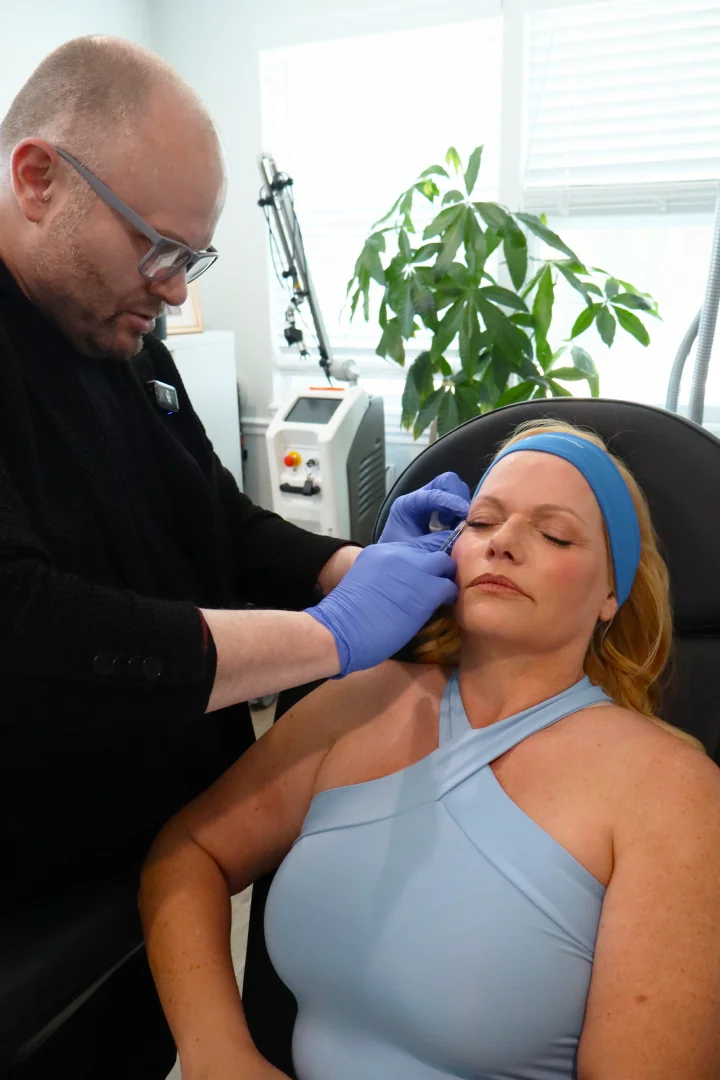
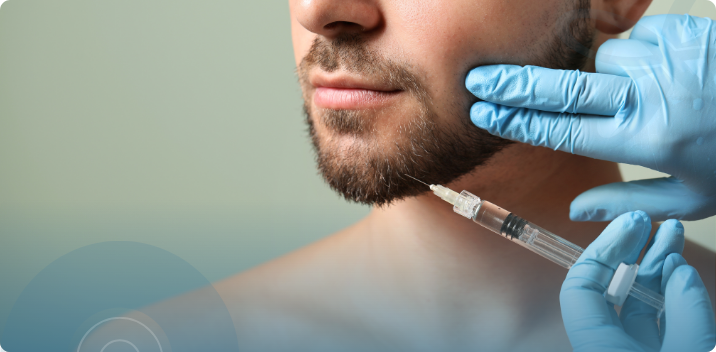
Answer: A Botox appointment usually takes 15 to 30 minutes. It begins with a brief consultation and facial assessment, followed by a series of small injections into the targeted muscles using a fine needle, with most patients resuming their day immediately.
No anesthesia is required, though a topical numbing cream can be used for comfort. After treatment, you may be advised to stay upright for a few hours and avoid rubbing the area so the product stays where it was placed. Mild redness or small bumps at the injection sites typically fade within minutes to hours. There is no recovery period and no surgery.
How Much Does Botox Cost?
Answer: Botox is usually priced per unit or per treatment area, so the total depends on how many units your muscles need and how many areas you treat. Because it is a cosmetic treatment, it is generally not covered by insurance.
The number of units varies with muscle strength and the areas being treated, which is why pricing is best confirmed during a consultation rather than quoted blindly. We review the expected cost with you before treatment so there are no surprises, and we can suggest a maintenance rhythm that fits your goals and budget.
Why Choose AgeRejuvenation for Botox?
Answer: AgeRejuvenation treats aesthetics as a medical discipline, with experienced injectors who calibrate dosage and placement to your individual facial anatomy rather than applying a uniform protocol.
Placement and dosage are everything with injectables. Over-injection looks frozen and under-injection produces no result, so getting it right is a clinical skill our providers train for. Your consultation includes a facial assessment, a discussion of your goals, and an honest recommendation about what Botox can and cannot achieve for your anatomy. Botox is one service within our medical spa aesthetic services, and because our medical spa sits inside a larger clinical practice, your aesthetic care can be coordinated alongside other wellness services if you want a more integrated approach to how you look and feel.
Explore more in our medical spa services .