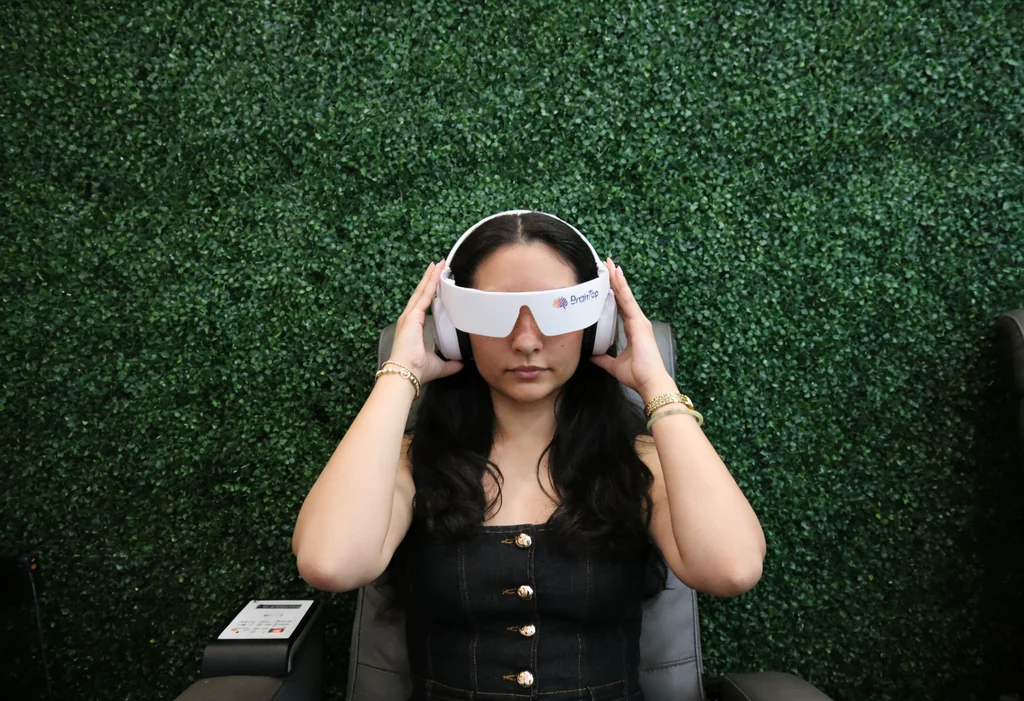
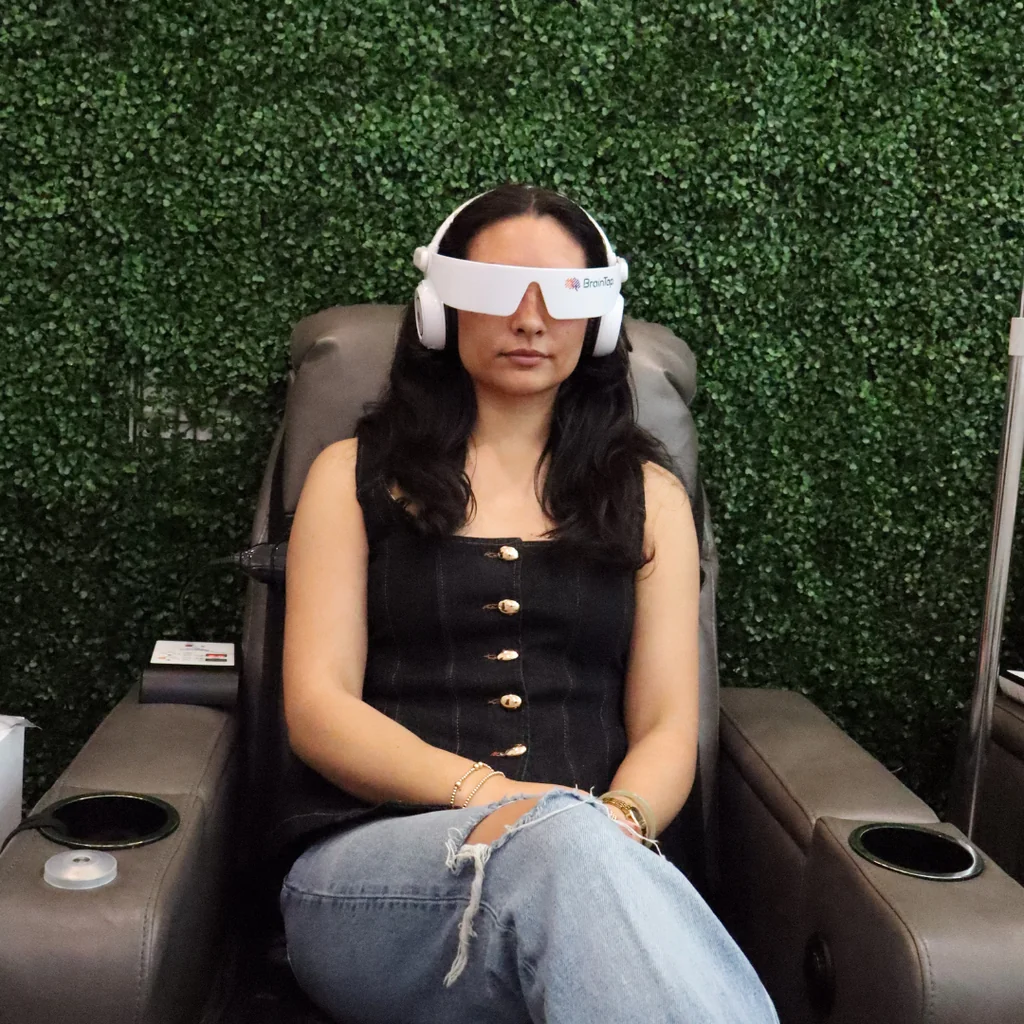
Most people have heard that sleep quality matters. Fewer understand that the brain itself cycles through distinct electrical frequency states, Alpha, Theta, Delta, and Beta, and that disruptions to these cycles can underlie fatigue, poor sleep, anxiety, and difficulty concentrating. BrainTap is a brainwave entrainment system that uses light, sound, and guided sessions to help the brain reach the restful, restorative frequencies it struggles to access under chronic stress. This guide explains what BrainTap is, who it suits, how the technology works, the benefits, what a session feels like, and how it fits an integrative wellness plan.
This guide covers BrainTap therapy, a guided light-and-sound system designed to nudge the brain toward calmer, more restorative frequency states. Below we explain what BrainTap is, who tends to benefit, how the technology actually works, what the science says, the benefits and limits, what a session feels like, and how it fits a larger wellness plan. The goal is a clear, honest picture so you can decide whether it belongs in your routine.
What Is BrainTap?
Answer: BrainTap is a brainwave entrainment system that uses binaural beats, isochronic tones, guided audio, and light pulses delivered through the ears and eyes to guide the brain toward Alpha, Theta, and Delta frequency states linked with relaxation, recovery, and deep sleep.
The brain produces electrical activity that can be measured as frequency waves, and BrainTap is built around the idea of steering that activity on purpose. This is not passive relaxation audio. It is a structured neurological protocol, and sessions typically run 20 to 30 minutes. Most people use the device daily during an initial training period, then taper to three or four sessions per week for maintenance. BrainTap itself is a wellness technology rather than an FDA-cleared medical device, so it is best understood as a tool that supports recovery, not a diagnosis or cure.
How Does Brainwave Entrainment Work?
Answer: Brainwave entrainment uses rhythmic light or sound at a target frequency, and the brain's electrical activity tends to synchronize toward that rhythm, a response researchers call the frequency-following effect.
Different brain states correspond to different frequency bands. Beta waves above 13 Hz accompany active thinking and alertness, Alpha waves at 8 to 12 Hz accompany calm focus, Theta waves at 4 to 7 Hz accompany light sleep and creative insight, and Delta waves at 0.5 to 3 Hz accompany deep, restorative sleep. Under chronic stress, many adults spend too much time in Beta and rarely reach the lower frequencies that drive recovery. BrainTap pairs binaural beats, where slightly different tones in each ear create a perceived third frequency, with isochronic pulses and synchronized light to guide the brain toward those calmer targets. Peer-reviewed research on binaural beats and brainwave entrainment published in Frontiers in Human Neuroscience describes how these auditory techniques are associated with shifts in attention, relaxation, and mood.
Who Is a Good Candidate for BrainTap?
Answer: BrainTap suits people dealing with chronic stress, poor sleep, burnout, anxiety, or cognitive fog who want a non-pharmaceutical way to support recovery, and it works best alongside healthy sleep, nutrition, and movement habits.
It is particularly popular with high-demand professionals, athletes, and others who feel mentally wired but struggle to wind down. Because it is non-invasive and drug-free, many people use it to complement, rather than replace, other care. That said, BrainTap is not a substitute for treatment of diagnosed conditions. People with epilepsy or a history of seizures should be cautious with light-based stimulation, and anyone with a diagnosed psychiatric condition should review BrainTap with their physician first. When in doubt, our wellness team assesses your goals and history before recommending a protocol.
What Concerns Does BrainTap Address?
Answer: BrainTap is most commonly used for stress and anxiety, sleep disruption, mental fatigue, trauma-related stress, and habit change, by guiding the brain out of overactive Beta states and into the restorative Alpha, Theta, and Delta ranges.
Prolonged stress keeps the brain locked in elevated Beta activity, which impairs recovery and keeps cortisol high. Sessions in Alpha and Theta can interrupt that cycle and support a return to parasympathetic, rest-and-digest activity. For sleep, programs that guide the brain toward Delta-adjacent patterns may help people who struggle to fall asleep, stay asleep, or wake rested. For cognitive fog tied to burnout or poor sleep, sessions designed for focus aim to restore the recovery cycling that attention and memory depend on. BrainTap libraries also include guided programs for habit change that can reinforce behavioral consistency when paired with other wellness work.
How Does BrainTap Compare to Other Relaxation Tools?
Answer: BrainTap differs from meditation apps, white-noise audio, and float tanks mainly in how it delivers entrainment, combining synchronized light and structured audio to reach target states faster than audio or unguided practice alone.
The table below outlines the practical differences. Each tool has a place, and the right choice depends on your goals, time, and how much structure you want.
| Approach | How it works | Typical session | Best suited for |
|---|---|---|---|
| BrainTap | Light pulses plus binaural and isochronic audio guide the brain to target frequencies | 20-30 minutes | People wanting structured, faster entrainment without long practice |
| Meditation apps | Spoken guidance and audio without light or entrainment signals | 5-30 minutes | People building a self-directed mindfulness habit |
| White-noise or music audio | Steady sound masks distraction and aids relaxation | Open-ended | People who mainly want background calm |
| Float tanks | Sensory reduction in buoyant, quiet water | 60-90 minutes | People seeking deep sensory rest in a dedicated setting |
Many people combine approaches over time. BrainTap stands out for delivering a structured, repeatable session that pairs light with sound, which is harder to replicate with audio alone.
What Are the Benefits of BrainTap?
Answer: Reported benefits of BrainTap include calmer stress response, improved sleep quality, sharper focus, and a greater sense of mental recovery, with most people noticing the first changes within one to two weeks of consistent daily use.
The benefit people value most is simple, the nervous system finally gets a chance to downshift. Calmer Alpha and Theta states are associated with the kind of recovery that chronic stress crowds out. According to consumer health guidance from the National Library of Medicine, healthy sleep is essential for memory, mood, and overall health, which is part of why a tool aimed at restorative states can ripple into daytime energy and clarity. Benefits accumulate with consistency rather than arriving all at once, and individual results vary with the concern, your neurology, and how often you use the device.
How Is a BrainTap Session Delivered?
Answer: A BrainTap session is delivered through a headset that combines audio with LED light glasses, layering binaural beats, isochronic tones, guided visualization, and synchronized light pulses through the closed eyes and ear canal.
Four inputs work together. Binaural beats deliver slightly different tones to each ear so the brain perceives the difference as a target frequency, which is why headphones are required. Isochronic tones add a crisp on-off pulse that some frequency targets respond to more directly. Holographic music encoded with entrainment signals, paired with spoken visualization, gives each session a focus such as sleep, focus, or stress. Finally, light pulsed at target frequencies through specialized eyewear engages the brain's photic driving response, contributing to entrainment in a way audio alone does not. The retina's role in light-driven brain responses is well documented, and the National Eye Institute offers a helpful overview of how the eye sends visual signals to the brain.
What Does a BrainTap Session Feel Like?
Answer: Most people describe a BrainTap session as deeply relaxing, similar to a guided meditation but more structured, and many drift into a light sleep during early sessions, which signals the device is reaching the intended state.
You wear the headset, settle into a comfortable seated or reclined position, and let the programming run for 20 to 30 minutes. There is no effort required beyond keeping your eyes closed and relaxing. Some people feel noticeably calmer after a single session, while sleep and cognitive benefits tend to build over a consistent protocol. Because the experience is gentle, most people find it easy to fold into a daily routine.
Are There Side Effects or Risks With BrainTap?
Answer: BrainTap is generally well tolerated, with the most common effect being drowsiness; the main caution is that flashing light can be a trigger for people with photosensitive epilepsy or a seizure history.
Because BrainTap uses light pulses, anyone with epilepsy, a seizure history, or photosensitivity should avoid light-based entrainment unless cleared by their physician. Occasional users report mild headache or grogginess if they use sessions while already very fatigued, which usually resolves with rest and adjusted timing. As a wellness technology rather than a medical device, BrainTap is not a treatment for diagnosed conditions, and people managing a psychiatric diagnosis should coordinate with their treating clinician.
How Often Should You Use BrainTap and What Does It Cost?
Answer: Most protocols start with daily sessions for two to four weeks, then taper to three or four sessions per week for maintenance, and in-clinic pricing varies by session count and how it is bundled into a wellness plan.
Consistency matters more than intensity. A short daily session during the training period helps the brain learn the target states, after which maintenance keeps the benefit in place. Because plans are individual, our wellness team reviews session frequency and any package details with you up front so expectations are clear. The aim is a routine you can actually sustain, since the value comes from repetition over time.
Why Choose AgeRejuvenation for BrainTap?
Answer: At AgeRejuvenation, BrainTap is integrated into a supervised, whole-person plan rather than handed over as a rented headset, so neurological retraining works alongside metabolic and hormonal support.
BrainTap is a tool, and its effectiveness depends on how it is used. We discuss your program in the context of your overall goals, whether that means pairing it with IV nutrient therapy for recovery, hormone optimization for energy and sleep, or peptide therapy for cognition, and we help you select the right session library for your concerns. It anchors our broader integrative wellness program, which also includes IV therapy, BAHI therapy, peptide therapy, and functional medicine care. For people whose challenges are multifactorial, combining neurological retraining with metabolic and hormonal optimization often produces results that neither approach achieves alone.
Explore more in our wellness center services .