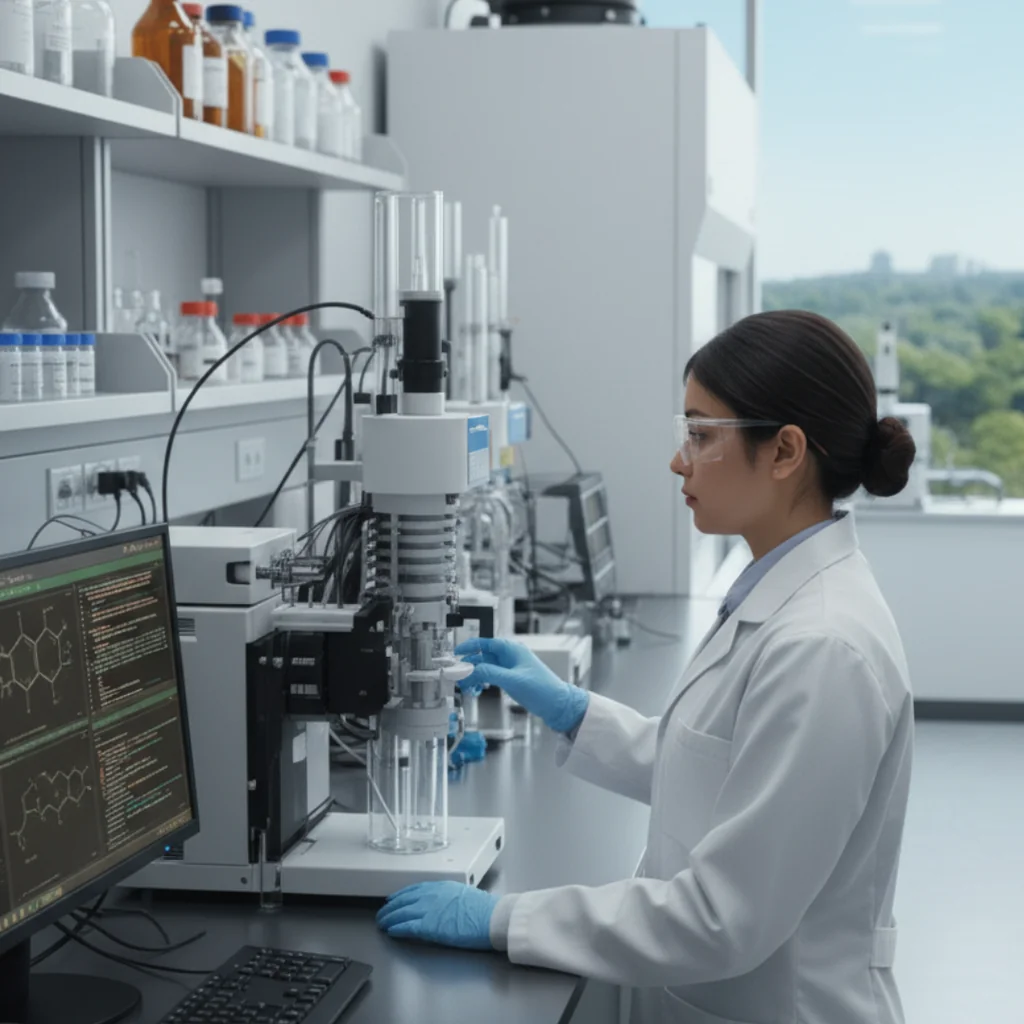
Most chemical exposures are invisible. They arrive through food, water, indoor air, and everyday products, and over years some can settle into fat and tissue. Environmental toxin screening uses urine or blood samples processed by specialty laboratories to measure dozens of these compounds at once. The result is not a diagnosis but a detailed map of your exposures, which your physician reviews alongside your symptoms and history to decide what, if anything, deserves attention next.
This guide explains what environmental toxin screening measures, who tends to consider it, and how the results are used. It is a diagnostic panel, not a treatment, so it tells you about your exposures rather than promising any outcome. Below, you will find how samples are collected, which chemical classes the testing covers, how it compares to related panels, what the numbers can and cannot say, and the next steps a physician may discuss with you.
What Is Environmental Toxin Screening?
Answer: Environmental toxin screening is a laboratory panel that measures synthetic chemicals and pollutants accumulated in your body, giving your physician an objective picture of your exposures rather than a diagnosis.
The panels look at common culprits such as plasticizers, solvents, pesticides, herbicides, and other industrial compounds. Rather than a single number, the testing produces a detailed map of marker concentrations that your medical team reads alongside your symptoms, history, and goals. The National Institute of Environmental Health Sciences describes research on how environmental chemicals disrupt hormone signaling even at low concentrations, which is part of why exposure is worth measuring.
What Does the Test Actually Measure?
Answer: It measures concentrations of specific chemical markers, such as plasticizer metabolites, solvent byproducts, and pesticide or herbicide residues, in a urine or blood sample, reported as levels rather than a pass or fail result.
These markers reflect recent and ongoing exposure to compounds that are otherwise invisible. Because the body processes and clears chemicals at different rates, a panel captures a snapshot of what your system is handling at the time of collection. The numbers describe burden and exposure, not a named illness, which is why interpretation always sits with a clinician.
Who Should Consider Environmental Toxin Screening?
Answer: It is most often considered by people with persistent fatigue, brain fog, hormone-related symptoms, or stubborn weight changes that standard workups have not explained, and by those with notable occupational, dietary, or environmental exposures.
If your symptoms have lingered without a clear cause, an exposure profile can add information that routine bloodwork does not capture. People who work around solvents or pesticides, live in agricultural or industrial areas, or simply want a baseline sometimes pursue testing as well. The decision is individual, and a physician helps weigh whether the panel is likely to add useful information in your case.
What Conditions and Exposures Can It Detect?
Answer: The test detects elevated levels of specific environmental chemicals, including plasticizers, solvents, common pesticides and herbicides, and certain industrial pollutants; it identifies exposure, not the diseases those exposures are associated with.
Many of these compounds are studied for their links to hormone, metabolic, and immune effects, but a marker level is a signal to investigate, not proof of harm. The Agency for Toxic Substances and Disease Registry summarizes how the body is exposed to and processes environmental contaminants, which helps frame what an elevated reading may, and may not, mean for you.
How Does Sample Collection Work?
Answer: Most panels use a simple urine or blood sample, collected in-office or at home, then sent to a specialty laboratory that measures dozens of chemical markers at once before returning a detailed report.
Collection is brief and noninvasive, and any preparation, such as timing or avoiding specific foods beforehand, is explained when the test is ordered. Because exposures rarely travel alone, your physician may pair this panel with related diagnostics to capture a fuller view of total burden before drawing conclusions.
How Does It Compare to Related Panels?
Answer: Environmental toxin panels focus on synthetic chemicals like plasticizers and pesticides, while heavy-metal and mycotoxin tests target different exposure categories; together they describe different slices of total burden.
| Panel | Primary focus | Typical sample | What it adds |
|---|---|---|---|
| Environmental toxin screening | Plasticizers, solvents, pesticides, herbicides | Urine or blood | Synthetic and industrial chemical exposure |
| Heavy-metal testing | Metals such as lead, mercury, arsenic | Urine or blood | Metal accumulation distinct from organic chemicals |
| Mycotoxin testing | Mold-derived toxins | Usually urine | Exposure from water-damaged or moldy environments |
No single panel covers everything, and the right combination depends on your symptoms and history. A clinician decides which tests are likely to be informative rather than ordering them all by default.
What Do the Results Mean?
Answer: Results show your measured exposure levels against laboratory reference points; higher readings flag chemicals worth discussing, but they describe burden, not a diagnosis or a predicted outcome.
A number on a report means little without context. Your physician reviews each marker in light of your symptoms, lifestyle, and medical history, then explains what the findings may indicate and what they do not. This conversation, not the raw data, is where the test becomes useful, and it is the appropriate place to weigh any next steps.
What Are the Limitations of the Test?
Answer: The panel reflects exposure at the time of collection, not lifetime history; reference ranges vary by laboratory, and an elevated marker indicates a chemical is present, not that it is causing a specific symptom.
Levels can fluctuate with recent diet, environment, and how quickly your body clears a compound, so a single result is a snapshot rather than a verdict. The science linking many of these chemicals to specific outcomes is still developing. For that reason, results are interpreted cautiously, alongside your full clinical picture, and are never treated as a stand-alone diagnosis.
What Are the Next Steps After Testing?
Answer: After review, your physician explains your results, discusses options that may include targeted exposure-reduction guidance and support for the body's natural detoxification pathways, and may suggest follow-up testing to track change over time.
Because results identify your specific high-priority markers, any guidance can be focused rather than an overwhelming overhaul. Where appropriate, that supervised plan is monitored and refined as your body responds. Environmental toxin screening is one part of our advanced diagnostics and precision medicine program, and your results help your care team decide what, if anything, is worth pursuing next.
Explore more in our medical clinic services .