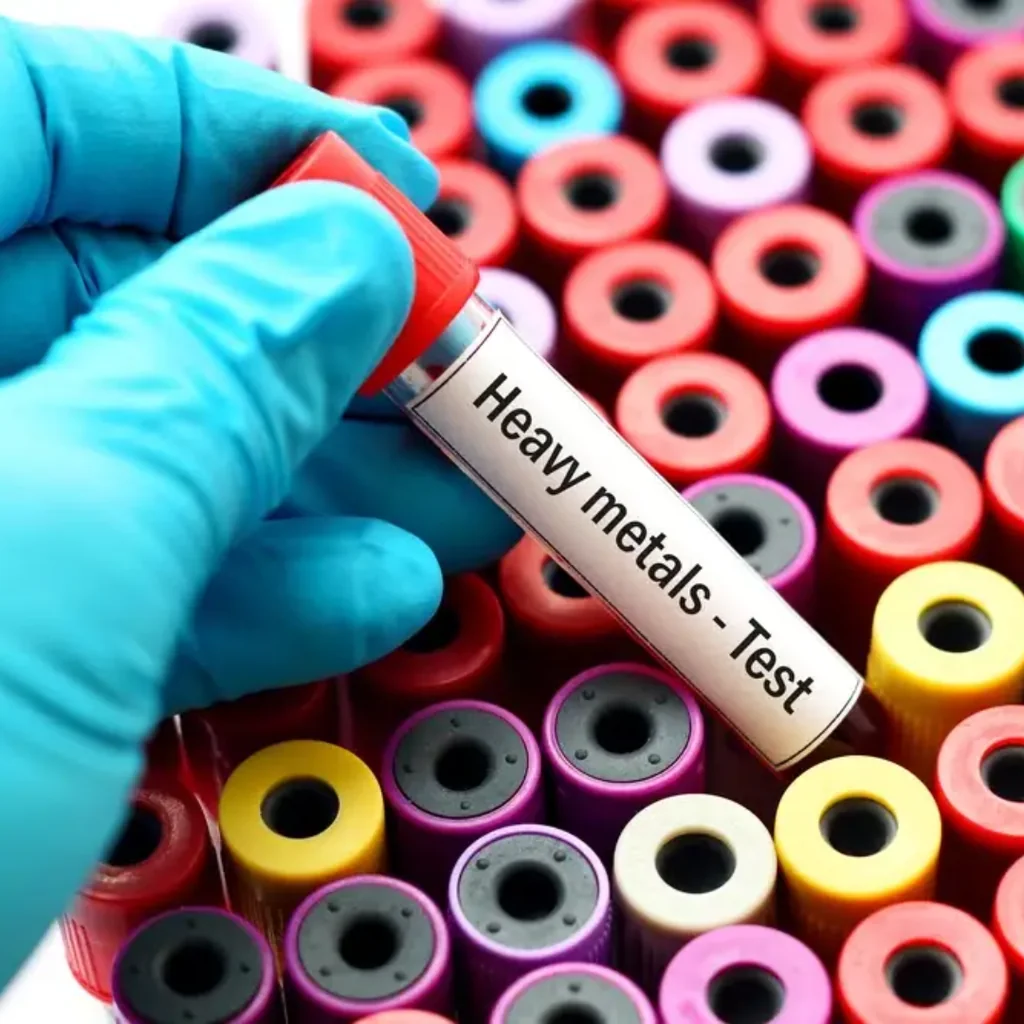
Chronic fatigue your doctor cannot explain. Brain fog that never lifts. Labs come back normal, yet you feel worse every year. Heavy metal accumulation is one of the most underrecognized contributors to unexplained chronic symptoms, in part because standard blood work only captures what is circulating right now and misses what is stored in tissues, organs, and bone. Comprehensive heavy metal testing combines several methods to measure that hidden burden so any decision about detoxification rests on real data rather than guesswork.
At AgeRejuvenation, heavy metal toxicity testing is built to measure what standard panels miss. We combine provoked urine testing, hair mineral analysis, and blood work so the result reflects what is stored in your tissues, not only what is circulating today. This guide explains what heavy metal testing is, what it measures, who should consider it, how each sample is collected, what the results indicate, how the methods compare, the limitations of testing, and the next steps that follow a result.
What Is Heavy Metal Toxicity Testing?
Answer: Heavy metal testing is a set of laboratory analyses that measure toxic elements such as lead, mercury, arsenic, and cadmium in urine, hair, or blood to estimate how much your body has absorbed and retained.
No single sample tells the whole story, which is why comprehensive assessment uses more than one method. Blood reflects recent or ongoing exposure, urine reflects what the body is excreting, and hair reflects a longer window of accumulation. The National Library of Medicine describes how laboratory testing is used to evaluate suspected heavy metal exposure. Reading those measurements together gives a clearer picture than any one value alone.
What Does Heavy Metal Testing Measure?
Answer: A heavy metal panel typically measures toxic elements including lead, mercury, arsenic, cadmium, and sometimes aluminum, nickel, or thallium, reporting how much of each is present in the sample collected.
Each metal has its own distribution pattern in the body. Mercury concentrates in the brain and kidneys, lead deposits in bone and teeth, and cadmium accumulates in the kidneys and liver. The U.S. Centers for Disease Control and Prevention tracks human exposure to environmental chemicals, including toxic metals, reflecting how common low-level contact actually is. Testing identifies which specific elements are elevated rather than lumping all "toxins" together.
Who Should Consider Heavy Metal Testing?
Answer: Testing is most relevant for people with unexplained chronic symptoms, a known exposure history, or occupational and environmental risk factors, especially when conventional evaluation has not found a cause.
Common reasons people ask about testing include persistent fatigue, cognitive complaints, exposure to older housing, well water, certain occupations, or frequent consumption of large predatory fish. Symptoms alone do not confirm toxicity, so testing is used to investigate a reasonable suspicion. A clinician reviews your history first to decide whether testing is appropriate and which method fits your situation.
What Conditions and Symptoms Is Heavy Metal Testing Used to Investigate?
Answer: Testing is ordered to investigate symptoms that overlap with metal exposure, including neurological complaints, persistent fatigue, immune dysregulation, cardiovascular changes, and endocrine disruption, when other explanations have been ruled out.
Mercury and lead are recognized neurotoxins, and Mount Sinai's health library outlines how lead poisoning affects the nervous system and other organs. Some metals act as endocrine disruptors that can interfere with thyroid signaling, which is one reason patients with stubborn thyroid dysfunction or unresolved hormone imbalances are sometimes evaluated. Testing helps clarify whether metals are a contributor; it does not by itself diagnose any condition.
How Is the Sample Collected?
Answer: Blood is drawn from a vein, urine is collected over a timed window (sometimes after a provoking agent), and hair is cut close to the scalp. Each method captures a different exposure window, so collection follows the question being asked.
Provoked urine testing administers a chelating agent that binds stored metals and pulls them into urine for measurement, while a baseline urine sample reflects ongoing excretion without provocation. Hair is collected from near the scalp to represent recent months of exposure. Following the lab's preparation and collection instructions matters, because diet, supplements, and even some seafood meals can influence certain results.
What Do Heavy Metal Test Results Mean?
Answer: Results report the amount of each metal detected, which a clinician interprets alongside your history, symptoms, and the collection method, since an elevated value signals exposure or accumulation rather than an automatic diagnosis.
Interpretation is not a simple high-or-low readout. A value must be read in context: the sample type, whether provocation was used, recent diet, and the reference framework the lab applies. The National Library of Medicine notes that results are interpreted by a qualified provider rather than read in isolation. We walk through what each finding suggests and what it does not, so the result guides a conversation rather than a snap conclusion.
How Do the Testing Methods Compare?
Answer: Blood, provoked urine, and hair analysis answer different questions: blood shows current circulating levels, provoked urine estimates stored body burden, and hair reflects cumulative exposure over months. Used together they form a fuller picture.
| Method | What it reflects | Exposure window | Typical role |
|---|---|---|---|
| Blood panel | Metals currently circulating | Recent or ongoing | Confirms active exposure; monitors progress |
| Provoked urine | Metals mobilized from tissue stores | Cumulative body burden | Estimates stored load standard tests miss |
| Hair mineral analysis | Metals deposited during growth | Several months | Flags chronic low-level exposure patterns |
| Baseline urine | Metals being excreted without provocation | Recent | Reflects ongoing elimination |
The right combination depends on the question being asked and your history. No single column is "best"; they are complementary, and a clinician selects the methods that match your suspected exposure.
What Are the Limitations of Heavy Metal Testing?
Answer: Testing has real limits: a single sample can miss stored metals, results vary with collection method and timing, and provoked testing is debated and must be interpreted cautiously rather than treated as a standalone verdict.
No test is perfect, and metals stored deep in bone or organs may not appear in a casual blood draw. Recent meals, supplements, and the specific lab method all influence numbers, which is why interpretation belongs with a clinician who knows your history. Testing identifies a potential contributor to your symptoms; it does not promise a diagnosis or predict how you will respond to any intervention.
What Are the Next Steps After Testing?
Answer: After results return, a clinician explains what was found, discusses likely exposure sources, and outlines whether further evaluation or supervised follow-up is appropriate, with the pace matched to your individual situation.
Understanding your results enables informed decisions about what comes next, including reducing ongoing exposure and confirming findings where needed. Heavy metal testing is one piece of our broader medical and functional health evaluations, which look for underlying contributors when standard work-ups have not explained how you feel. We focus on clear interpretation first, so any decision is grounded in what your results actually show.
Why Choose AgeRejuvenation for Heavy Metal Testing?
Answer: Accurate assessment depends on combining the right methods and interpreting them carefully, which a brief, single-panel visit rarely allows.
Our approach pairs multi-modal testing with plain-language education. We explain what each result suggests, discuss exposure sources specific to your history and environment, and set realistic expectations about what testing can and cannot tell you. The goal is a clear, honest read on your toxic burden, so the path forward is built on evidence rather than assumption.
Explore more in our medical clinic services .