


Stem cell ortho injections are a non-surgical, ultrasound-guided treatment that places mesenchymal stem cells from donated umbilical cord tissue (Wharton’s jelly) directly into a damaged knee, hip, shoulder, or spine joint. The goal is to calm chronic inflammation and support the joint’s own repair process, without an incision, general anesthesia, or weeks of rehab. In Tampa, the procedure is performed in office by the physician-led team at our sister clinic, Leheal Biogenix, and most patients return to light activity the same day.
If a surgeon has told you it may be time for a knee or hip replacement, you already know the trade-offs: months of rehab, time away from the people and activities you love, and no guarantee the joint will feel truly yours again. Before you commit to the operating room, there is a non-surgical path worth understanding.
At AgeRejuvenation, our philosophy has always been to treat the root cause of how you feel, not just the symptom. Orthopedic joint pain is no different. That is why we partner with Leheal Biogenix, a physician-led regenerative medicine clinic in Tampa’s Hyde Park district, to bring advanced stem cell ortho injections to Tampa Bay patients.
What Are Stem Cell Ortho Injections?
Stem cell ortho injections are a non-surgical regenerative therapy that places mesenchymal stem cells (MSCs) and growth factors precisely where a joint has broken down. Rather than masking pain, the goal is to support the body’s natural repair process: reducing chronic inflammation and encouraging healthier tissue in cartilage, tendons, and the structures around the joint.
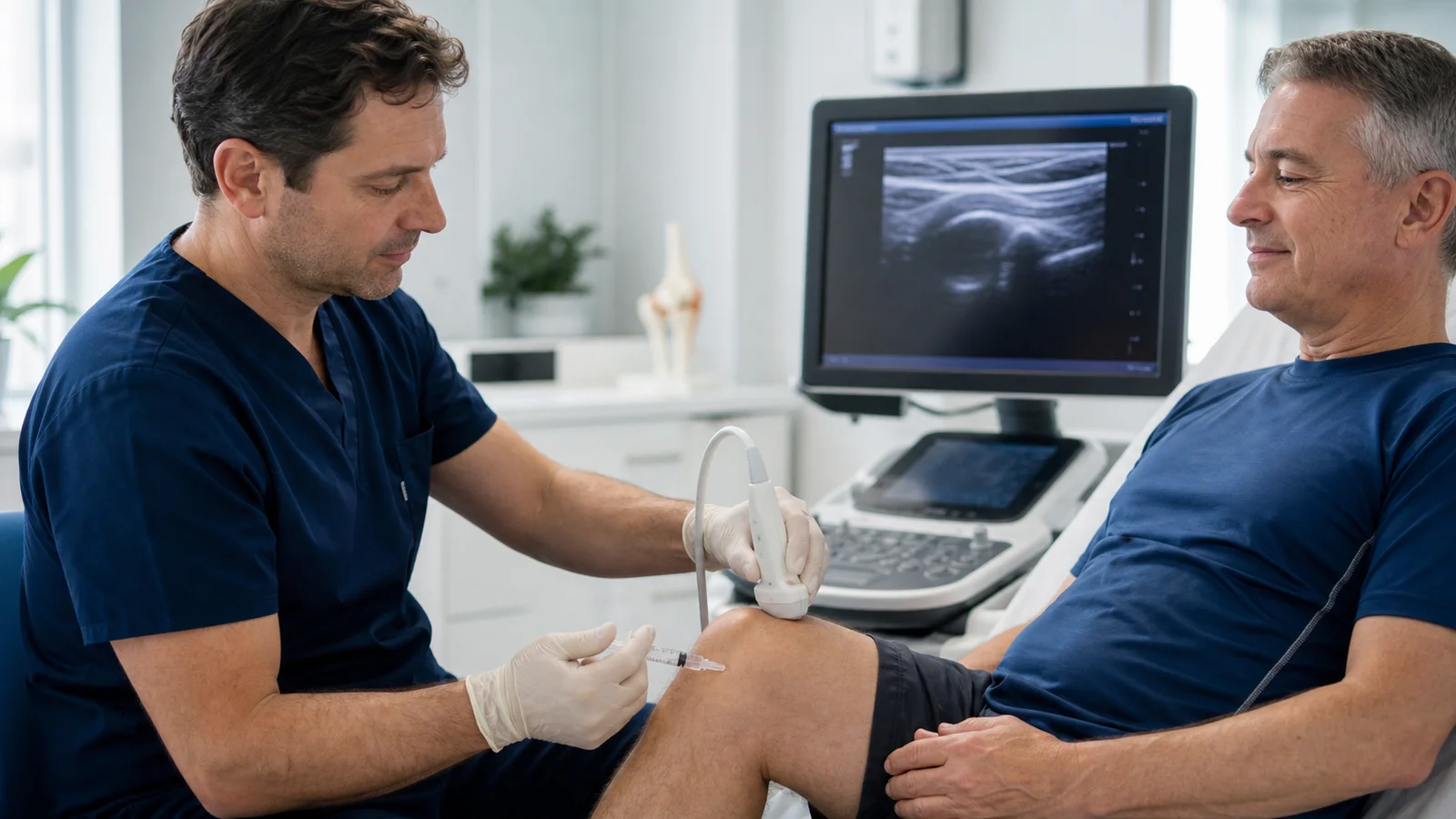
The cells used are derived from ethically sourced Wharton’s jelly, the protective tissue found in the umbilical cord, processed through an FDA-compliant tissue bank. Under ultrasound guidance, a physician delivers them directly into the affected joint, which is why placement is so accurate and downtime is minimal.
The short version: a targeted injection designed to support root-cause healing in a worn joint. No surgery, no general anesthesia, and typically no time off your feet.
Why Consider Injections Before Joint Replacement Surgery?
Joint replacement is a major operation. It removes and rebuilds the joint, and while it can be the right answer for advanced cases, it is difficult to reverse and comes with real recovery costs. For many people with moderate arthritis or a degenerating joint, it makes sense to exhaust regenerative options first.
- No incision, no hospital stay. The procedure is done in office in under an hour.
- Minimal downtime. Most people walk out and return to light daily activity right away, rather than facing weeks of rehabilitation.
- It does not burn any bridges. Choosing injections first keeps surgery available later if you ever need it.
- Aims at the cause. Instead of trimming or replacing tissue, the therapy is designed to support the joint’s own repair environment.
Curious how this fits alongside surgery for your specific joint? Leheal’s stem cell therapy overview walks through candidacy in more detail.
Joints We Help: Knees, Hips, Shoulders, and Spine
Orthopedic stem cell injections are used across the joints that most often wear down with age and activity. Common areas include:
- Knees: osteoarthritis, meniscus wear, and the “bone-on-bone” discomfort that has patients weighing knee replacement.
- Hips: joint degeneration and labral wear that make walking, stairs, and sleep uncomfortable.
- Shoulders: rotator cuff strain, frozen shoulder, and the stiffness that limits reaching overhead.
- Spine and lower back: degenerative disc disease and facet joint pain that do not respond to rest or medication.
Elbows, hands, wrists, and ankles can be candidates as well. A consultation determines whether the joint has enough healthy structure left to benefit.
How Wharton’s Jelly MSCs Support Joint Repair

Mesenchymal stem cells are signaling cells. When placed in a damaged joint, they release growth factors and anti-inflammatory proteins that help quiet the chronic inflammation driving your pain and recruit the body’s own cellular repair mechanisms. Wharton’s jelly is a particularly rich source: it carries a high concentration of these growth factors, which is why it is often considered more potent than platelet-rich plasma (PRP) for chronic joint and cartilage concerns.
In plainer terms, the injection does not “regrow a new knee.” It works to improve the biological environment of the joint so your body can do more of its own repair and maintenance, supporting comfort and function over time.
Do Stem Cell Injections Actually Work? An Honest Look at the Evidence
It is the first question every careful patient asks, and it deserves a straight answer rather than a sales pitch.
Clinical research on MSC injections for osteoarthritis has shown encouraging improvements in pain and function for many patients, and major academic medical centers now run regenerative orthopedic programs of their own. At the same time, orthopedic societies note that the evidence base is still maturing, and outcomes vary from joint to joint and person to person. Both things are true, and any clinic that tells you otherwise is not being honest with you.
On the regulatory side: no stem cell product is FDA approved to treat arthritis or orthopedic conditions. Wharton’s jelly products are regulated as human cellular and tissue products and must be processed by FDA-registered tissue banks under strict handling standards. Your physician will explain exactly what that regulatory status does and does not mean for your treatment.
There is also a world of difference between a physician-evaluated, ultrasound-guided injection and the “research use only” stem cell and exosome products sold online with no exam, no imaging, and no supervising doctor. If you are comparing options, make the comparison on those terms: a medical procedure with a licensed physician accountable for your outcome, versus a vial shipped to your door.
Stem Cell Injections vs. Cortisone vs. Joint Replacement
Each option has a role. The table below shows where stem cell ortho injections tend to fit for patients who want to stay active and delay or avoid surgery.
| Factor | Stem Cell Ortho Injection | Cortisone Shot | Joint Replacement |
|---|---|---|---|
| Approach | Supports tissue repair | Masks inflammation | Removes and rebuilds joint |
| Downtime | Minimal, same-day activity | Minimal | Weeks to months of rehab |
| Effect on tissue | Aims to preserve and support | May accelerate breakdown over time | Replaces the joint |
| Root cause? | Targets the source | Temporary symptom relief | Definitive but irreversible |
| Repeatable? | Yes | Limited (steroid load) | One-time major surgery |
| Best suited for | Mild to moderate wear, staying active | Short-term flare relief | Advanced, end-stage joints |
This comparison is educational and not a substitute for a physician’s evaluation.

What Do Stem Cell Ortho Injections Cost in Tampa?
Regenerative injections are almost always self-pay. Most insurers, including Medicare, classify them as investigational and do not cover the procedure. The price for your plan depends on a few factors:
- The joint being treated and whether one or several joints are addressed in the same plan.
- The cell product and dose your physician recommends for the degree of wear.
- Imaging and guidance, since every injection is placed under ultrasound.
- Your follow-up plan, which tracks how the joint responds over the following weeks.
Leheal Biogenix reviews exact pricing with you at the consultation, before any treatment begins, so there are no surprises. When you weigh the numbers, compare them honestly against the full cost of surgery: deductibles, rehab visits, time away from work, and the help you would need at home during recovery.
Who Is a Good Candidate (and Who Is Not)?
Stem cell ortho injections tend to fit best when there is still healthy structure for the joint to build on. Strong candidates often have:
- Mild to moderate osteoarthritis, meniscus or labral wear, or a chronic tendon problem
- Joint pain that has outlasted rest, physical therapy, or cortisone
- A desire to delay or avoid joint replacement and stay active
The therapy is not the right fit for everyone. Severe end-stage joints with major deformity may genuinely be better served by a surgical consult, and active infection, certain cancers, and some uncontrolled medical conditions rule the procedure out. A consultation with imaging review is how the Leheal team confirms, honestly, whether your joint is a reasonable candidate.
Your Care Team: Treatment Delivered by Leheal Biogenix
AgeRejuvenation focuses on root-cause, whole-person care: hormones, metabolism, and the everyday vitality that keeps you moving. For the orthopedic injection itself, you are in specialized hands. Our sister company, Leheal Biogenix, is a physician-led regenerative medicine clinic whose team is trained in physical medicine, functional medicine, and non-surgical orthopedic care. This page is medically reviewed by Dr. Shelanda Hayes, MD, a board-certified physician who sees patients across both practices.
2007 W Swann Ave, Suite B, Tampa, FL 33606 · 813-999-2192
Explore Leheal’s stem cell therapy →What to Expect: Consultation, Procedure, and Recovery
1. Consultation and imaging review
Your visit starts with a conversation about your history, imaging, and goals. This is where the team confirms whether stem cell ortho injections are a reasonable fit for your joint, and sets honest expectations.
2. The injection
The procedure is performed in office using ultrasound guidance for precise placement. Most appointments take under an hour, and there is no general anesthesia.
3. Recovery and follow-up
Most patients resume light daily activity the same day, with simple activity guidance for the first week or two. Because the therapy supports a gradual repair process, comfort and function often continue to improve over the weeks that follow, and a follow-up plan keeps your progress on track.
Serving Tampa and the Greater Bay Area
Leheal Biogenix treats patients at 2007 W Swann Ave, Suite B, in Tampa’s Hyde Park district, a few blocks from Bayshore Boulevard and minutes from Tampa General Hospital. The clinic sits a short walk from our AgeRejuvenation South Tampa location on Howard Avenue, and patients visit from across the bay: South Tampa, Brandon, Wesley Chapel, St. Petersburg, and Clearwater. If you have been searching for stem cell ortho injections near Tampa, this is where the conversation starts.
Getting Back to the Life You Don’t Want to Slow Down

The point of all of this is not a number on a scan. It is the 7 a.m. tee time, the pickleball league, chasing grandkids across the yard, and traveling without planning your day around a bad knee. Regenerative joint care is about protecting your independence and keeping you in motion for the decades ahead, which is exactly the kind of long-view, root-cause thinking AgeRejuvenation is built on.
Explore more in our regenerative medicine services .