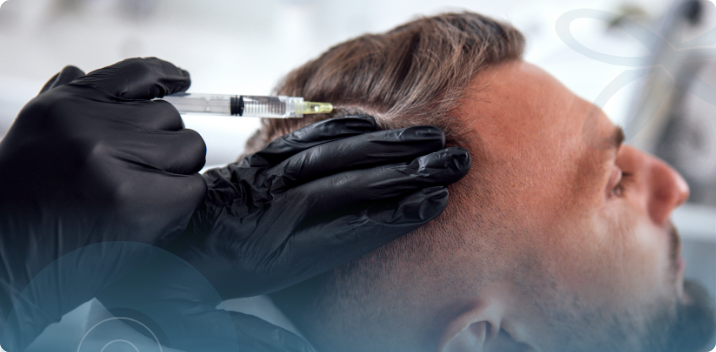
Masseter Botox for men injects botulinum toxin into the jaw's chewing muscle to lower clenching force. For men, that eases TMJ strain and tension headaches while gradually softening a heavy, square lower face. A clinical exam confirms the muscle is overactive, then dosing is tailored to male anatomy with restraint. Results last roughly three to four months and pair well with sleep and stimulant changes.
If you are exploring masseter Botox for men in Florida, you may be dealing with a problem that feels bigger than the jaw. Many men notice it first during long workdays: a tight bite while driving, a sore face after calls, or a dull headache that builds behind the temples. Others pick up on signs in the mirror when the lower face looks wider or more squared than it used to. In the clinic, these threads often connect to the same driver, an overactive masseter muscle carrying too much daily load.
At AgeRejuvenation, we treat this as a mechanical and neurological pattern, not a cosmetic trend. The goal is to reduce excessive force, calm strain around the temporomandibular joint, and support facial balance with a plan that fits a professional schedule.
What Is Masseter Botox and How Does It Help Men?
Masseter Botox is a targeted injection of botulinum toxin into the large chewing muscle at the angle of the jaw to lower how hard it contracts. As that muscle quiets, daily clenching force drops, jaw tension eases, and an enlarged lower face can gradually soften. For men, the appeal is both relief and refinement at once.
Botulinum toxin is a prescription medication that reduces excessive muscle activation by blocking the nerve signal that tells a muscle to contract, a mechanism well documented in the clinical literature on botulinum toxin and its therapeutic uses. In the masseter, the purpose is to lower the intensity of contraction so the muscle can rest more often. This is part of the injectable care offered through our physician-supervised Botox injection treatments, where dosing is matched to a man's anatomy rather than a one-size template.
Why Clenching Becomes a Pattern in High-Functioning Men
The masseter is one of the strongest chewing muscles in the body. It is designed for short bursts of force, like biting and chewing. When stress, sleep disruption, stimulants, or intense training drives repeated clenching, the muscle begins to behave like it is always on call. Over time, that can lead to hypertrophy, which is a true increase in muscle size, along with soreness and fatigue.
Clenching is also a learned motor habit. The nervous system builds efficiency around repeated actions. Once the body rehearses a tight bite during focus or tension, the pattern can show up automatically. Many men describe it as a constant readiness in the lower face, even during rest.
Common factors we see in practice line up with what major clinics list as bruxism risk factors. According to Mayo Clinic guidance on teeth grinding, stress, caffeine, nicotine, and alcohol can all raise the odds of clenching and grinding:
Nighttime grinding or bruxism, often noticed by a partner or dentist.
Daytime clenching during screen time, commutes, or deadlines.
High caffeine intake, pre-workout stimulants, or nicotine.
Heavy strength training with breath-holding or jaw bracing.
Sleep fragmentation that lowers recovery and increases muscle tone.
Because so much of this traces back to load on the nervous system, addressing the upstream driver matters too. Men who clench under pressure often benefit from also looking at how their bodies handle ongoing stress and anxiety, since calmer baseline tone tends to support steadier results.
Understanding TMJ Stress Without Overcomplicating It
TMJ symptoms can look different from one person to the next, and they are not limited to a single joint issue. Many patients describe a cluster: soreness near the angle of the jaw, tension headaches, facial fatigue after meals, clicking, or a sense of pressure near the ear. Some feel tightness that radiates into the neck, especially after long days at a desk.
These overlapping signs are typical of temporomandibular disorders, a group of conditions that affect the jaw joint and the muscles around it, as described in Cleveland Clinic's overview of temporomandibular disorders. In a clinical setting, the useful question is straightforward. Is the masseter contributing significant force that keeps the area irritated and overworked? When that answer is yes, targeted muscle downtraining can be part of a measured plan.
Key Signs Men Often Report
Morning jaw soreness or a tired bite.
Headaches that track with workload or stress.
Tenderness when pressing the jaw muscles.
A heavier, more square lower-face appearance over time.
Increased wear on teeth, often seen during dental visits.
How Does Masseter Botox Change the System?
Masseter Botox changes the system by lowering peak contraction strength, which reduces overload on the jaw joint and the strain that feeds headaches and facial fatigue. When the muscle stops firing at full strength all day, it can begin to relax into a healthier baseline. That shift gives the surrounding tissues a chance to recover.
A helpful way to think about it is force management. The joint and surrounding tissues tolerate normal chewing very well. They struggle when repeated clenching adds a second job, hour after hour. By reducing the peak strength of the masseter, the tissues around the temporomandibular joint get a better chance to settle. The jaw joint and its muscles are a complex system, and the National Institute of Dental and Craniofacial Research notes that TMJ disorders often respond best to conservative, reversible approaches first.
There is also an aesthetic component. In men with true hypertrophy, gradual reduction in muscle bulk can soften excessive width at the lower face. This kind of refined, masculine contouring fits naturally within our broader aesthetic and injectable services, where the aim is facial balance, not a dramatic change. Male proportions matter. A plan that respects structure and symmetry tends to look composed and natural.
Who Is Masseter Botox Best For, and When Do We Slow Down?
Masseter Botox is best for men with a consistent clenching pattern, a clearly overactive muscle, and symptoms that match the mechanical load. Men who benefit often have a history of clenching or grinding, a dense masseter on exam, and repeatable discomfort that tracks with stress or sleep.
We also take caution seriously. A different clinical pathway may be appropriate when there is recent jaw trauma, sharply escalating pain, marked limitation in opening, active dental infection, or a bite issue that needs dental evaluation first. A careful intake keeps decision-making tied to physiology and safety.
How the Visit Runs, Built for Precision and Discretion
We avoid generic templates. The masseter is a large muscle, and dosing needs to match its strength, symmetry, and function. The first step is mapping.
Clinical Mapping and Movement Review
Your provider evaluates the face at rest and during clenching. We palpate the muscle, note asymmetry, and review the specific pattern that triggers symptoms. We also discuss sleep, stimulants, training habits, and any use of a night guard.
Dosing Strategy for Facial Balance
Men often carry more mass and force in the lower face. For that reason, many plans start with a conservative dose and then adjust based on response. The aim is predictable improvement, with functional comfort and a balanced look. For some patients, a follow-up check helps fine-tune symmetry once the muscle begins to settle.
Aftercare That Fits a Normal Workday
Most patients return to routine activities the same day. We provide simple guidance to reduce irritation and support clean results. Many men also benefit from pairing treatment with practical habit changes, such as jaw relaxation cues during screen time, better sleep consistency, and training form that avoids jaw bracing.
Local Access Across Central Florida and the Tampa Bay Area
This is a common request among professionals who move between offices, meetings, and family logistics. We keep care accessible across Florida with five locations:
220 N Howard Ave, Tampa, a practical stop for patients commuting from Hyde Park, SoHo, or along S Howard Ave and Bayshore Boulevard.
1155 Nikki View Drive, Brandon, convenient for those coming off I-75 and nearby corridors around Brandon Boulevard.
1940 Bruce B. Downs Blvd, Wesley Chapel, accessible for patients traveling the Bruce B. Downs route and the area near Wiregrass.
5730 Hamlin Groves Tr #176, Winter Garden, helpful for those coming from Horizon West and SR 429.
1523 S Orange Ave, Orlando, FL 32806, a straightforward option for patients in the SoDo district and surrounding neighborhoods.

Frequently Asked Questions
Should guys get masseter Botox?
Many men are good candidates, especially those with strong clenching, jaw tension, teeth grinding, or a heavy, square lower face. The treatment can relieve discomfort and refine the jawline at the same time. The right move is a clinical exam to confirm the masseter is overactive and that your symptoms match the mechanical load before any injection.
How many units of Botox does a man need in the masseter?
There is no single fixed number. Men often carry more muscle mass and force in the lower face, so providers map the muscle and tailor dosing to its strength and symmetry. Many plans start conservative and adjust at a follow-up. Your provider sets the dose during the exam rather than from a generic chart.
Is there a downside to masseter Botox?
Possible downsides include temporary chewing fatigue, mild soreness at injection sites, or slight asymmetry that usually settles or is corrected at follow-up. Aggressive overdosing can over-thin the muscle. Working with an experienced medical provider who maps the muscle and doses with restraint keeps the approach measured and reversible over time.
How long does masseter Botox last for men?
Results typically last around three to four months as the medication gradually wears off and muscle activity returns. With repeated treatments over time, some men notice the muscle stays calmer and the clenching habit eases. Maintenance scheduling is reviewed with your provider based on how your jaw and symptoms respond.
Does masseter Botox help with TMJ and teeth grinding?
For many men, yes. By lowering the masseter's peak contraction, it can reduce the repeated force that irritates the jaw joint and drives tension headaches. It is part of a broader plan that may include better sleep, stimulant changes, and a dental review. It is not a cure for every jaw problem, so a careful intake matters.
Conclusion
For many men, jaw tension is a performance problem as much as a comfort issue. It drains energy, amplifies headaches, and changes how the lower face carries stress. A clinically guided plan can reduce excessive contraction, ease TMJ strain, and support facial balance in a way that stays aligned with male anatomy and daily demands.
When masseter Botox for men in Florida is selected carefully and dosed with restraint, the outcome tends to feel stable, discreet, and repeatable.
If you want clarity on whether your clenching pattern is a strong fit for treatment, the next step is to schedule an appointment and review symptoms, habits, and facial mechanics with a medical provider.
Ready to take the next step?
Talk with the AgeRejuvenation team about a Botox Injections plan built around your labs and goals.