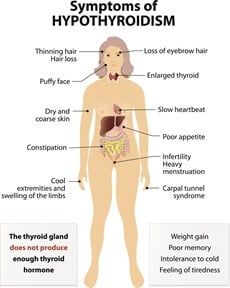
Low thyroid activity slows your metabolism and shows up as fatigue, headaches, cold hands or feet, constipation, and unexplained depression. Experiencing three to five together signals possible hypothyroidism. Because standard TSH-only testing can miss the problem, a fuller panel including T3 and T4 gives a more accurate answer and guides effective treatment.
Your thyroid is a small, butterfly-shaped gland at the base of your neck, but it controls some of the biggest jobs in your body. Thyroid hormones regulate your metabolism, which is your ability to burn food for energy and generate body heat. These hormones are also needed for the normal development of bone, muscle, and the brain. When the gland slows down, nearly every system feels it.
What are the top 5 signs of low thyroid activity?
The five most common signs of low thyroid activity are fatigue, headaches, cold hands or feet, constipation, and unexplained depression. When someone regularly experiences three to five of these together, they may have, or be at risk of developing, hypothyroidism (an underactive thyroid).
Here are the top five signs to watch for:
FATIGUE
HEADACHES
COLD HANDS AND/OR FEET
CONSTIPATION
and DEPRESSION (UNEXPLAINED).
Other common symptoms include dry skin, brittle or ridged fingernails, unexplained pain, unexplained weight gain, hair loss, irritability, and an inability to sweat. Because these symptoms come on slowly and often look like ordinary aging, many people live with them for years before connecting the dots. The National Institute of Diabetes and Digestive and Kidney Diseases notes that an underactive thyroid can slow down nearly every organ in the body, which is why the signs feel so widespread.
If several of these patterns sound familiar, our team that provides comprehensive thyroid support and hormone testing can measure and analyze your blood levels to see what is really happening.
Why does low thyroid activity cause fatigue and weight gain?
Low thyroid activity slows your metabolism, so your body produces less energy and burns fewer calories at rest. That combination explains why deep fatigue and gradual, unexplained weight gain are two of the most reported complaints, even when sleep and diet have not changed.
When thyroid hormone runs low, your cells receive fewer signals to convert food into usable fuel. Cleveland Clinic lists fatigue, brain fog, depression, and unexplained weight gain among the hallmark symptoms of hypothyroidism. Many people describe feeling sluggish even after a full night of rest, or watching the scale creep up despite no lifestyle changes. Persistent tiredness and stubborn weight are not character flaws, and they are worth investigating rather than ignoring.
Why do cold hands, feet, and constipation happen?
Thyroid hormone helps set your internal thermostat and keeps your digestive tract moving. When levels fall, you generate less body heat, so your hands and feet feel cold, and the muscles of your gut slow down, which leads to constipation.
Feeling chilly when everyone else is comfortable is a classic clue. So is a digestive system that suddenly runs sluggish. These signs may seem minor on their own, but paired with fatigue and low mood, they paint a clearer picture of an underactive thyroid. This pattern of slowed body functions is a recognized feature of thyroid dysfunction and related hormone problems, and it tends to improve once hormone levels are corrected.
Can low thyroid activity affect your mood and cause depression?
Yes. Thyroid hormones influence brain chemistry, so low levels can flatten mood, dull motivation, and trigger unexplained depression. For some people, emotional changes appear before the more physical symptoms, which is why low mood with no clear cause deserves a thyroid check.
The brain depends on steady thyroid signaling for focus, memory, and emotional balance. According to Yale Medicine, hypothyroidism develops when the thyroid gland does not produce enough hormone, and the resulting slowdown can show up as forgetfulness, brain fog, or persistent sadness. If you have been treated for depression but never feel quite right, asking your provider to look at your thyroid is a reasonable next step.
Do thyroid problems cause aches and joint pain?
Untreated low thyroid activity can cause muscle aches, stiffness, and joint pain. Mayo Clinic explains that hypothyroidism may lead to muscle tenderness, stiffness, and joint pain, particularly in the hands and knees. These aches often ease once thyroid hormone levels are restored to a healthy range.
If you have unexplained pain along with fatigue and cold sensitivity, the connection may run through your thyroid rather than wear and tear alone. Treating the root hormone imbalance often does more for these aches than chasing each symptom separately.
How common are thyroid problems, and who is at risk?
Thyroid problems are widespread. They affect approximately 1 in 7 adults and are more common in women, and the risk increases with age. Because the gland touches so many body systems, even a modest dip in hormone output can ripple through your energy, weight, mood, and comfort.
Women are especially likely to develop an underactive thyroid, often around major hormonal shifts such as pregnancy and menopause. Family history and autoimmune conditions also raise the odds. This is one reason a dedicated thyroid evaluation and treatment program belongs in your care rather than being treated as an afterthought. Knowing your personal risk helps you push for the right testing sooner.
Why standard thyroid testing can miss the problem
All thyroid hormones are critical to normal functioning, but many physicians are still "old school" when it comes to thyroid testing. They often check only TSH levels, and at too wide of a reference range.
This is a problem because T3 is actually the most active thyroid hormone. If someone has trouble converting T4 to T3, then the thyroid is not functioning optimally, yet a physician relying on TSH alone may say, "Everything is okay." Mayo Clinic confirms that hypothyroidism is diagnosed through blood tests and that symptoms can be minimal in the early stages, which makes thorough testing so important. A fuller panel gives a more honest answer than a single number ever could.
How is low thyroid activity treated?
At ageRejuvenation, we specialize in thyroid testing and can correct low thyroid activity with a combination of natural thyroid extract and nutritional supplements unique to your needs. We also monitor and adjust dosages accordingly until you reach desirable improvements in symptoms.
Almost everyone feels better when their T4 and T3 levels move from low to mid normal and up toward high normal. Our broader women's health and hormone optimization care looks at the whole picture, not just one lab value, so your treatment matches how you actually feel day to day. The goal is steady energy, stable mood, and a metabolism that works with you instead of against you.
Frequently Asked Questions
What are the 5 most common signs of an underactive thyroid?
The five most common signs are fatigue, headaches, cold hands or feet, constipation, and unexplained depression. Other frequent symptoms include dry skin, brittle nails, hair loss, and unexplained weight gain. Experiencing three to five of these together suggests it is time to have your thyroid evaluated.
Can you have low thyroid symptoms with a normal TSH?
Yes. TSH alone does not capture the full picture, because T3 is the most active thyroid hormone. If your body struggles to convert T4 to T3, you can feel hypothyroid even when TSH looks normal. A complete panel that includes T3 and T4 gives a far more accurate view than TSH testing by itself.
Are thyroid problems more common in women?
Thyroid problems affect roughly 1 in 7 adults and are notably more common in women, with risk rising as you age. Hormonal shifts around pregnancy and menopause, family history, and autoimmune conditions all increase the likelihood, which is why thyroid screening is an important part of women's health care.
Can hypothyroidism cause depression and brain fog?
Yes. Thyroid hormones help regulate brain chemistry, so low levels can cause depression, low motivation, forgetfulness, and brain fog. These mood and cognitive changes sometimes appear before physical symptoms. If you feel persistently low or foggy without a clear cause, asking your provider to evaluate your thyroid is a sensible step.
How is low thyroid activity treated?
Treatment restores thyroid hormone to a healthy level, often using natural thyroid extract paired with targeted nutritional support. Providers monitor your labs and symptoms and adjust the dose over time. Most people feel meaningfully better once their T4 and T3 levels move from low to mid and high normal ranges.
Ready to take the next step?
Talk with the AgeRejuvenation team about a Thyroid Support plan built around your labs and goals.