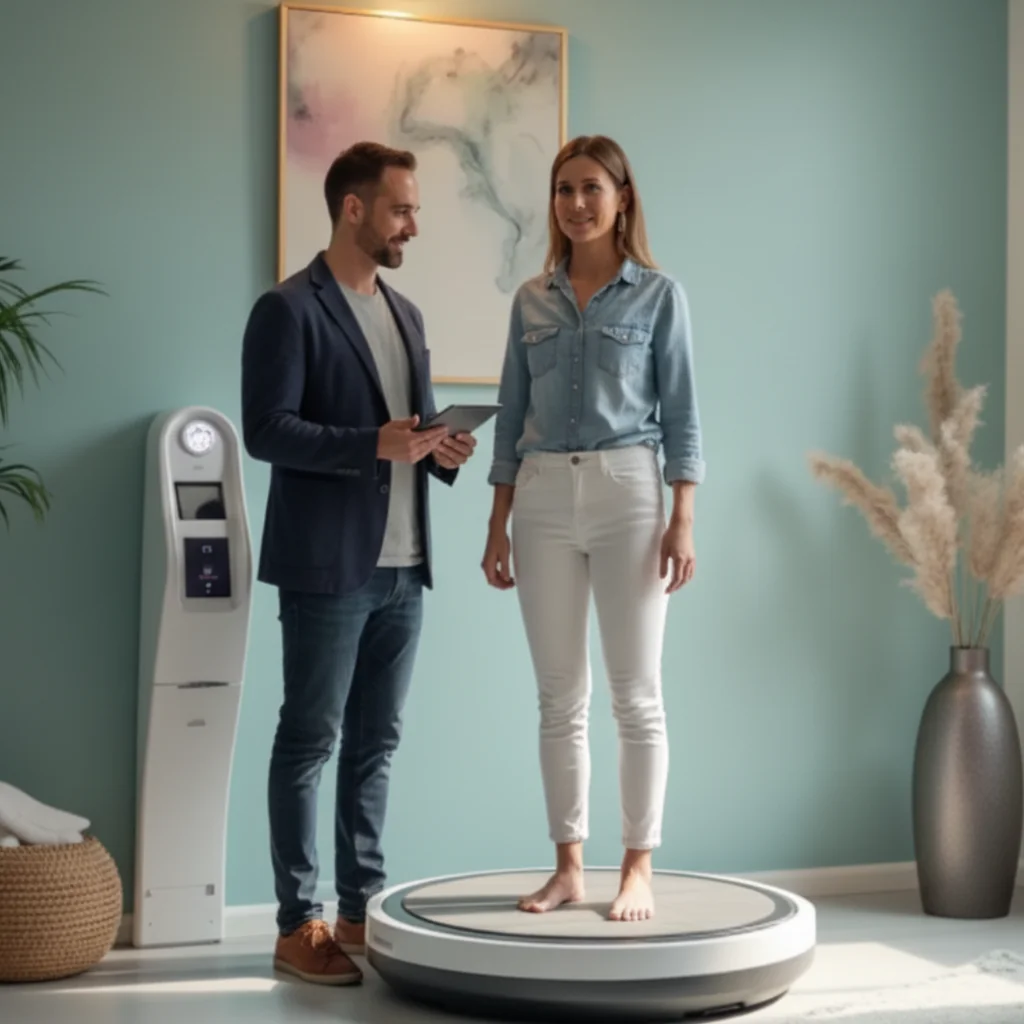
You are exercising, eating well, recovering consistently, and still hitting a wall. The soreness lingers longer than it should. Flexibility has not improved the way you expected. And some goals, particularly muscle tone and circulation, feel like they are moving in slow motion. Sonix vibration therapy addresses the gap between effort and result by working at the level where conventional exercise cannot reach: direct sound-wave stimulation of muscle tissue and circulation.
At AgeRejuvenation, Sonix vibration therapy is configured to your goals, not delivered as a one-size session. This guide explains what Sonix vibration therapy is, who is a good candidate, how the sound-wave technology works, the benefits for muscle, circulation, and bone, the side effects and safety considerations, how it compares to older vibration platforms and conventional exercise, and what to expect at a session.
What Is Sonix Vibration Therapy?
Answer: Sonix vibration therapy uses high-quality sound wave technology to transmit controlled mechanical vibrations through the body. The vibrations make muscles contract and relax many times per second, mimicking exercise stimulus while improving circulation and supporting lymphatic drainage, in non-invasive sessions of about 10 to 30 minutes.
Because the stimulus reaches muscle tissue directly, Sonix works at a level that standing on a vibrating platform from years ago could not. The system delivers its vibrations through a platform or mat while you stand, sit, or lie in specific positions, and the intensity is adjustable to match your fitness level. That range is what makes it appropriate both for someone easing back into activity and for an athlete chasing better recovery. As the National Library of Medicine outlines the broad benefits of regular physical activity, Sonix is designed to add to that foundation rather than replace it.
How Does Sonix Vibration Therapy Work?
Answer: Sonix transmits rapid, controlled vibrations into the body, triggering reflexive muscle contractions and increasing blood flow. This mechanical stimulus engages muscle fibers many times per second, which is why short sessions can produce an exercise-like effect along with improved circulation and lymphatic movement.
The principle is mechanical loading. When tissue is gently and rapidly displaced, the nervous system responds with reflexive contractions, and the pumping action helps move blood and lymph fluid. At AgeRejuvenation, your provider sets the intensity, duration, and positioning for your session, then adjusts over time as your tolerance and goals change. The mechanism is the same one that makes weight-bearing and resistance work valuable, applied in a low-impact, time-efficient format.
Who Is a Good Candidate for Sonix Vibration Therapy?
Answer: Good candidates include adults managing age-related muscle weakness, people who cannot yet tolerate high-intensity exercise, athletes seeking faster recovery, and anyone wanting low-impact support for circulation or bone health. Suitability is confirmed during an intake that reviews your health history.
Sonix is adjustable enough to meet most people where they are, from gentle rehabilitation-style stimulation to performance support. That said, it is not right for everyone. Your provider screens for contraindications before recommending a protocol, which is why the first appointment includes a brief intake and a demonstration rather than a self-service session.
What Conditions and Goals Can Sonix Vibration Therapy Help With?
Answer: Patients use Sonix vibration therapy for age-related muscle weakness, slow recovery from training, poor circulation and lymphatic flow, and as a low-impact support modality for bone health. The shared theme is mechanical stimulation that conventional rest does not provide.
For muscle weakness and reduced vitality, the rapid contractions add a training-like stimulus for people who cannot yet tolerate heavy exercise. For recovery, improved circulation helps clear metabolic byproducts from muscle tissue, shortening the soreness window between harder workouts. For bone health, the low-impact mechanical loading is the kind of stimulus the skeletal system responds to. Because muscle weakness and circulation also drive balance and fall risk, the guidance on preventing falls emphasizes regular exercise and strength, the same factors Sonix is meant to support.
Does Sonix Vibration Therapy Help Build Muscle and Bone Density?
Answer: Vibration-based stimulation can support muscle activation and add a low-impact mechanical load that the skeleton responds to, which is why it is studied as a complement to strength and weight-bearing exercise. It supports these goals rather than replacing dedicated resistance training.
Bone and muscle both adapt to load. The National Institute on Aging notes that strength and balance work are key types of exercise for staying strong with age, and Sonix layers a low-impact mechanical stimulus on top of that work. The most reliable results come from a sustained program, not a single visit, and Sonix is typically used alongside, not instead of, active training.
Sonix vs. Older Vibration Platforms vs. Conventional Exercise
Answer: Sonix differs from older whole-body vibration platforms by being calibrated for therapeutic precision and configured to your profile, and it differs from conventional exercise by delivering a low-impact, time-efficient stimulus rather than replacing strength training.
The table below summarizes how the three approaches compare on the points patients ask about most.
| Approach | How it works | Session demand | Best suited for |
|---|---|---|---|
| Sonix vibration therapy | Calibrated sound-wave vibration configured by a provider | 10 to 30 minutes, low impact | Recovery, circulation, gentle muscle and bone support |
| Older vibration platforms | Fixed, self-service whole-body vibration | Short but uncalibrated | General consumer use without clinical configuration |
| Conventional exercise | Active resistance and cardiovascular training | Longer, higher effort | Building strength and fitness over time |
Whole-body vibration is widely discussed as a low-effort adjunct rather than a substitute for exercise, a point Mayo Clinic makes in its overview of whole-body vibration as fitness. Sonix is positioned the same way: a precise, supervised stimulus that makes your overall program work better.
What Are the Side Effects and Risks of Sonix Vibration Therapy?
Answer: Sonix vibration therapy is generally low-risk for most healthy adults, with no needles, medication, or recovery time. Possible considerations include temporary fatigue or sensitivity, and it may not be appropriate for some people, which is why an intake screens for contraindications first.
Because the therapy is non-invasive and adjustable, intensity can be lowered for anyone new to it. People with certain conditions, including some who are pregnant or who have specific cardiovascular, joint, or implant concerns, should be cleared before starting, and your provider reviews these factors at intake. The goal is a stimulus strong enough to help and gentle enough to be sustainable.
What Should I Expect at a Sonix Vibration Therapy Session?
Answer: A Sonix session lasts about 10 to 30 minutes and requires no preparation, no recovery time, and no medication. After a brief intake and demonstration, you stand, sit, or lie on the platform while controlled vibrations are delivered at an intensity set to your goals.
The first visit focuses on configuration: your provider reviews your history, sets the positioning and intensity, and walks you through the experience. Sessions are short enough to fit into a busy day, and because there is no downtime afterward, many patients schedule them around work or training. Frequency is matched to your goals and adjusted as you progress.
How Much Does Sonix Vibration Therapy Cost?
Answer: Sonix vibration therapy is a wellness service that standard health insurance typically does not cover, so it is usually self-pay. The total depends on your goals and how many sessions your program involves, and our team reviews transparent pricing before you commit.
Because results often build over a series of sessions rather than a single appointment, cost is best understood as a program rather than a one-time fee. We explain the full pricing up front so you can choose a plan you can sustain.
Why Choose AgeRejuvenation for Sonix Vibration Therapy?
Answer: AgeRejuvenation delivers Sonix vibration therapy inside a clinical environment where your goals are mapped against your health history before a single session, and where recovery is treated as downstream of your overall metabolic and hormonal health.
Sonix is not a trendy add-on here. Care is led by Chief Medical Director Dr. Dawn Ericsson, MD, alongside a team of providers who connect physical recovery and performance to the rest of your wellness picture. Sonix works best when those broader factors are addressed, which is why it sits inside our complete wellness and longevity program that may also include hormone optimization, IV therapy, and peptide protocols. One configured session is the start of a plan, not the whole of it.
Explore more in our wellness center services .