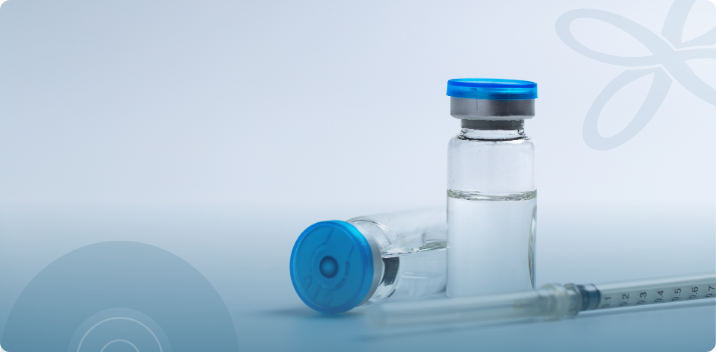
Accelerated recovery and reduced inflammation are goals many people assume require prescription medications, and those medications often carry a trade-off of side effects, dependency risk, or systemic impacts that create new problems while addressing the original one. BPC-157 is a different category of approach. This synthetic peptide, based on a protein sequence found in gastric juice, has been studied for its ability to support healing and recovery through mechanisms that work with the body's own repair biology rather than overriding it. At AgeRejuvenation, BPC-157 is offered under provider supervision as part of a personalized peptide therapy plan across our Florida clinics serving Tampa Bay and Orlando.
At AgeRejuvenation, BPC-157 is offered under provider supervision, not dispensed by questionnaire. We start with an evaluation of your health history and goals, then decide whether this peptide fits your plan, and we monitor your response over a dosage cycle. This guide explains what BPC-157 is, who it may help, how it works, the benefits and the real limits of the evidence, how it is delivered, and what treatment involves.
What Is BPC-157?
Answer: BPC-157 (Body Protection Compound 157) is a synthetic peptide of 15 amino acids based on a protein sequence found in human gastric juice, studied in preclinical research for tissue repair, gut protection, and reduced inflammation.
It is often called a stable gastric pentadecapeptide because, unlike many peptides, it stays stable in gastric acid rather than breaking down on contact. Because peptides are short chains of amino acids that act as signaling molecules, BPC-157 appears to act on the tissues of the digestive tract and more broadly throughout the body. The National Library of Medicine offers helpful background on how peptides function in the body. Most of the published evidence on BPC-157 comes from animal and laboratory studies, with human clinical investigation still limited.
How Does BPC-157 Work?
Answer: BPC-157 is studied for promoting blood vessel formation, stimulating collagen-producing cells, and modulating inflammation, mechanisms that may accelerate repair in the gut lining, tendons, ligaments, and other tissues.
In preclinical models, the peptide has been linked to angiogenesis, which is the formation of new blood vessels, and to fibroblast activity that drives collagen synthesis in healing tissue. Researchers have also described tissue-protective effects across muscle, bone, and the gastrointestinal tract. Reviews such as the peer-reviewed research on BPC-157's protective and regenerative properties summarize these findings, while noting that they are drawn largely from animal models.
What Conditions Might BPC-157 Help?
Answer: BPC-157 has been studied most for gut and inflammatory bowel conditions, wound and tissue repair, tendon and joint recovery, collagen support for skin, and systemic inflammation, though much of this evidence is preclinical.
Among the most research-supported applications is the gastrointestinal system, where BPC-157 has been linked to protection of the gut lining and the stomach against ulceration. Tendon healing is another area of frequent study, since the peptide has been associated with faster tendon-to-bone repair in animal models. Active patients and those with slow-healing connective tissue injuries are common reasons providers consider it, alongside chronic low-grade inflammation.
Who Is a Candidate for BPC-157 Therapy?
Answer: Good candidates are generally adults recovering from soft-tissue or tendon injury, those with stubborn gut or inflammatory concerns, or people seeking collagen and recovery support who clear a provider evaluation and medication review first.
BPC-157 is not right for everyone, and candidacy depends on your health history, current medications, and goals. Because it is a research peptide rather than an FDA-approved drug, a provider must weigh the limited human data against your situation. People who are pregnant, breastfeeding, or managing active cancer or other serious conditions should not start it without specialist guidance.
What Are the Benefits Patients Look For?
Answer: The benefits people pursue with BPC-157 include faster recovery from injury or training, improved gut comfort, better collagen and skin quality, reduced inflammation, and connective-tissue support, all under supervision.
A practical draw of BPC-157 is its broad, multi-tissue profile: the same collagen-supporting and tissue-protective activity studied for the gut may also support tendon and skin tissue. That overlap is why it is sometimes discussed alongside recovery and longevity goals. Outcomes vary by person, and the strength of the evidence varies by application, so results should be framed honestly rather than promised.
What Are the Side Effects and Risks of BPC-157?
Answer: Published studies report few side effects, but BPC-157 is not FDA-approved and human safety data are limited, so it should be used only under medical supervision with a full medication review.
The most important caveat is regulatory and scientific: the U.S. Food and Drug Administration has flagged BPC-157 among bulk substances reviewed for compounding, and long-term human safety has not been established. That is exactly why our providers review your complete medication list to identify potential interactions and why we monitor your response throughout a dosage cycle rather than dispensing and walking away. Honest framing of unknowns is part of responsible care.
How Is BPC-157 Taken? Injection vs. Oral
Answer: BPC-157 is most often given as a subcutaneous injection or as an oral capsule; the methods differ mainly in convenience, how the peptide is absorbed, and which goals they best suit.
| Delivery method | How it works | Often suits | Practical notes |
|---|---|---|---|
| Subcutaneous injection | Injected just under the skin during a dosage cycle | Tendon, joint, and systemic tissue goals | Common in research protocols; requires comfort with self-injection |
| Oral capsule | Taken by mouth, leveraging the peptide's gastric stability | Gut and digestive-tract goals | Convenient and needle-free; absorption differs from injection |
Your provider helps match the route to your goals, your comfort, and your response over time, and the plan can be adjusted. The right method is the one that fits both your biology and your daily life.
How Long Does a BPC-157 Cycle Take to Work?
Answer: BPC-157 is typically used in dosage cycles of roughly 6 to 12 weeks, and many people in protocols report noticing recovery changes within the first few weeks, though timelines vary by goal and individual.
Because the peptide works with the body's repair processes, results tend to build over a cycle rather than appear overnight. Tendon and connective-tissue goals often take longer than gut-comfort goals. Your provider sets the cycle length and reassesses based on how you respond rather than applying a fixed template.
What Should I Expect From Treatment at AgeRejuvenation?
Answer: Expect a provider evaluation of your history and goals, a medication-interaction review, a personalized cycle if BPC-157 is appropriate, and ongoing monitoring, all coordinated within our supervised peptide program.
Peptide therapy here is integrated with the rest of your health plan rather than treated as a standalone product. Providers may pair or compare BPC-157 with other peptides depending on your situation, and the evaluation, the cycle, and the monitoring are all coordinated so you know what to expect at each step before your visit.
Why Choose AgeRejuvenation for BPC-157?
Answer: AgeRejuvenation offers BPC-157 through provider-led evaluation and monitoring rather than questionnaire dispensing, with honest framing of the evidence and a plan built around your goals.
Our providers conduct a thorough evaluation to understand your health history, current conditions, and goals before recommending BPC-157 or any other peptide. The result is a program that integrates the peptide appropriately and sets realistic expectations about what the current research does and does not show. BPC-157 is one part of our broader wellness and longevity care, which supports recovery and healthy-aging goals across our Tampa Bay and Orlando clinics.
Explore more in our wellness center services .