Tissue damage, chronic inflammation, and reduced circulation do not respond well to rest alone. When the problem is cellular, such as compromised tissue integrity, restricted blood flow, or stalled healing, you need something that works at that level. Shockwave therapy delivers high-energy acoustic waves to a targeted area, creating controlled microtrauma that signals the body to repair and rebuild. That response includes new blood vessel growth, faster cellular regeneration, and a reduction in the inflammation that keeps tissue stuck.
This guide explains how shockwave therapy works, who tends to benefit, and what to expect from a course of treatment. Shockwave therapy, also called extracorporeal shockwave therapy or ESWT, uses focused acoustic waves to stimulate the body's own repair process in compromised tissue. Below you will find clear answers to the questions patients ask most, from candidacy and the procedure itself to side effects, comparisons with other options, and cost.
What Is Shockwave Therapy?
Answer: Shockwave therapy uses focused high-energy acoustic waves directed into tissue to stimulate the body's natural healing response. The waves create controlled microtrauma that triggers angiogenesis (new blood vessel formation), boosts circulation, breaks down calcified deposits, and activates cellular regeneration without surgery.
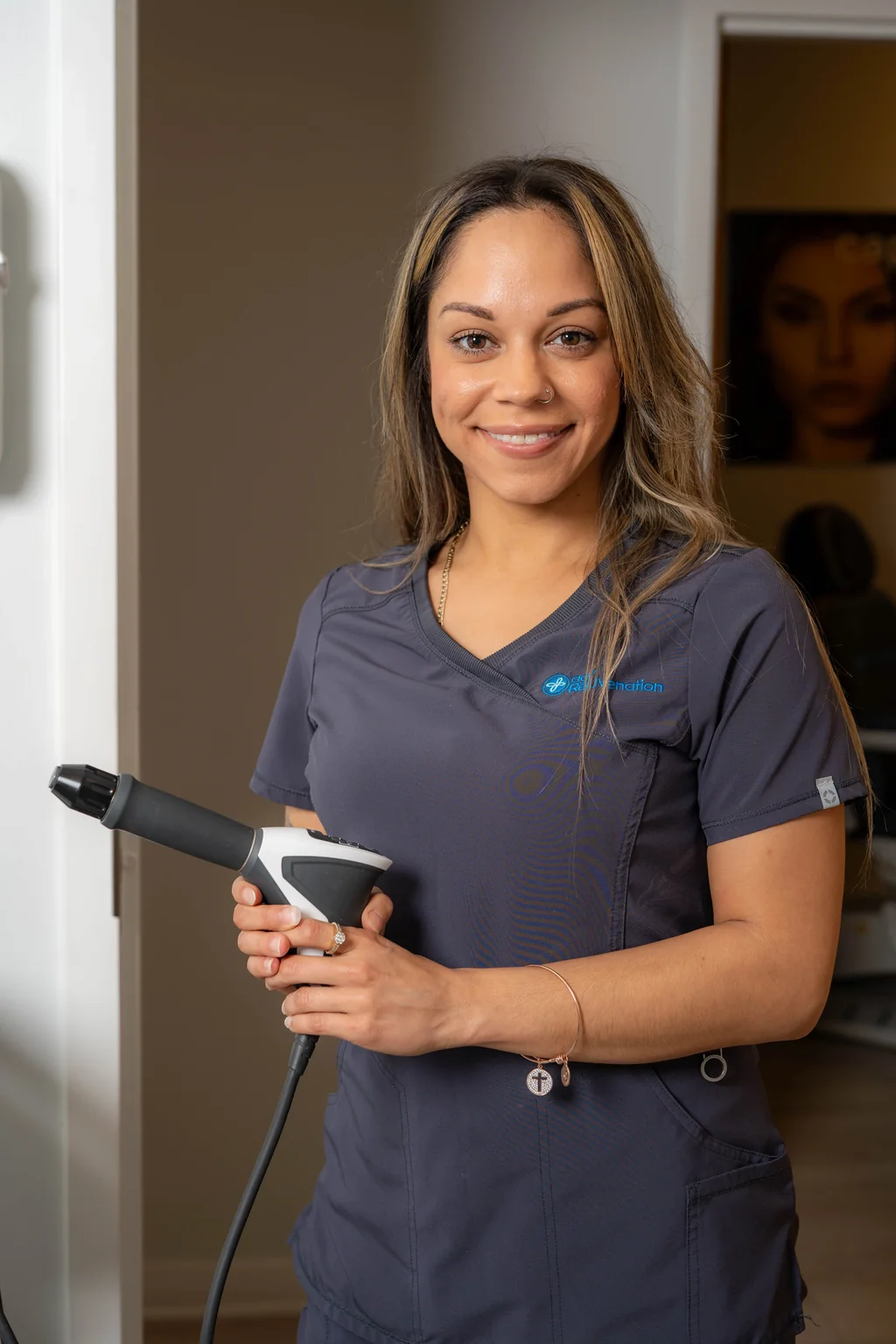
At AgeRejuvenation, shockwave is delivered with a hand-held device that aims acoustic waves precisely at the treatment area. The waves pass through the surface of the skin without damaging it, reaching the deeper tissue where repair signals are needed. Research summarized by the National Library of Medicine describes how extracorporeal shockwave therapy drives angiogenesis and tissue regeneration through a process called mechanotransduction, where mechanical force is converted into a biological repair signal.
How Does Shockwave Therapy Work?
Answer: Shockwave therapy works by delivering rapid acoustic pulses that create controlled microtrauma in targeted tissue, which prompts the body to grow new blood vessels, remodel collagen, clear calcified or scarred areas, and improve local circulation so healthy repair can take place.
The key is that the treatment does not simply quiet a symptom. It activates the same biological pathways the body uses to heal an injury, then concentrates that activity exactly where it is needed. Because the response builds over time, improvements in vitality and tissue function usually develop over several days after each session and accumulate across a series of treatments.
What Conditions Can Shockwave Therapy Address?
Answer: Shockwave therapy is commonly used for tendon and soft-tissue injuries, calcific deposits, slow-healing wounds, restricted circulation, and age-related cellular decline. Its angiogenic and regenerative mechanism makes it useful wherever stalled blood flow or compromised tissue is the underlying problem.
For active patients dealing with overuse injuries or slow-healing tissue, shockwave therapy can accelerate the recovery timeline without downtime. The Cleveland Clinic notes that, in conditions like calcific tendonitis, shock waves are used to reduce pain and encourage tendon healing. Tendinopathy and similar overuse problems are a frequent reason patients are referred for the treatment, and conservative measures alone often fall short, as the clinical overview of tendinopathy from Cleveland Clinic outlines.
Who Is a Good Candidate for Shockwave Therapy?
Answer: Good candidates are patients with chronic or slow-healing soft-tissue concerns, restricted circulation, or age-related tissue decline who want a non-invasive option and prefer to avoid surgery, injections, or long-term medication.
Shockwave therapy is not right for everyone. Active infection in the area, certain bleeding disorders, and some other medical conditions can make it unsuitable, which is why an assessment comes first. The National Institute of Arthritis and Musculoskeletal and Skin Diseases explains how overuse and soft-tissue injuries develop and respond to treatment, and that context helps your provider judge whether the mechanism fits your specific concern.
What Are the Benefits of Shockwave Therapy?
Answer: The main benefits of shockwave therapy are structural tissue repair rather than symptom masking, improved circulation, no surgery or downtime, short 20-minute sessions, and compatibility with other regenerative care.
Most conventional approaches to tissue damage manage symptoms, with anti-inflammatories reducing swelling and rest taking stress off the area. Shockwave therapy instead triggers the biological process behind actual structural repair, including new blood vessels, collagen remodeling, and clearance of scarred or calcified tissue. The vascular improvement can also extend beyond the treated spot over time, supporting healthier tissue more broadly.
What Happens During a Shockwave Therapy Session?
Answer: During a shockwave therapy session, a provider applies a hand-held device to the treatment area and delivers acoustic pulses for roughly 20 minutes. Most patients feel only mild pressure or vibration, no anesthesia is needed, and normal activities can usually resume the same day.
There is no incision, injection, or recovery period. Sessions run about 20 minutes, and because the treatment is non-invasive, patients managing busy schedules can fit it in without arranging downtime. Your provider may adjust the intensity and the number of pulses based on the area being treated and how your tissue responds.
How Many Shockwave Therapy Sessions Will I Need?
Answer: Most shockwave therapy protocols involve a series of sessions spaced over several weeks, with the exact number depending on the concern being treated and your individual response. Your provider sets a specific plan at your assessment.
Because the repair response builds with each session, a single visit rarely tells the full story. Many patients notice early improvements within a few days, while the more meaningful gains accumulate across the planned series. Maintenance sessions are sometimes added once the goal is reached, depending on the concern.
Are There Side Effects or Risks With Shockwave Therapy?
Answer: Shockwave therapy is generally well tolerated, and the most common side effects are temporary, including mild soreness, redness, minor bruising, or short-lived tingling in the treated area. Serious complications are uncommon when the treatment is appropriately screened and delivered.
Like any therapy, it is not suitable in every situation, which is why screening for active infection, certain bleeding disorders, and other conditions happens before treatment. If you have concerns about how shockwave therapy interacts with your health history, raise them at your assessment so your provider can confirm the approach is safe for you.
Shockwave Therapy vs. Other Tissue-Repair Options
Answer: Compared with surgery, injections, or rest alone, shockwave therapy is non-invasive, requires no downtime, and works by stimulating the body's own repair pathways rather than only relieving symptoms, though it typically requires a series of sessions to take full effect.
The table below compares common approaches to slow-healing tissue and circulation concerns at a high level.
| Approach | How it works | Invasiveness | Downtime |
|---|---|---|---|
| Shockwave therapy | Acoustic waves trigger angiogenesis and tissue repair | Non-invasive | None, resume the same day |
| Rest and anti-inflammatories | Reduces swelling and stress on the area | Non-invasive | Minimal, but symptom-focused |
| Injection therapies | Delivers medication or biologics into tissue | Minimally invasive | Short, varies by type |
| Surgery | Repairs or removes damaged tissue directly | Invasive | Often weeks of recovery |
The right choice depends on your concern, your history, and your goals. Shockwave therapy is frequently chosen by patients who want to avoid the surgical route and prefer a treatment that supports repair from within.
How Much Does Shockwave Therapy Cost?
Answer: Shockwave therapy for general wellness and cellular optimization is typically not covered by insurance, and the total cost depends on the concern being treated and the number of sessions in your protocol. Pricing is reviewed before you begin.
Because plans are built around your specific goals, our team walks you through current pricing and any membership options that may apply before you commit, so there are no surprises. The aim is a course of treatment you can complete in full, since the benefit accumulates across the series rather than from a single visit.
Why Choose AgeRejuvenation for Shockwave Therapy?
Answer: AgeRejuvenation is built to address the biology of aging and cellular decline rather than only manage symptoms, and shockwave therapy is delivered as one coordinated tool within a broader, physician-led plan.
Our team uses advanced diagnostics to understand what is driving your concern, then applies shockwave therapy where the mechanism genuinely fits. Care is led by Chief Medical Director Dr. Dawn Ericsson, MD. Because shockwave improves the cellular environment that other therapies work in, patients who combine it with hormone optimization or regenerative peptide protocols often see a compounded effect. Shockwave therapy is one of several modalities within our regenerative medicine program, which also includes PRP, stem cell, and nervous system reset options. If you are ready to give your tissue the repair signal it needs, book a session and we will assess your goals and build a protocol from there.
Explore more in our wellness center services .