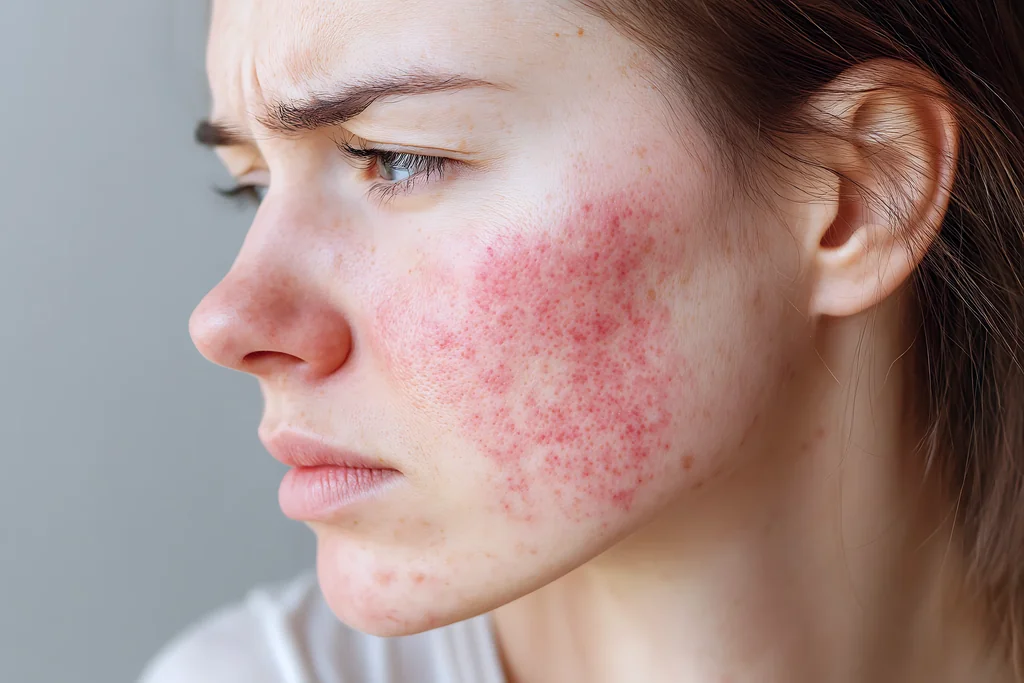
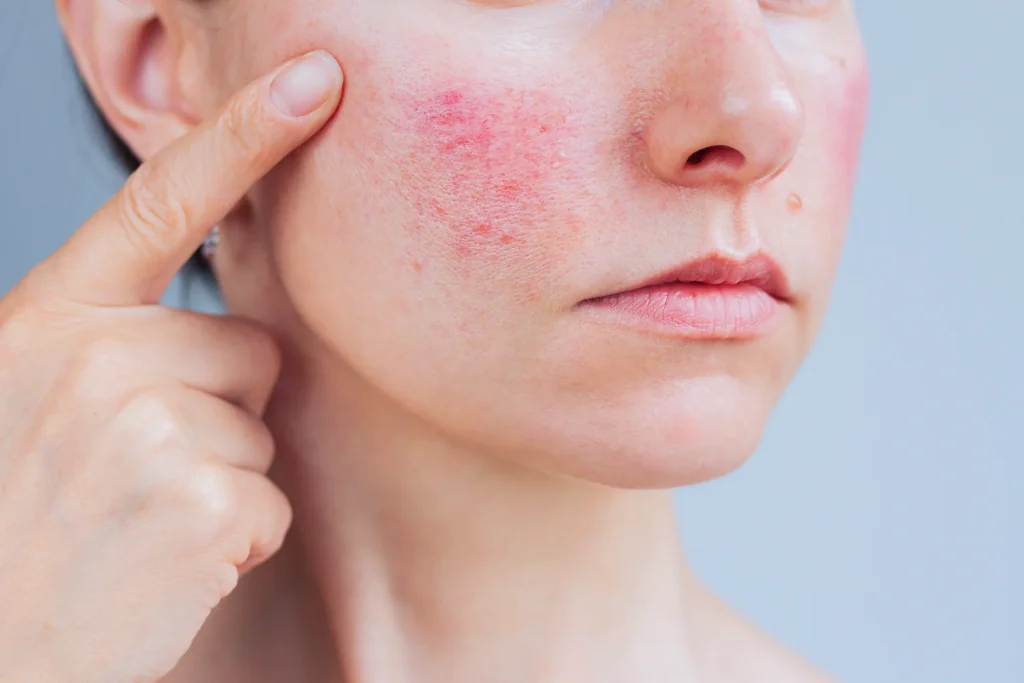
Rosacea is a chronic inflammatory skin condition that causes persistent facial redness, visible blood vessels, flushing, and acne-like bumps, most often on the cheeks, nose, chin, and forehead. It stems from an overactive immune response, dilated blood vessels, and sometimes Demodex mite overgrowth. Triggers worsen flares, but targeted treatment can calm inflammation and reduce visible vessels at the tissue level.
Understanding Rosacea
Answer: Rosacea is a chronic inflammatory skin condition that causes recurring facial redness, visible blood vessels, flushing, and sometimes acne-like bumps. It is driven by an overactive immune response, dilated vessels, and in some cases Demodex mite overgrowth, not by poor hygiene.
It most often appears on the central face, the cheeks, nose, chin, and forehead, and it is more common in fair-skinned adults. While it cannot be cured, the right plan can calm the inflammation and shrink visible vessels so flares become far less disruptive. The National Institute of Arthritis and Musculoskeletal and Skin Diseases describes rosacea as a long-term condition that comes and goes in flare-ups. The first step is identifying your subtype and the triggers that set off your flares.
What causes rosacea?
Answer: Rosacea has no single cause. It develops from a combination of an overactive innate immune response, blood vessels that dilate too easily, a weakened skin barrier, and in some people an overgrowth of Demodex skin mites, layered on top of a genetic tendency.
These mechanisms feed each other, which is why rosacea becomes self-perpetuating once it sets in. Environmental triggers do not create the condition, but they set off the vascular and inflammatory cascade behind each flare. The Cleveland Clinic notes that common triggers include sun, heat, spicy food, alcohol, and stress. Family history and fair skin raise the baseline risk, but rosacea occurs across skin types and backgrounds.
What are the symptoms of rosacea?
Answer: The hallmark symptoms are persistent central-face redness, easy flushing, visible broken capillaries, and a burning or stinging sensation. Some people also develop acne-like papules and pustules, thickened skin, or dry, irritated eyes.
Symptoms tend to come and go in cycles of flare and calm. Rosacea is also classified into subtypes, and many people have features of more than one. The subtype matters because it guides treatment, vessel-focused redness responds to different therapies than bump-and-pustule patterns.
| Subtype | Main features | Common focus of treatment |
|---|---|---|
| Erythematotelangiectatic | Persistent redness, flushing, visible vessels | Calming inflammation, targeting vessels |
| Papulopustular | Acne-like bumps and pustules with redness | Reducing inflammatory lesions, barrier repair |
| Phymatous | Thickened, bumpy skin, often on the nose | Resurfacing and texture correction |
| Ocular | Dry, gritty, red, irritated eyes and lids | Lid care and inflammation control |
How is rosacea diagnosed?
Answer: Rosacea is diagnosed clinically. A provider examines the pattern, location, and history of your redness, flushing, vessels, and bumps. There is no single lab test, so diagnosis rests on the appearance of the skin and ruling out look-alike conditions.
Because rosacea can resemble acne, lupus, seborrheic dermatitis, or an allergic reaction, an accurate diagnosis is what keeps treatment on track, the wrong assumption can make symptoms worse. The Mayo Clinic explains that there is no specific test for rosacea and diagnosis is based on the skin exam and your history. Identifying your subtype and personal triggers during the visit shapes the plan that follows.
What are the treatment options for rosacea?
Answer: Treatment combines daily trigger management and gentle skincare with in-office therapies that target the vessels and inflammation behind the redness. Options range from laser and light treatments to regenerative and barrier-rebuilding therapies, chosen by subtype.
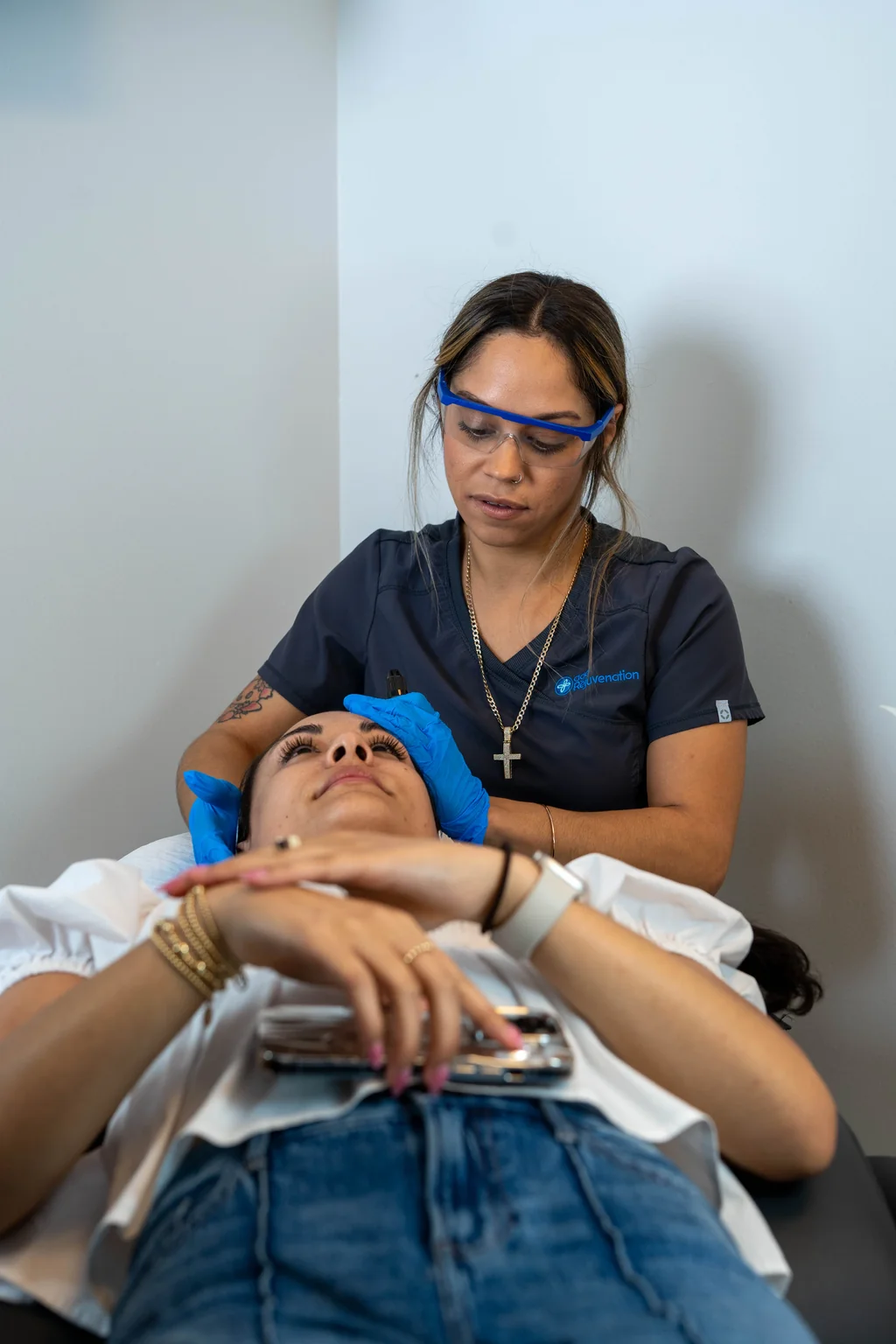
Topical products can quiet symptoms temporarily, but lasting improvement comes from addressing the structural changes in the skin. CoolPeel laser therapy targets abnormal vessels and resurfaces damaged outer layers with minimal downtime, while microneedling prompts collagen production to rebuild a stronger, less reactive barrier. For persistent reactivity, PRP therapy uses your own growth factors to normalize the skin's healing response. Most plans layer these with a customized skincare and sun-protection routine.
Can rosacea be reversed or cured?
Answer: Rosacea cannot be permanently cured, but it can be controlled so effectively that many people reach long stretches with little visible redness. The goal is fewer, milder flares, reduced vessels, and a calmer, more resilient skin barrier.
Treatment can reverse some of the visible damage, such as broken capillaries, and prevent the progression that turns occasional flushing into permanent redness or skin thickening. Because rosacea is chronic, results are maintained with periodic care and consistent trigger management rather than a one-time fix. Starting earlier, before vessels become permanent, generally leads to a better outcome.
When should you see a provider for rosacea?
Answer: See a provider when facial redness becomes persistent rather than temporary, when bumps or visible vessels appear, when burning and stinging worsen, or when your eyes feel dry, gritty, or irritated. Early evaluation prevents progression.
Rosacea tends to advance without treatment, with intermittent flushing evolving into fixed redness and chronic inflammation. Eye involvement deserves prompt attention because untreated ocular rosacea can affect vision. An evaluation confirms the diagnosis, identifies your subtype and triggers, and sets up a plan before symptoms become harder to reverse. You can book an appointment to start with a skin assessment.
How does rosacea connect to skin health and inflammation?
Answer: Rosacea reflects how reactive and inflamed your skin is overall. A compromised skin barrier, heightened immune activity, and vascular sensitivity make the skin quick to flush and slow to settle, which is why barrier repair is central to long-term control.
Strengthening the skin barrier reduces how easily triggers provoke a flare, and calming the underlying inflammation reduces both redness and the bumps that come with it. Care at AgeRejuvenation is led by Chief Medical Director Dr. Dawn Ericsson, MD, and her team approaches rosacea as a vascular and inflammatory condition rather than a cosmetic nuisance, matching treatment to your subtype, triggers, and skin type so flares become less frequent and less severe over time.
Common symptoms
Symptoms evaluated at AgeRejuvenation include:
How we treat rosacea
Care plans are personalized to the root cause. Treatments include:
- CoolPeel laser therapy: CoolPeel laser treatment reduces facial redness and visible blood vessels by precisely targeting abnormal vessels and resurfacing the damaged outer skin layers. Advanced laser technology makes it possible to improve skin texture and reduce persistent redness with minimal downtime compared to traditional ablative resurfacing. For rosacea patients, the combination of vessel targeting and skin renewal is particularly effective.
- Microneedling: Microneedling creates controlled micro-injuries that trigger natural wound-healing and collagen production. When applied to rosacea-affected skin, this process helps restore the skin barrier, reduce inflammation over a series of sessions, and improve overall skin texture and resilience. Rebuilding the barrier reduces sensitivity to triggers over time.
- PRP therapy: PRP therapy uses concentrated growth factors from your own blood to accelerate skin healing and strengthen the skin barrier. For persistent rosacea, PRP helps normalize the healing response and improve the structural integrity of damaged facial skin, reducing long-term sensitivity and reactivity.