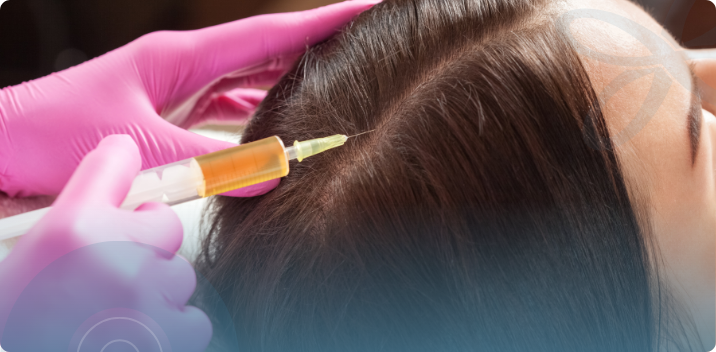
Stem cell therapy for hair restoration aims to improve the scalp environment so existing, underperforming follicles function better, rather than regrowing hair where follicles have died. It works best for early to moderate thinning with dormant follicles still present. Compared with PRP, medications, and surgery, the right choice depends on your pattern of loss, candidacy, and tracked, realistic outcomes.
If you are researching a regenerative treatment for baldness, you are probably looking for clear answers. You want a plan that respects biology, sets realistic expectations, and does not waste your time. Hair loss can feel cosmetic on the surface, but the frustration is physiological. Your follicles are changing, and your body is responding to stress, hormones, inflammation, and circulation in ways that are not always obvious day to day.
When you compare hair restoration options, it helps to start with what the therapy is designed to change, who tends to benefit, and how results should be measured.
What Causes Hair Loss at the Follicle Level?
Hair loss is not one event, it is a sequence. The most common type, androgenetic alopecia, follows a predictable pattern in genetically susceptible people, and the hormone dihydrotestosterone gradually shrinks affected follicles over repeated growth cycles, as described by NIH genetics resources on pattern hair loss. The earlier you understand what is happening, the easier it is to choose the right strategy.
Follicle Miniaturization and Why Thickness Changes First
In common patterns of thinning, follicles often keep producing hair, but each cycle produces a finer strand. That is miniaturization. Over time, the growth phase gets shorter, the resting phase becomes longer, and density drops. This progressive shrinking of the follicle is the defining feature of pattern hair loss in clinical descriptions of androgenetic alopecia. Many people notice it as a widening part, more scalp showing under bright light, or a softer hairline that feels less defined.
Hormones can play a role here, especially dihydrotestosterone in genetically susceptible follicles. But genetics is not the whole story. The scalp environment matters, too.
Scalp Microcirculation, Inflammation, and the Local Environment
Follicles are active tissue. They rely on oxygen delivery, nutrient flow, and a stable signaling environment. When microcirculation is limited or the scalp is inflamed, follicles may stay alive but behave like they are under-resourced. That can mean more shedding and slower recovery after stress, illness, or rapid weight change.
Stress Load and the Sympathetic Nervous System
Chronic pressure is not just mental. A high-alert state can bias the body toward short-term survival signals. The sympathetic nervous system can tighten blood vessel tone and shift priorities away from repair. In hair loss, that can show up as prolonged shedding or a stall in regrowth after a trigger event.
How Does Stem Cell Therapy Support Hair Restoration?
Stem cell based hair restoration is best judged by mechanism, candidacy, and measurable outcomes rather than broad promises. In short, the approach aims to improve the scalp environment around follicles that are still present, so they can function better, instead of forcing new hair where follicles have already died.
What Stem Cells Do in Regenerative Medicine
Stem cells are often discussed as builders, but in many clinical contexts they act more like communicators. They release growth factors and signaling molecules that can influence local inflammation, tissue repair behavior, and blood vessel support. Research summarized in an NIH review of stem cell based therapy for hair loss describes interest in reactivating follicle stem cells and improving the signaling environment, while noting that the field is still developing.
The goal is not a simple switch from bald to full hair. The purpose is to improve the environment that supports active follicles. Within a physician-led regenerative medicine program, that kind of care can be coordinated with diagnostics and a broader physiology plan.
Stem Cells for Hair Follicles and the Signaling Concept
When clinicians discuss stem cells for hair follicles, they are usually talking about supporting follicle function through signaling and changes in the scalp environment. The goal is often to improve the conditions around follicles that are still present but not performing well, rather than to recreate follicles that are no longer active.
Candidacy is the deciding factor. If an area has been smooth and inactive for years, there may be fewer viable follicles left to respond. The regenerative cell approach to hair restoration tends to favor early to moderate thinning where dormant follicles remain. That is why a careful assessment and realistic goal setting matter more than a bold promise. Both leading hair organizations and regenerative researchers describe this field as promising but still early, which is reflected in commentary from the American Hair Loss Association on stem cells in hair treatment.
What Outcomes Tend to Mean in Real Life
Results are typically discussed in terms of:
Visual density in photos taken under consistent lighting.
Hair caliber, meaning strand thickness.
Reduced shedding over time.
Improved coverage in thinning zones.
Some people expect a dramatic hairline reversal. A more realistic frame is follicle support and stabilization first, then gradual cosmetic improvement when the biology allows it.
Who Should Be Cautious, and Why Screening Matters
A responsible clinic screens for factors that can distort outcomes or increase risk. That includes scalp disease, uncontrolled metabolic issues, medication effects, and other health variables that change tissue recovery.
In many cases, you get better results when hair restoration is treated as part of a broader physiology plan, not a standalone procedure.
How Does Stem Cell Therapy Compare With PRP, Medications, and Surgery?
Patients often ask how stem cell therapy compares with other options. The short answer is that each works through a different mechanism, so the best choice depends on your pattern of loss and how much active follicle tissue remains.
PRP uses a concentrated portion of your own blood to deliver growth signals that support the scalp environment. It is usually done as a series, and outcomes often depend on consistency and good candidate selection.
Medications work through ongoing pressure control. Some reduce hormonal effects linked to follicle miniaturization, while others support the hair growth cycle and help limit shedding. These approaches are described among standard options in the American Academy of Dermatology guidance on hair loss treatment. They can be effective for the right pattern, but they require long-term adherence and a clear discussion of side effects.
Surgical hair restoration relocates hairs from a stable donor zone to areas with visible loss. It can improve coverage when donor density and pattern fit, but it does not change the biology affecting native hairs.
A stem cell based approach may be considered when your priority is scalp environment support and follicle performance, especially in diffuse thinning. For some patients, combination strategies make sense. The deciding factor is not the trend, it is whether the mechanism matches your pattern.
Why AgeRejuvenation Fits Central Florida Patients
AgeRejuvenation is built for people who want clear reasoning. We operate as a functional medicine clinic, which means hair restoration decisions can be supported by medical oversight, diagnostics, and physiology-based planning under one roof. Our stem cell hair restoration care is structured around candidacy, tracking, and realistic goals.
Locations
1155 Nikki View Drive, Brandon, FL 3351
220 N Howard Ave, Tampa, FL 33606
1940 Bruce B. Downs Blvd, Wesley Chapel, FL 33544
5730 Hamlin Groves Tr #176, Winter Garden, FL 34787
1523 S Orange Ave, Orlando, FL 32806
For patients commuting through Tampa Bay and Central Florida, convenience is essential because consistency matters. If you are coming from Hyde Park, the Tampa location is straightforward via S Howard Ave.
For those in Brandon, the clinic near Nikki View Drive is practical for commuters using I-75. Wesley Chapel patients often appreciate being right on Bruce B. Downs Blvd. In Winter Garden, the Hamlin area location serves growing neighborhoods with busy schedules. Winter Park patients often find the S Orange Ave corridor in Orlando's SoDo district easy to access between work and home routines.
In practice, hair loss care works best when it is personalized and tracked. Our hair restoration and stem cell therapy services are designed to support that kind of structured approach.

Frequently Asked Questions
Does stem cell therapy for hair loss actually work?
It can help in the right candidate, but it is not a guaranteed cure. The approach aims to support follicles that are still present and underperforming, not to recreate follicles that have already died. Research described in an NIH review of stem cell based hair therapy calls the field promising but still developing, so realistic goals matter.
Can stem cell therapy regrow hair on a completely bald area?
It is much less effective on long-bald, smooth scalp where follicles are no longer active. Stem cell based care works by improving the environment around living follicles, so areas with diffuse thinning and remaining dormant follicles tend to respond better than zones that have been inactive for many years.
Who is a good candidate for regenerative hair restoration?
Good candidates usually have early to moderate thinning with follicles that are still present but producing finer strands, a pattern typical of androgenetic alopecia. A responsible clinic screens for scalp disease, hormone issues, and medication effects before recommending treatment, because those factors change how tissue responds.
How long does it take to see results from stem cell hair therapy?
Hair grows slowly, so visible change is gradual rather than immediate. Most plans measure progress over several months using consistent photos, strand thickness, and shedding patterns. Stabilizing shedding and supporting follicle performance often come first, with cosmetic density improving later when the underlying biology allows it.
How is stem cell therapy different from PRP for hair?
Both support the scalp environment, but they use different inputs. PRP concentrates growth signals from your own blood, while stem cell based care focuses on signaling molecules that may influence inflammation, repair, and blood vessel support. Some patients combine approaches, and the right choice depends on your specific pattern of loss.
Conclusion
A regenerative treatment for baldness works best when it is approached with clear expectations and a plan that matches your biology. The right next step is to align the mechanism with your pattern of loss, confirm that there are follicles capable of responding, and choose outcomes you can track over time. When the strategy is grounded in physiology, the decision feels steady and informed, not rushed.
If you want a medically guided procedure that treats hair loss as a real biological process, not a cosmetic gamble, you can review your options and decide whether stem cell therapy for hair restoration fits your goals and your timeline.
Ready to take the next step?
Talk with the AgeRejuvenation team about a Stem Cell Therapy plan built around your labs and goals.