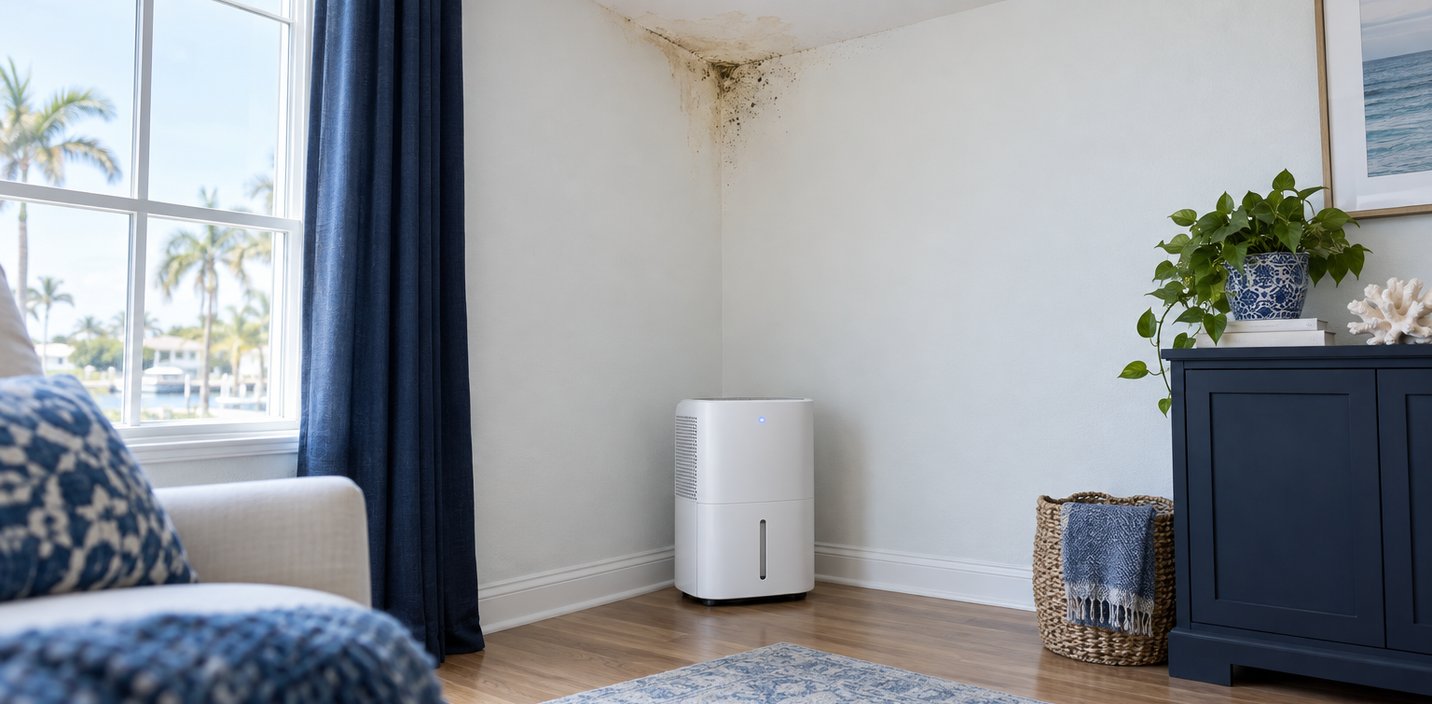
The best-documented signs of mold exposure are respiratory and allergic: stuffy nose, cough, wheezing, itchy eyes, skin rash, and asthma flares. Fatigue, brain fog, and headaches are often reported, but they overlap with many other conditions and the science on them is still debated. Fixing the moisture problem comes first, and any testing, including urine mycotoxin testing, is one piece of a broader medical evaluation.
The best-documented signs of mold exposure are respiratory and allergic: a stuffy nose, sore throat, cough, wheezing, burning or itchy eyes, skin rash, and asthma flares. Fatigue, brain fog, and headaches are also commonly reported, but they overlap with many other conditions, and research on them is still debated.
If you suspect mold, the two most useful steps are finding and fixing the moisture source and getting a medical evaluation that looks at the whole picture. Testing can add information, though no single lab result diagnoses "mold toxicity" on its own.
What Are the Signs of Mold Toxicity?
"Mold toxicity" is a common search term, not a formal medical diagnosis. Mold can affect health in a few different ways: through allergy, through irritation of the eyes, nose, throat, and lungs, through infection in people with weakened immune systems, and possibly through toxins called mycotoxins that some molds produce.
The symptoms people describe fall into two groups. One group is well supported by research. The other is widely reported and taken seriously by patients and some clinicians, but the evidence is less settled.
Symptoms with strong evidence
The CDC notes that for some people, mold can cause a stuffy nose, sore throat, coughing or wheezing, burning eyes, or skin rash. People with asthma or a mold allergy may have severe reactions.
In 2004, a literature review by the Institute of Medicine (now the National Academy of Medicine) found sufficient evidence of an association between damp indoor environments and upper respiratory symptoms, coughing, wheezing, and asthma symptoms in sensitized people.
Symptoms that are debated
Fatigue, trouble concentrating, headaches, poor sleep, and joint aches are often what lead people to search for mold symptoms. These complaints are real, and they can be disabling.
The EPA notes that symptoms other than the allergic and irritant types are not commonly reported from inhaling mold, and the same symptoms also occur with thyroid changes, hormone shifts, nutrient deficiencies, poor sleep, chronic stress, and inflammatory conditions. That overlap is exactly why a careful history matters.
10 signs people commonly report
Here are ten of the signs most often linked to mold exposure, with a note on how strong the evidence is for each:
Stuffy or runny nose and sinus congestion (strong evidence)
Sore or scratchy throat (strong evidence)
Cough (strong evidence)
Wheezing or chest tightness (strong evidence)
Burning, red, or itchy eyes (strong evidence)
Skin rash or itching (strong evidence)
Asthma flares in people who have asthma (strong evidence)
Ongoing fatigue that sleep does not fix (debated)
Brain fog and trouble concentrating (debated)
Frequent headaches (debated)
How Do I Know If I Am Sick From Mold?
No symptom on its own proves that mold is the cause. The clues that make mold more likely tend to come from your surroundings and your timeline.
A musty smell, visible growth, or water stains in your home, car, or workplace
A history of roof or plumbing leaks, flooding, or a damp crawl space
Symptoms that started after moving into a space or after a water event
Symptoms that ease when you are away for a while and return when you come back
Other people or pets in the same space having similar problems
When several of these line up, it is worth looking at the building and talking with a clinician. When none do, other causes of your symptoms deserve attention first.
Why Don't Doctors Believe in Mold Toxicity?
Many patients feel dismissed when they raise mold, so it helps to understand where the disagreement comes from. Mainstream allergy guidance accepts that mold plays a role in asthma, allergic rhinitis, sinusitis, hypersensitivity pneumonitis, and certain fungal infections. The debate centers on broader, toxin-driven illness.
The American Academy of Allergy, Asthma and Immunology's position paper put it this way: exposure to molds can cause disease through several well-defined mechanisms, while many newer mold-related illnesses remain largely or completely unproved. Testing is a big part of the concern.
A 2015 CDC report described a worker whose urine mycotoxin result led to a "mold toxicity" diagnosis, while inspectors found no water damage or significant mold in her office. The report notes that there is no FDA-approved test for mycotoxins in human urine.
Both things can be true at once. Your symptoms deserve a real evaluation, and test results deserve careful interpretation. The most useful approach treats mold as one possible contributor, checked alongside other common causes.
Bring what you know about the building to your visit: photos of leaks or stains, dates of any flooding, and inspection or remediation reports. Those details help your clinician weigh mold against the other explanations for how you feel.
Will Mold Show Up in Bloodwork?
Routine blood tests do not measure mold or mycotoxins. They can still help by ruling out other explanations for fatigue and brain fog, such as thyroid problems, anemia, or blood sugar issues.
Urine mycotoxin testing measures certain mold-derived toxins your body is excreting. Our mycotoxin mold testing can be considered for appropriate patients as part of a more complete evaluation. The results are reviewed alongside your symptoms, health history, other lab findings, and known exposures.
What testing can and cannot tell you
A urine result shows exposure to specific mycotoxins. It cannot show where that exposure came from or prove that it is causing your symptoms.
Food is one reason context matters. A Swedish study of 252 adults found that exposure to mycotoxins is common, with 69% carrying more than one, since molds can contaminate crops before harvest or in storage. A positive result is a reason to look closer, and it is read with that background in mind.
For patients whose history points to a wider range of exposures, Total Tox Burden screening looks at mold mycotoxins together with heavy metals and persistent organic pollutants.

When to See a Doctor Right Away
Most mold-related symptoms are uncomfortable and build slowly. Some situations call for prompt care.
The CDC notes that people with asthma or mold allergy may have severe reactions, and that people with weakened immune systems or chronic lung disease can develop lung infections from mold. Workers exposed to large amounts of mold may develop fever or shortness of breath.
Seek urgent care for trouble breathing, wheezing that does not settle with your usual inhaler, a high fever with cough, or coughing up blood.
Fix the Source First
Ongoing exposure undercuts any treatment plan, so the home or workplace comes first. The EPA's guidance is simple: the key to mold control is moisture control.
Dry water-damaged areas and items within 24 to 48 hours to prevent mold growth
Keep indoor humidity below 60 percent, ideally between 30 and 50 percent
Keep air conditioning drip pans clean and drain lines flowing
Fix roof, window, and plumbing leaks promptly
Get professional help if mold covers more than about 10 square feet or follows significant water damage
You usually do not need to test the mold itself. The EPA says that when mold is visible, sampling is unnecessary in most cases, and the CDC adds that no matter what type of mold is present, it needs to be removed.
Why Florida homes need extra attention
Florida's long, humid summers, afternoon storms, and hurricane season keep moisture control a year-round job. Air conditioners pull water out of the air, so a clogged condensate line or a dirty drip pan can quietly create a damp spot.
After any storm flooding, the 24 to 48 hour drying window matters most. A basic humidity meter from a hardware store can tell you whether a room is staying in the safer range.
How to Detox From Mold
The most important step is ending the exposure. Your liver, kidneys, gut, and lungs are the body's built-in systems for processing and clearing unwanted substances, and they work best when the source is gone.
Evidence for specific mold detox products and protocols is limited. Daily habits that support your body's normal functions are a reasonable foundation:
Drinking enough water
Eating fiber-rich, nutrient-dense foods
Regular physical activity
Consistent, sufficient sleep
Managing stress
Cutting unnecessary exposure to household chemicals and plastics
Any medical treatment beyond these basics should be guided by a clinician who has reviewed your history and results.
Some patients also ask about Cellular Plasma Recharge, our name for the therapy formerly known as EBOO, which is offered only at our South Tampa clinic. It is a separate wellness therapy, and we do not offer it as a treatment for mold illness. You can read about how Cellular Plasma Recharge works on its service page.
A Broader Look at Persistent Symptoms
Persistent symptoms rarely have a single cause. When fatigue, poor focus, congestion, or slow recovery have not been explained by routine testing, we look at several areas together: hormones, thyroid function, nutrition, inflammation, gut health, sleep, stress, and environmental exposures.
Our environmental toxin testing can add information when your history suggests chemicals or metals may play a role. If exhaustion is your main complaint, our overview of chronic fatigue covers other causes worth checking.
Mycotoxin testing, on its own or as part of Total Tox Burden screening, is available at all five of our clinics: South Tampa, Brandon, Wesley Chapel, Winter Garden, and Orlando. To schedule an evaluation, call 888-681-6521.

Frequently Asked Questions
What are the first signs of mold exposure?
The earliest signs are usually allergy-type symptoms: a stuffy or runny nose, sneezing, itchy or watery eyes, a scratchy throat, or a skin rash. People with asthma may notice more wheezing or need their rescue inhaler more often. These tend to be worse in the affected building and ease away from it.
Can mold exposure cause brain fog and fatigue?
Many people with mold exposure report brain fog and fatigue, and those symptoms deserve evaluation. The research link is less established than it is for respiratory symptoms, and the same complaints often come from thyroid, hormone, sleep, or nutrient problems. Checking those causes at the same time gives you the clearest answer.
How long does it take for mold symptoms to go away?
It depends on the type of reaction and whether the exposure has truly ended. Allergy-type symptoms often ease once you are out of the moldy space or the remediation is complete. Symptoms that linger after the source is fixed are a reason to look for other contributing causes with your clinician.
Should I test my home or my body first?
Start with the building. If you can see or smell mold, focus on fixing the moisture problem and removing the growth, since sampling is usually unnecessary when mold is visible. Medical testing makes the most sense when symptoms persist or when your clinician wants more information alongside your history.
Can mold make you sick even if you cannot see it?
Yes. The EPA notes that mold can hide on the back side of drywall or wallpaper, on top of ceiling tiles, under carpet pads, around leaking pipes inside walls, and in ductwork. A musty smell, past water damage, or condensation problems are common clues to hidden growth. A professional inspection can help locate it when the signs point that way.
Is black mold more dangerous than other types of mold?
Many people worry most about "black mold," but the CDC's advice is the same for every type: if mold is growing indoors, remove it. The CDC does not recommend testing to identify the species, because health effects vary from person to person. Focus your energy on fixing the moisture problem and cleaning up the growth.
Sources
Centers for Disease Control and Prevention. Mold: health effects
U.S. Environmental Protection Agency. Mold and Health
Bush RK, et al. The medical effects of mold exposure (AAAAI position paper). J Allergy Clin Immunol, 2006. PubMed 16514772
Kawamoto M, Page E. Notes from the field: use of unvalidated urine mycotoxin tests for the clinical diagnosis of illness, United States, 2014. MMWR, 2015. PMC4584707
Wallin S, et al. Biomonitoring of concurrent mycotoxin exposure among adults in Sweden through urinary multi-biomarker analysis. Food Chem Toxicol, 2015. PubMed 26070503
U.S. Environmental Protection Agency. A Brief Guide to Mold, Moisture and Your Home
Institute of Medicine. Damp Indoor Spaces and Health. National Academies Press, 2004.
Ready to take the next step?
Talk with the AgeRejuvenation team about a Mycotoxin Mold Testing plan built around your labs and goals.