AgeRejuvenation pairs IV therapy with red light therapy to support inflammation recovery in Orlando. IV drips address whole-body inputs like hydration, electrolytes, and nutrients, while red light therapy targets tissue-level comfort and cellular signaling. The structured plan starts with screening, matches protocols to your goals, and uses progress checkpoints across multiple Central Florida locations.
If you are considering IV therapy for inflammation in Orlando, you are probably looking for a practical way to feel steadier day to day. For many high-performing adults, the issue is not a single symptom. It is a pattern: recovery feels slower, joints or muscles stay tight longer, energy dips in the afternoon, and focus is harder to sustain after a demanding week.
At AgeRejuvenation, we approach inflammation support as a systems problem. Sleep quality, hydration status, nutrient availability, circulation, and stress response all influence how your body handles workload.
That is why we often pair IV drips with red light therapy. This pairing is designed to support whole-body recovery and tissue comfort in one structured plan, with checkpoints to track your response.
Why Does Inflammation Show Up as Fatigue, Stiffness, and Slower Recovery?
Inflammation does not always announce itself with pain or swelling. Many people carry a low-grade inflammatory load that shows up instead as tiredness, stiffness, and recovery that drags. In adults, it often builds quietly from daily inputs that add up over time, such as long hours sitting, heavy training weeks, poor sleep depth, frequent travel, irregular meals, or sustained pressure at work.
Research summarized by Harvard Health on chronic inflammation links everyday lifestyle inputs with sustained inflammatory load, which helps explain why a run-down stretch can feel like more than simple fatigue. Clinically, we look at how inflammation changes performance and recovery, not only how it feels. Common patterns we hear include:
Workouts that leave you sore longer than usual.
Stiffness that lingers after a commute or desk-heavy day.
Brain fog that shows up mid-morning or mid-afternoon.
A run-down baseline despite consistent habits.
Recovery that varies more than it used to from week to week.
These patterns can involve shifts in hydration, electrolyte balance, oxidative stress, and nervous system tone. When that run-down baseline lingers for weeks, it can overlap with the day-to-day exhaustion patterns we evaluate as chronic fatigue, so screening matters before any plan is built. For some people, inflammation support starts with basic fundamentals. For others, adding targeted clinical support helps them stabilize faster while they tighten the foundations.
The Clinical Rationale for Pairing IV Therapy With Red Light Therapy
We use a combined approach based on your goals, health history, and how your body tends to respond under load. The two services target different layers of the same recovery picture.
Our intravenous infusion service is often used to support whole-body factors such as hydration, electrolyte balance, and targeted nutrients that act as metabolic cofactors. Red light therapy, also known as photobiomodulation, is commonly used to support tissue-level comfort, microcirculation, and cellular signaling associated with recovery. A peer-reviewed review of photobiomodulation describes how red and near-infrared light may reduce inflammation and stimulate healing at the cellular level, which is the mechanism we lean on for the tissue-focused half of the plan.
Our IV therapy and vitamin drip protocols are designed around safety, clarity, and measurable goals. Both sit inside our broader wellness center menu, where recovery, hydration, and longevity services are coordinated rather than treated as one-off appointments.
Why Can IV Delivery Support System-Level Inflammation Load?
IV delivery helps with system-level load because it puts fluids and nutrients directly into the bloodstream, which sidesteps the variability of digestion. This can be useful when timing and dosing matter, especially for people who are managing a high workload or inconsistent recovery.
Oral intake still plays a key role, but absorption can vary based on digestion, meal composition, and routine. With a clinically monitored hydration drip, we can support hydration and targeted nutrient delivery in a more consistent way. Because the body can lose more fluids than it takes in during heavy training, travel, or hot Florida weather, restoring fluid balance is a sensible first step, and even mild dehydration can affect energy and concentration.
In an inflammation-support plan, we may prioritize:
Fluid balance to support circulation and day-to-day resilience.
Electrolytes that contribute to nerve signaling and muscle function.
Nutrients involved in energy production pathways.
Ingredients commonly used to support oxidative stress management.
Before we recommend IV therapy, we review your health history, medications, and goals. We also set expectations around timing. Some patients notice improved hydration and mental clarity the same day. Others describe the more meaningful change as a steadier baseline across the week, especially when the main driver is stress load, travel, or heavy training volume.
How Does Photobiomodulation Support Tissue-Level Calm and Recovery?
Photobiomodulation supports tissue-level recovery by using specific wavelengths of red and near-infrared light that interact with cellular targets involved in energy production and stress response. Clinically, we look at how it may influence mitochondrial signaling, ATP production, and microcirculation in the treated area.
For patients dealing with stiffness, soreness, or localized discomfort, this tissue-focused approach can complement hydration and nutrient delivery from IV therapy. It also fits into a full calendar because sessions are brief and typically require no recovery time. Cleveland Clinic describes red light therapy as an emerging treatment, so we frame it as supportive care rather than a cure, and we track real changes instead of promising fixed outcomes.
IV therapy is often used to support whole-body inputs like hydration and nutrient availability, while red light therapy is commonly used to support tissue comfort and recovery signals in targeted areas. We track your response over time so the plan stays grounded in real changes, not assumptions.
Why Timing After a Drip Can Matter for Some Patients
Red light therapy is commonly paired with IV therapy because it can fit into the same visit without adding downtime. When these services are combined, we structure the sequence around your comfort, your schedule, and the clinical objective we are targeting.
Physiologically, the pairing works as a layered plan. IV therapy focuses on whole-body inputs like hydration and targeted nutrient delivery that influence recovery capacity. Red light therapy focuses on tissue-level comfort and cellular signaling in specific areas. We keep the sequence consistent so the protocol is easy to repeat and the response is easier to track over time.
Orlando Access That Makes Consistency Real
Consistency is often the hardest part of a wellness plan. When care feels out of the way, even disciplined people struggle to stay on schedule. That is why we make access across Central Florida straightforward, with multiple locations and routes that fit real workdays.
If you live or work in Winter Park, you can find us at 1523 S Orange Ave, Orlando, FL 32806, close to Park Avenue and the surrounding business district. Many patients coming from Downtown Orlando, College Park, Baldwin Park, or near Orlando Health reach us easily via I-4 or main surface roads that work for a lunch break.
For those based in Horizon West or near Hamlin, our 5730 Hamlin Groves Tr #176, Winter Garden, FL location is a practical option, especially if you commute around Winter Garden Village or use the 429 corridor.
For patients who split time between cities during the week, our additional clinics also help with continuity:
220 N Howard Ave, Tampa, FL
1155 Nikki View Drive, Brandon, FL
1940 Bruce B. Downs Blvd, Wesley Chapel, FL
That multi-location setup helps when your calendar changes. It also supports long-term follow-through, which is where most people see the best return.
How Your Visit Flows From Intake to a Clear Protocol
We keep visits organized and calm, with a clear focus on safety, fit, and next steps.
Here is what the visit usually includes:
Focused Intake and Screening
We review your goals, symptoms, health history, medications, hydration habits, and what your week looks like in terms of stress, sleep, and physical demand.
Protocol Selection Based on Your Objective
We select an IV therapy approach aligned with your needs, then match a red light plan to the areas you want to prioritize and the schedule you can maintain.
Comfort and Monitoring During the Infusion
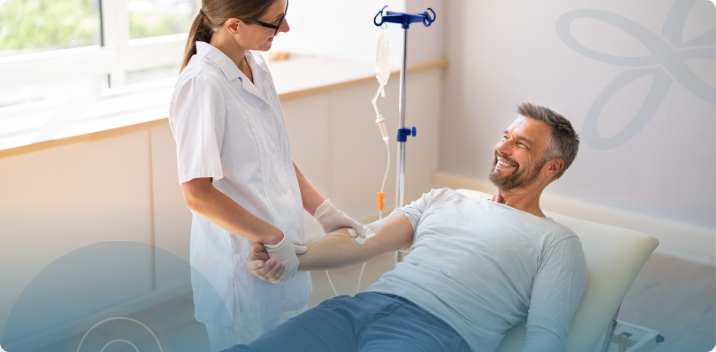
Our team monitors you throughout the IV infusion, answers questions in real time, and keeps the experience unhurried and comfortable.
Practical Guidance for the Next 24 to 48 Hours
You leave with simple recommendations that reinforce the visit, such as hydration targets, training pacing, and recovery priorities.
Progress Checkpoints
If you continue, we track your response over time and refine the plan using measurable feedback, so adjustments stay purposeful.
Frequently Asked Questions
Does red light therapy really work to reduce inflammation?
Evidence is still developing, but a research review of photobiomodulation reports that red and near-infrared light may lower inflammatory signaling and support healing at the cellular level. We treat it as supportive care, set realistic expectations, and track your response rather than promise fixed results.
How long does it take for red light therapy to work on inflammation?
Timelines vary by person and area treated. Some patients notice short-term comfort soon after a session, while a more meaningful change in soreness or stiffness usually reflects consistent sessions over several weeks. We use progress checkpoints so adjustments stay grounded in real, measurable feedback.
What is the fastest way to reduce inflammation in the body?
There is no single fast fix. The most reliable gains come from foundations: steady sleep, hydration, regular physical activity, and an anti-inflammatory eating pattern. Clinical support like hydration drips or red light sessions can help you stabilize faster while you tighten those daily habits.
Can I get IV therapy and red light therapy in the same visit?
Yes. Red light therapy is brief and typically requires no downtime, so it often fits into the same appointment as an IV drip. We structure the sequence around your comfort, your schedule, and the clinical objective, and we keep that order consistent so your response is easier to track.
Who should avoid red light therapy?
Red light therapy is generally well tolerated, but it is not right for everyone. If you have a light-sensitive condition, take photosensitizing medication, or have a history of skin cancer, tell our team during intake. We review your health history and medications first so the plan is matched safely to you.
Conclusion
For many adults managing a demanding schedule, IV therapy for inflammation in Orlando can fit into a clinically guided strategy, especially when it is paired with red light therapy for tissue-level support. What matters most is alignment: a protocol that matches your physiology, a cadence you can maintain, and a plan that is reviewed with clear checkpoints.
If you want an approach that respects your time and stays grounded in measurable feedback, you can review your goals with our team and confirm whether this combination makes sense for you. With the right structure, the focus stays on repeatable sessions, clear tracking, and thoughtful adjustments as your body responds over time.
Ready to take the next step?
Talk with the AgeRejuvenation team about a IV Therapy plan built around your labs and goals.