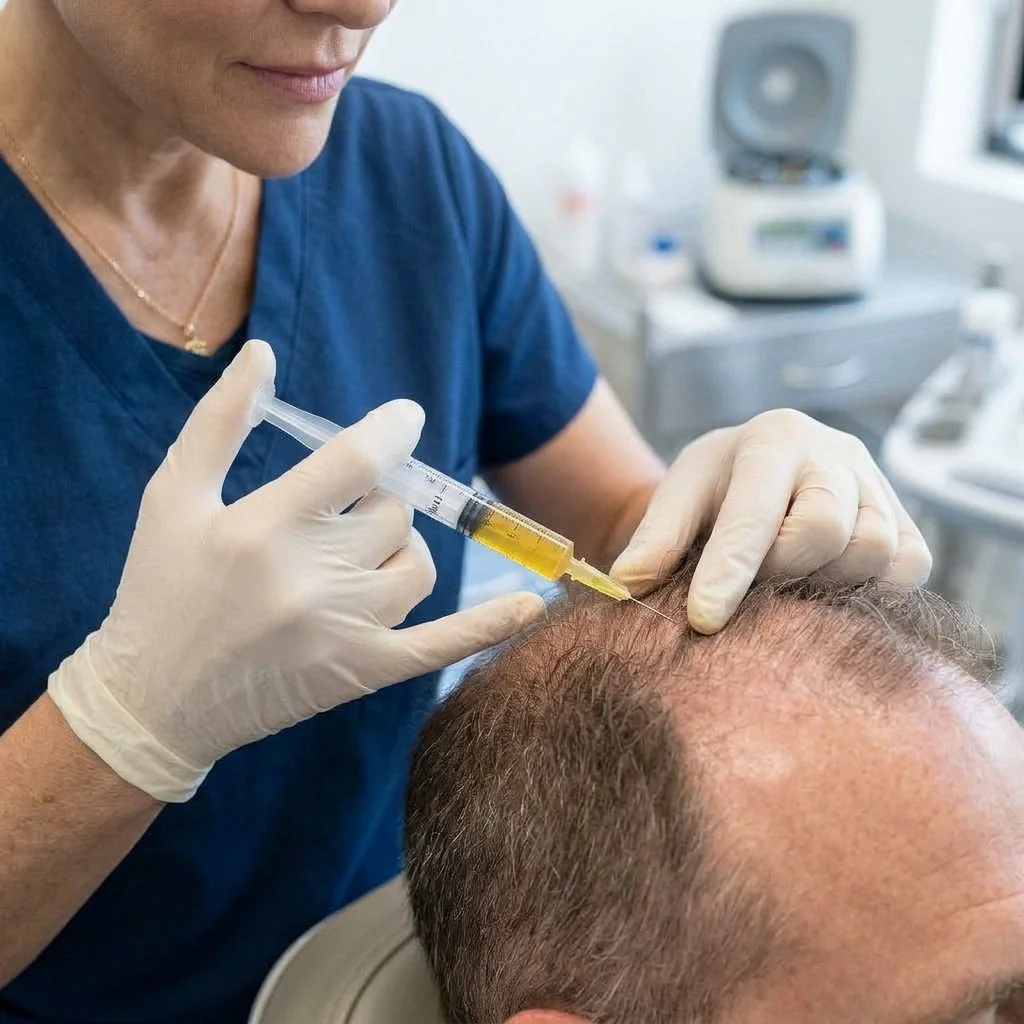
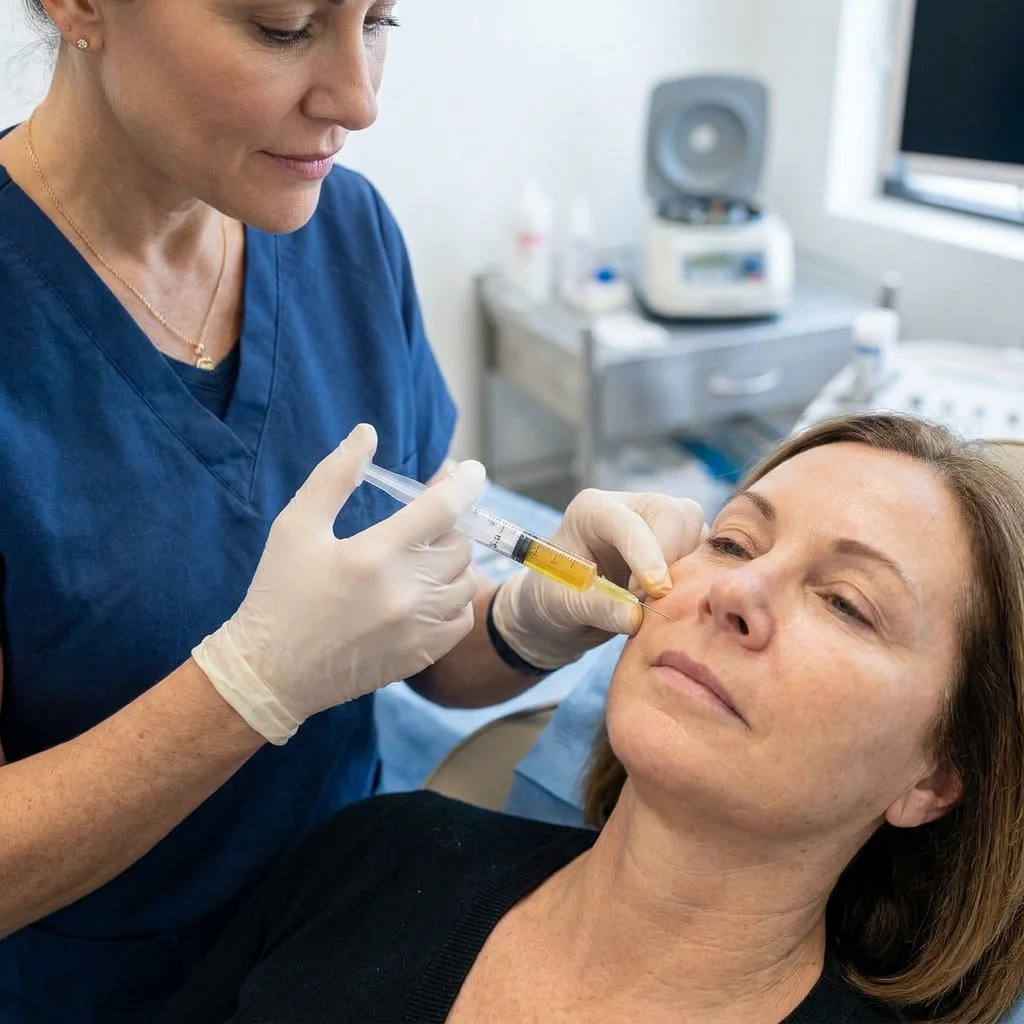
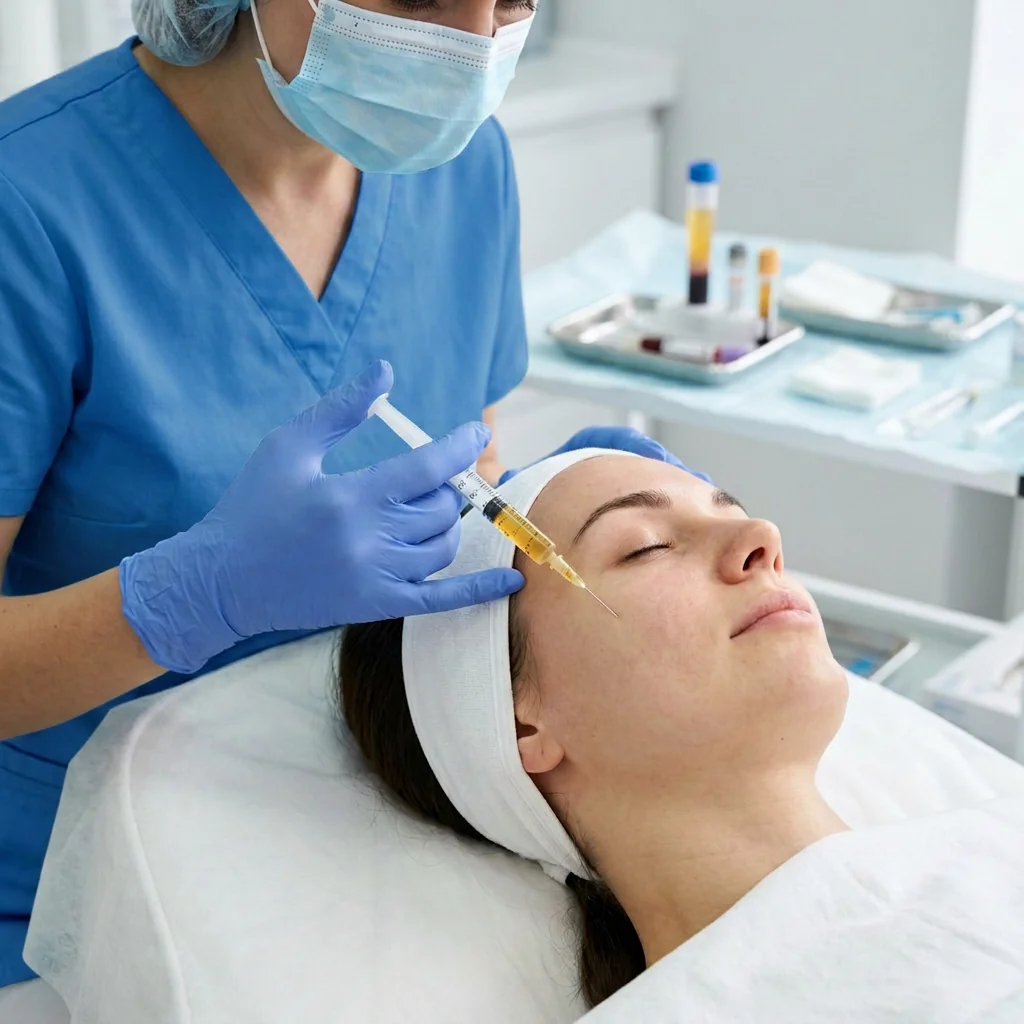
PRP therapy turns your own blood into a regenerative tool. A small sample is drawn, spun in a centrifuge to concentrate the platelets and their growth factors, and injected into the area you want to improve. Those signals prompt your body to build collagen, increase blood flow, and repair tissue. Because the material comes from you, the immune risk is low, and the same biology supports thinning hair, aging skin, and sexual health. This guide explains what PRP is, who is a candidate, how it works, the benefits, the risks, the cost, and what to expect.
At AgeRejuvenation, PRP therapy starts with your own biology, not an off-the-shelf product. We draw a small sample of blood, concentrate the platelets and their growth factors, and place that plasma where your body needs it most, then build a plan around your goals and your labs. This guide explains what platelet-rich plasma is, who is a good candidate, how it works, the benefits and the real risks, how it compares to similar regenerative options, what it costs, and what to expect.
What Is PRP Therapy?
Answer: PRP therapy, or platelet-rich plasma therapy, concentrates the platelets in a small sample of your own blood and injects that plasma into a target area, where its growth factors signal your body to repair and regenerate tissue.
A small amount of blood is drawn, processed in a centrifuge to separate and concentrate the platelets, and then injected into the treatment site. The concentrated growth factors in that plasma, including platelet-derived growth factor, transforming growth factor-beta, vascular endothelial growth factor, and epidermal growth factor, prompt the body to build collagen, improve blood flow, and rebuild tissue. Because the material comes from you, Mayo Clinic notes how platelet-rich plasma uses growth factors to aid healing with a low immunological risk profile. We treat PRP as one component of our broader regenerative medicine framework, coordinated with the rest of your care rather than used in isolation.
What Does PRP Therapy Treat?
Answer: PRP is most often used for thinning hair, aging or textured skin, and sexual health. The same regenerative growth factors drive follicle activity, collagen rebuilding, and new blood vessel formation depending on where the plasma is placed.
Hair restoration, skin rejuvenation, and sexual wellness are the most common goals, because each one depends on tissue that PRP is well suited to support. One treatment platform addressing several concerns is part of what makes PRP appealing, though the protocol changes meaningfully from one target to the next. Your provider reviews your history and goals before recommending where, and how often, PRP makes sense for you.
Does PRP Therapy Work for Hair Loss?
Answer: For many people with early androgenic alopecia, PRP can improve hair density and thickness over a series of sessions by increasing blood supply to dormant follicles and calming the inflammation that disrupts the growth cycle.
PRP delivered to the scalp can help reactivate follicles that have slowed but not fully stopped, which is why earlier treatment tends to work better than waiting until hair is long gone. A review published through the National Institutes of Health summarizes the evidence on PRP for hair restoration, with most protocols using a series of treatments followed by periodic maintenance. Results vary by person, and PRP is not a guarantee, which is why we set honest expectations before the first session.
How Does PRP Help Skin and Texture?
Answer: PRP stimulates fibroblasts to rebuild the collagen and elastin that decline with age, which can improve fine lines, firmness, tone, and overall skin texture, especially when paired with microneedling.
Fine lines, reduced elasticity, and uneven tone are partly driven by collagen loss in the dermis, and PRP signals the skin to rebuild that matrix. When combined with microneedling, the plasma penetrates deeper and amplifies the regenerative response, so the two are often used together. As with hair, the change is gradual and builds over weeks rather than appearing overnight.
How Does PRP Support Sexual Health?
Answer: Targeted PRP applications promote new blood vessel formation and enhance sensitivity in treated tissue, supporting sexual function for both men and women rather than masking symptoms.
For men, this is the foundation of treatments aimed at function and sensitivity. For women, similar applications support sensitivity and comfort. These uses work on the underlying tissue, and like other PRP protocols they typically improve over a course of treatment rather than in a single visit.
What Are the Benefits of PRP Therapy?
Answer: The main benefits of PRP are that it uses your own biology, carries a low risk of reaction, and produces gradual, natural-looking improvement in hair, skin, and tissue function without surgery.
For many patients the appeal is simple: results that look like a better version of you rather than an obvious procedure. Because PRP draws on your body's own repair processes, improvement tends to build steadily and read as natural. It also coordinates well with the rest of a longevity plan, since tissue regeneration is supported by good overall health and balanced hormones.
What Are the Side Effects and Risks of PRP?
Answer: PRP is minimally invasive and low risk because it uses your own blood, so allergic reaction or rejection is uncommon. The usual side effects are temporary redness, swelling, or mild bruising at the injection site.
Most people return to normal activity shortly after treatment. Because PRP is autologous, the risk of an immune reaction is very low compared with treatments that introduce outside material. Like any injection, it is not entirely without risk, which is why we follow strict preparation and handling standards and review your history before recommending it.
PRP vs. Stem Cell Therapy and Cortisone
Answer: PRP uses concentrated platelets and growth factors from your own blood to signal repair; stem cell therapy uses undifferentiated cells, and cortisone reduces inflammation without regenerating tissue.
| Approach | What it uses | Main goal | Source |
|---|---|---|---|
| PRP | Concentrated platelets and growth factors | Stimulate the body's own repair and regeneration | Your own blood |
| Stem cell therapy | Undifferentiated cells that can become other cell types | Replace or regenerate tissue | Donor or your own tissue |
| Cortisone injection | Corticosteroid medication | Reduce inflammation and pain short term | Synthetic medication |
PRP and stem cell therapy are both regenerative, but PRP focuses specifically on the growth factors already present in your blood. Cortisone, by contrast, calms inflammation rather than rebuilding tissue. The right choice depends on your goal, and your provider will explain why one fits your situation over another.
How Many PRP Sessions Will I Need?
Answer: Most hair plans start with three to four sessions spaced about a month apart, skin rejuvenation often uses a series of three, and sexual health applications may show change after one or two, with maintenance over time.
The exact schedule depends on your goal and how your body responds. Hair and skin protocols typically add periodic maintenance after the initial series to hold gains. Your provider outlines the expected number of sessions, the spacing, and the maintenance cadence during your consultation so you know what the full course involves.
How Much Does PRP Therapy Cost?
Answer: PRP for hair, skin, and sexual health is usually elective and self-pay, and the total cost depends on the target area and how many sessions your plan involves.
Because a hair series, a skin series, and a sexual health protocol differ in scope, pricing is quoted per plan rather than per drop. We review the full cost, including the number of sessions, before you begin so there are no surprises, and we build a plan you can realistically complete, since PRP works through a course of treatment rather than a single visit.
Why Choose AgeRejuvenation for PRP Therapy?
Answer: PRP works best when it is matched to your goals and coordinated with the rest of your care, which a one-size-fits-all clinic cannot offer.
Our approach begins with a diagnostic baseline, not a sales conversation. Your provider reviews relevant lab markers and health history before recommending PRP, and if it is appropriate you receive a plan that specifies session timing, targets, and how PRP fits alongside any hormone or peptide support you are receiving. We set honest expectations about gradual, natural-looking results, and we keep PRP within a broader longevity strategy rather than treating it as a standalone fix.
Explore more in our wellness center services .