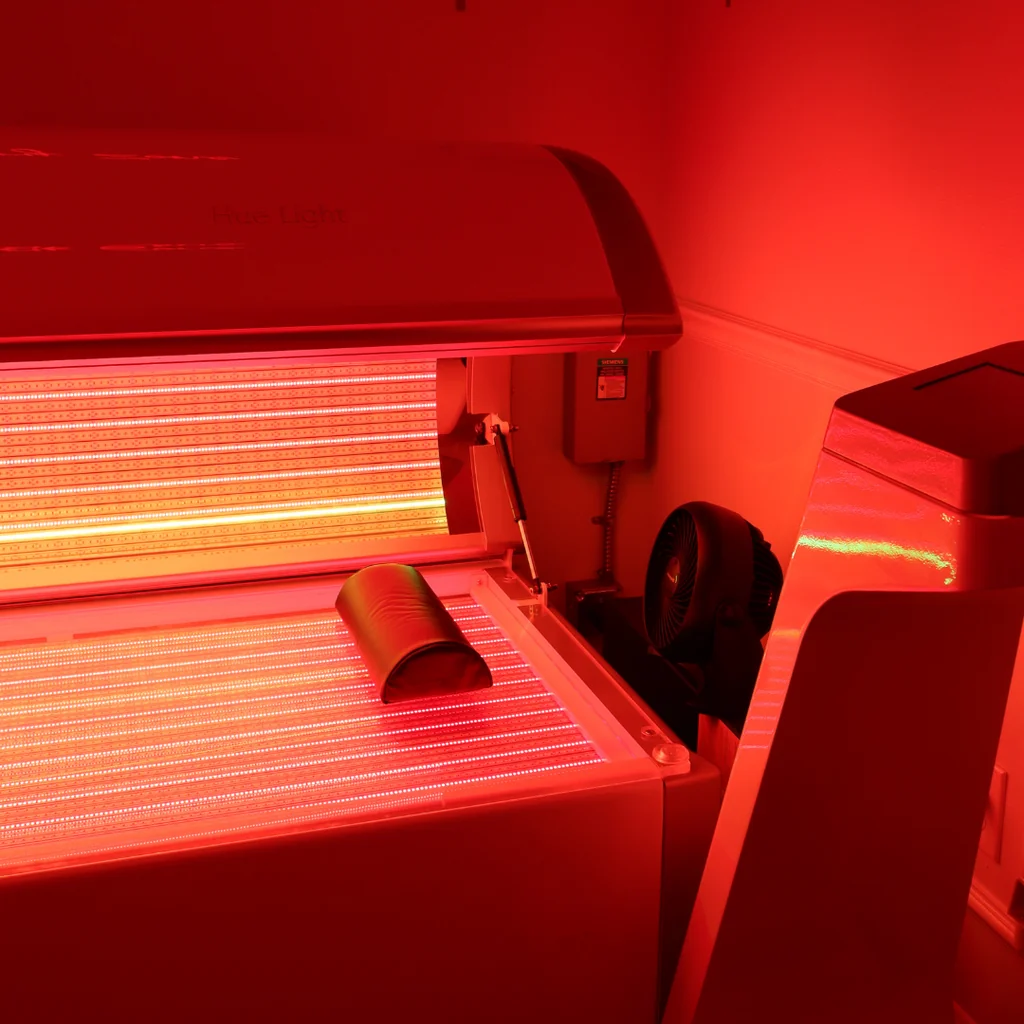
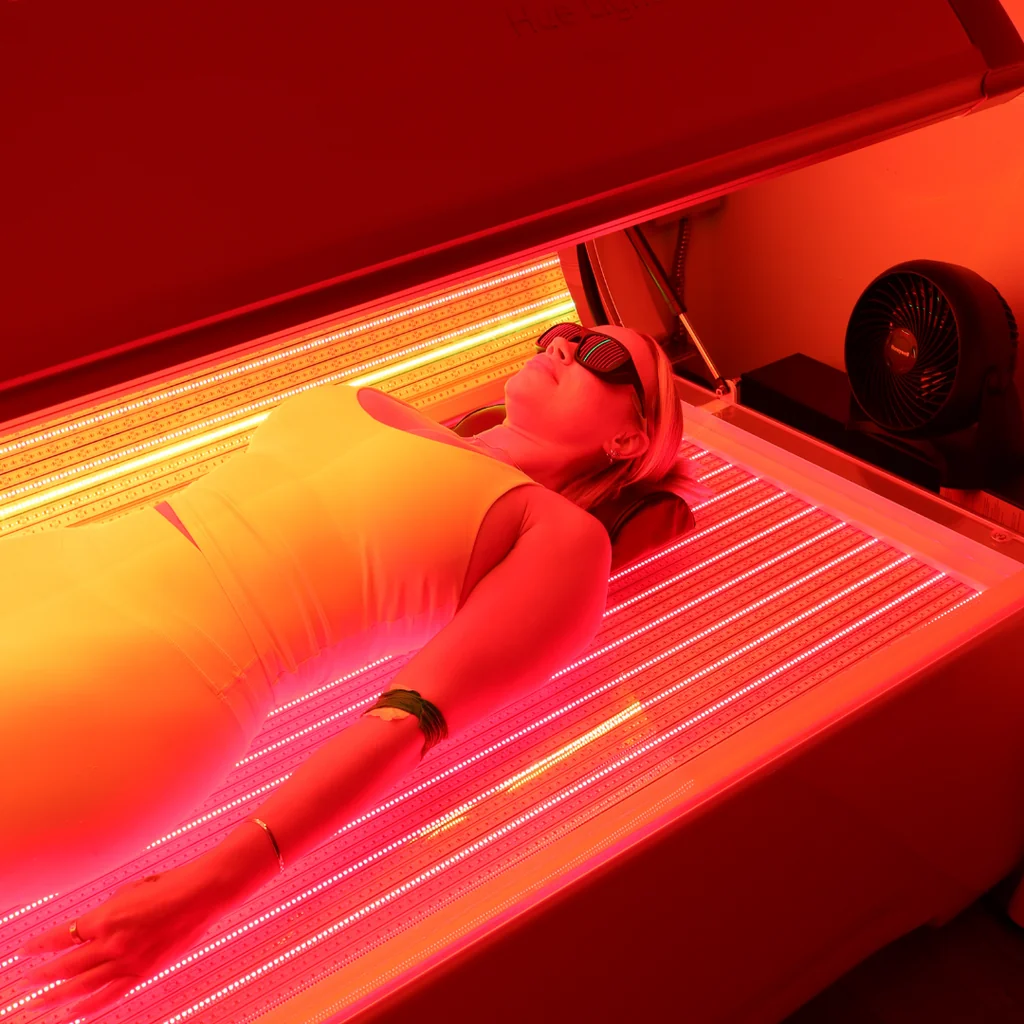
Your skin is showing wear. Recovery from workouts takes longer than it used to. Inflammation can feel like background noise you cannot turn off. Many people reach for topical solutions or rest and see limited results, because they are treating the surface when the real issue is cellular. Red light therapy works at the level of the mitochondria, the part of the cell that produces energy, which is why it can support skin renewal, recovery, and a calmer inflammatory baseline rather than just masking symptoms.
At AgeRejuvenation, red light therapy is delivered with clinical-grade equipment and a protocol matched to your goal, not a one-size panel. We choose the wavelength, power density, and session length that published research links to real cellular changes, then track how your skin and recovery respond over several weeks. This guide explains what red light therapy is, how it works, who it suits, the benefits, the real risks, how it compares to other light treatments, and what a course of sessions costs.
What Is Red Light Therapy?
Answer: Red light therapy, also called photobiomodulation, uses low-level red (630-700nm) and near-infrared (800-1100nm) light to penetrate the skin and stimulate the mitochondria inside your cells, increasing energy production and supporting repair without any invasive procedure.
Because the light activates cytochrome c oxidase, an enzyme in the mitochondria, cells produce more ATP, the fuel they use to repair and regenerate. The Cleveland Clinic describes how red light therapy works at the mitochondrial level to support skin and tissue health. At AgeRejuvenation we use targeted devices rather than generic consumer panels, because the wavelength, power density, and treatment duration all change the result. A session is painless, most patients feel a gentle warmth, and there is no recovery period.
How Does Red Light Therapy Work?
Answer: Red and near-infrared light passes through the skin and is absorbed by the mitochondria, which respond by making more ATP, reducing oxidative stress, and switching on anti-inflammatory and repair pathways inside the cell.
This is a photochemical effect, not a thermal one, so the light is doing real cellular signaling rather than simply heating the skin. The National Library of Medicine has reviewed photobiomodulation and collagen synthesis, reporting that the right wavelengths stimulate fibroblast activity and collagen production. What separates a clinical session from a home gadget is hitting the correct wavelength at the correct power density for the correct duration, since consumer devices often miss on at least one of those variables.
What Can Red Light Therapy Help With?
Answer: Red light therapy is used for skin aging and tone, fine lines, slow tissue recovery, joint and muscle soreness, and low-grade inflammation, because it targets cellular energy and repair rather than one symptom.
Red light stimulates the fibroblasts responsible for collagen and elastin, which is why patients seeking firmer skin and fewer fine lines often add it to a broader aesthetic plan. The same anti-inflammatory signaling makes it a useful recovery tool for active people who want to bounce back faster between training sessions. By raising mitochondrial ATP, it also addresses cellular energy at the source, which is why patients who pair it with NAD+ or peptide protocols often report it amplifies their overall results.
Who Is a Good Candidate for Red Light Therapy?
Answer: Good candidates are generally healthy adults looking to improve skin quality, speed recovery, or lower inflammation. It suits most skin types and tones because it uses no UV light, so there is no sunburn risk.
A short screening still matters. People with photosensitivity conditions, those taking photosensitizing medications, anyone who is pregnant, and patients with active skin cancer in the treatment area should discuss red light therapy with a provider before starting. Setting the right expectation is part of candidacy too, since cellular changes accumulate over a consistent protocol rather than appearing after a single visit.
What Are the Benefits of Red Light Therapy?
Answer: Reported benefits include improved skin firmness and tone, reduced fine lines, faster muscle and joint recovery, less inflammation, and better cellular energy, all from a painless session with no downtime.
For many patients the practical benefit is convenience layered on top of results: a ten to twenty minute session that requires no recovery and fits alongside other care. Skin quality and recovery tend to improve within a few weeks of consistent sessions, and because the effect is cumulative, a full protocol delivers more than an occasional one-off. We set realistic expectations and track your progress rather than promising overnight change.
Are There Side Effects or Risks?
Answer: Side effects are uncommon and usually mild, such as brief skin tightness, mild warmth, or eye strain when eye protection is skipped. Red light therapy is non-ionizing and does not damage skin the way UV exposure can.
The main precautions are sensible rather than alarming: use the provided eye protection, avoid treating over active skin cancers without medical guidance, and tell your provider about any photosensitizing medications. The American Academy of Dermatology notes that light-based skin treatments should be guided by a qualified professional to stay safe and effective. Done with the right parameters and supervision, red light therapy has a strong safety profile, which is one reason it has become a mainstay of non-invasive wellness care.
Red Light Therapy vs. Other Light Treatments
Answer: Red light therapy uses low-level red and near-infrared light to stimulate cells, which is different from UV tanning, blue light for acne bacteria, and laser resurfacing that intentionally injures tissue to trigger healing.
The table below shows how these light-based options differ in mechanism and purpose.
| Treatment | Light used | What it does | Typical goal |
|---|---|---|---|
| Red light therapy | Red and near-infrared (630-1100nm) | Stimulates mitochondria, no skin injury | Skin renewal, recovery, inflammation |
| Blue light therapy | Blue (around 415nm) | Targets acne-causing bacteria | Active acne |
| UV / tanning | Ultraviolet | Triggers melanin, can damage DNA | Tanning (carries skin-cancer risk) |
| Laser resurfacing | Concentrated laser | Intentionally injures skin to remodel | Deeper wrinkles, scars, downtime |
Unlike UV light, red light does not carry sunburn or DNA-damage risk, and unlike ablative lasers, it works without injuring the skin or requiring recovery time. That combination of effect without downtime is much of its appeal.
How Many Sessions and How Often?
Answer: Most protocols start with several sessions per week for a few weeks, then taper to a maintenance schedule. Skin goals often respond faster than deeper tissue recovery, so the exact cadence is matched to your target.
Consistency matters more than any single long session, because the cellular benefits build over time. Your provider maps out a starting frequency at your first visit and adjusts it based on how your skin and recovery respond, rather than locking you into a fixed number before anyone has seen results.
How Much Does Red Light Therapy Cost?
Answer: Red light therapy is usually self-pay because insurance does not cover wellness or aesthetic use, and the total depends on how many sessions your protocol calls for and whether you use a membership.
Because cost is tied to protocol length, we explain current pricing and any membership or package options before you commit, so there are no surprises. The aim is a plan you can sustain, since the value comes from a full course of sessions rather than a single appointment.
Why Choose AgeRejuvenation for Red Light Therapy?
Answer: Results depend on equipment and parameters, not just the idea of red light, and clinical-grade devices used under supervision produce changes that consumer panels often cannot.
Care is led by Chief Medical Director Dr. Dawn Ericsson, MD, and every session is guided by staff who understand the science behind the protocol. We calibrate our devices to the wavelength and power density shown in published research to be effective, then track your progress over the course of a protocol. Red light therapy is one tool within our full-spectrum wellness center program, where it integrates cleanly with hormone optimization, peptide therapy, and regenerative care rather than competing with them. If you want a session that actually does what it is supposed to do, book a consultation and we will explain exactly what to expect.
Explore more in our wellness center services .