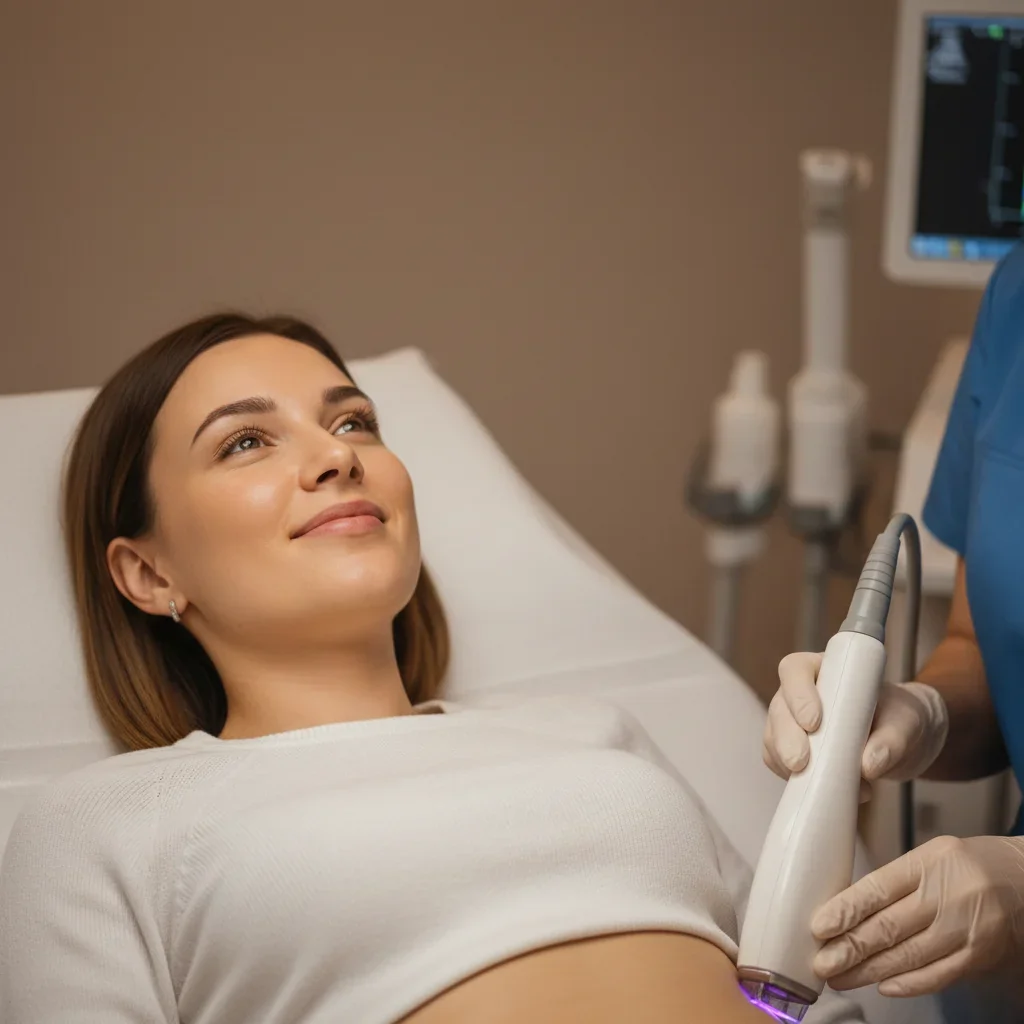
Vaginal laxity, often called vaginal looseness, is a loss of tone and elasticity in the vaginal walls and supporting pelvic floor. It most often follows childbirth or the estrogen decline of menopause, and can reduce sensation during intimacy, lower confidence, and contribute to urinary leakage. Non-surgical treatments such as radiofrequency rejuvenation and platelet-rich plasma can restore tone without surgery.
Understanding Vaginal Laxity
Answer: Vaginal laxity is the loosening and loss of elasticity in the vaginal walls and pelvic floor structures. The smooth muscle and connective tissue of the canal stretch or weaken, reducing tone and the friction that supports sensation during intimacy. It is among the most common concerns after childbirth and during menopause.
The structural components most affected are the vaginal lining, the underlying smooth muscle layer, and the pelvic floor musculature that supports the canal from the outside. When collagen production declines with age and estrogen loss, the tissue that once maintained firmness becomes looser, and when the pelvic floor weakens, the muscular support that creates tone decreases. The reassuring part is that both of those components respond to treatment. Non-surgical therapies work by stimulating the body's own regenerative capacity rather than by cutting and removing tissue.
What causes vaginal laxity?
Answer: The leading causes are vaginal childbirth, which mechanically stretches the canal, and the estrogen decline of menopause, which thins the tissue and slows collagen production. Aging, pelvic floor weakness, genetics, and chronic straining each add to the loss of tone.
Vaginal delivery is the single most frequent cause. The stretching that happens during birth, especially with multiple deliveries, larger babies, or instrumental assistance, creates structural changes that do not fully resolve on their own for many people. After menopause, falling estrogen weakens the tissue and reduces collagen, so the walls become thinner, less elastic, and less able to hold their original shape. Genetics influence baseline connective tissue quality, while weight fluctuations and chronic straining from coughing or heavy lifting place repeated load on pelvic floor structures. These factors compound, which is why laxity is usually multifactorial rather than traceable to one event. The American College of Obstetricians and Gynecologists describes how pelvic support problems involve the muscles and connective tissue of the pelvic floor.
How is vaginal laxity diagnosed?
Answer: Diagnosis is clinical. A provider reviews your symptoms and history, then performs a pelvic examination to assess vaginal tone, tissue quality, and pelvic floor strength, sometimes asking you to contract the muscles so support can be graded.
There is no single lab test for laxity, so the evaluation focuses on how the tissue looks and functions and on how the symptoms affect daily life and intimacy. A thorough assessment also screens for overlapping conditions, including pelvic organ prolapse, vaginal dryness from low estrogen, and stress urinary incontinence, because these often coexist and influence which treatment makes sense. Hormone testing may be added when menopausal changes are suspected, since the underlying estrogen status shapes the plan.
What are the treatment options for vaginal laxity?
Answer: Non-surgical options dominate today. Radiofrequency rejuvenation heats the tissue to stimulate new collagen, platelet-rich plasma injections use your own growth factors to regenerate tissue, shockwave therapy improves blood flow, and pelvic floor training rebuilds muscular support.
The right approach depends on whether your laxity is driven mainly by tissue quality, by muscular weakness, by hormone loss, or by a combination. Many plans combine modalities, for example pairing a collagen-stimulating treatment with pelvic floor work. The two non-surgical treatments offered here are vaginal rejuvenation treatment, which uses radiofrequency energy to remodel collagen, and the Intimate Wellness PRP at AgeRejuvenation, which uses platelet-rich plasma drawn from your own blood. Both stimulate the body's repair process rather than removing tissue, and both can be planned together when that fits your goals.
| Treatment | How it works | Often best for |
|---|---|---|
| Radiofrequency rejuvenation | Controlled heat stimulates collagen remodeling and tightens the vaginal walls | Tissue thinning and mild to moderate laxity |
| Intimate Wellness PRP | Concentrated growth factors from your own blood spur cellular regeneration | Reduced sensation, dryness, and tissue quality |
| Shockwave therapy | Acoustic energy improves local blood flow and tissue response | Supporting circulation and combination plans |
| Pelvic floor training | Strengthens the muscles that support the canal | Muscular weakness and mild stress leakage |
Is vaginal laxity reversible, and what is the outlook?
Answer: Laxity is often substantially improvable. Tissue does not heal back to a pre-childbirth state on its own, but collagen-stimulating and regenerative therapies can meaningfully restore tone, and the improvement builds over weeks to months as new collagen forms.
Because these treatments rely on your body's own regeneration, results are gradual rather than instant, and a standard radiofrequency course is commonly delivered in a few spaced sessions. Maintenance matters too. Pelvic floor strength is preserved with ongoing exercise, and where estrogen loss is a driver, addressing the hormonal side helps protect the gains. With a well-matched plan, most people see lasting improvement in tone, sensation, and confidence.
How does vaginal laxity connect to hormones and menopause?
Answer: Estrogen keeps vaginal tissue thick, elastic, and well-lubricated. As levels fall during perimenopause and menopause, the tissue thins and collagen production slows, so laxity frequently appears alongside dryness, irritation, and reduced elasticity.
This is why laxity that begins around the menopausal transition often responds best to a combined strategy. Tissue-focused therapy rebuilds structure, while attention to the hormonal environment supports the tissue so improvements last. Cleveland Clinic notes that low estrogen in menopause can cause vaginal dryness and thinning of the tissue. Identifying whether hormones are part of the picture is one reason a careful evaluation is worth more than choosing a treatment in isolation.
When should you see a provider about vaginal laxity?
Answer: Consider an evaluation when looseness, reduced sensation, or related symptoms begin to affect intimacy, confidence, or comfort, or when you notice mild urinary leakage. There is no need to wait for symptoms to become severe.
A consultation is also worthwhile if you are unsure whether your symptoms come from laxity, low estrogen, prolapse, or pelvic floor weakness, since the right treatment depends on the cause. Care here is led by Chief Medical Director Dr. Dawn Ericsson, MD, a board-certified OB/GYN, with a team experienced in women's intimate health and non-surgical rejuvenation. You can book an appointment to discuss your symptoms and which approach fits your anatomy and goals.
Common symptoms
Symptoms evaluated at AgeRejuvenation include:
How we treat vaginal laxity
Care plans are personalized to the root cause. Treatments include:
- Vaginal rejuvenation treatment: Non-surgical vaginal rejuvenation uses radiofrequency energy delivered through a specially designed handpiece to stimulate collagen production and tighten the vaginal walls. Sessions run 15 to 30 minutes with no downtime, and collagen remodeling continues for months after the standard three-session course.
- Intimate Wellness PRP at AgeRejuvenation: Intimate Wellness PRP uses platelet-rich plasma derived from your own blood to rejuvenate vaginal tissue and enhance sensation. The growth factors in PRP stimulate cellular regeneration, improve natural lubrication, and restore tissue sensitivity over several weeks.