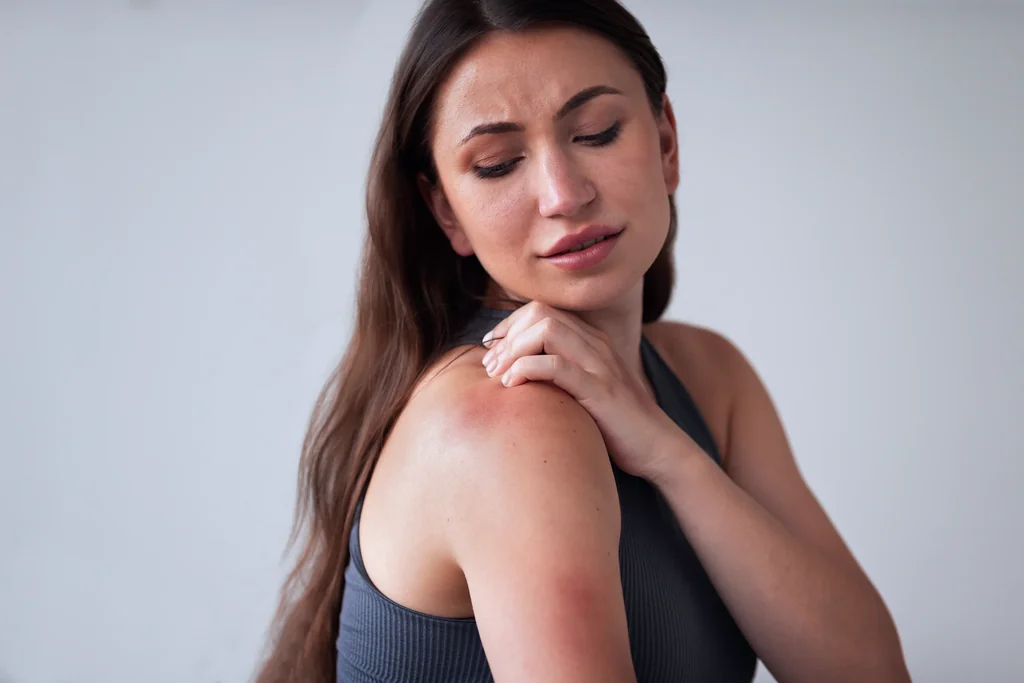
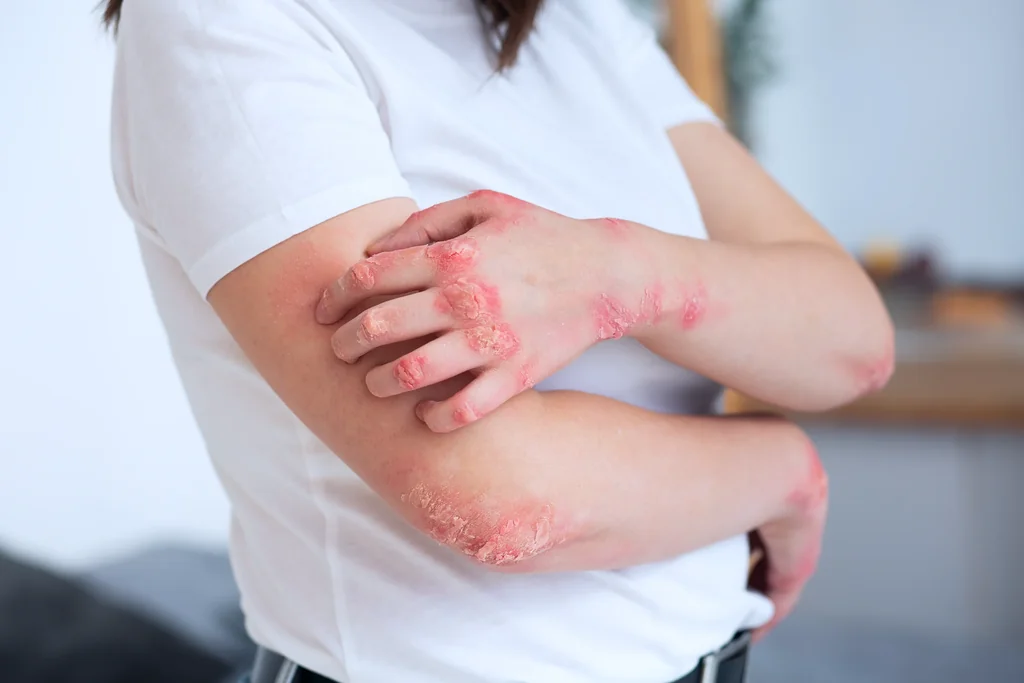
Eczema, or atopic dermatitis, is a chronic inflammatory skin condition that causes dry, itchy, red, and easily irritated skin that flares and settles in cycles. It develops when a weakened skin barrier and an overactive immune response let moisture escape and irritants penetrate, driving ongoing inflammation. Effective care strengthens the barrier and calms the immune triggers behind the flares.
Understanding Eczema
Answer: Eczema, also called atopic dermatitis, is a chronic inflammatory skin condition that leaves skin dry, itchy, red, and prone to recurring flares. It develops when a weakened skin barrier and an overactive immune response let moisture escape and irritants penetrate, driving persistent inflammation.
Eczema is common: the National Eczema Association estimates that more than 31 million Americans live with some form of eczema. It often begins in childhood and can persist into or first appear in adulthood. Persistent eczema rarely responds to over-the-counter creams alone, because those products quiet symptoms without strengthening the underlying barrier or calming the immune drivers behind the flares. Effective care treats eczema as more than a surface problem, addressing the barrier, the inflammation, and your individual triggers together so flares become fewer and milder over time.
What causes eczema?
Answer: Eczema is driven by a combination of a leaky skin barrier and an overactive immune system, usually on top of a genetic tendency toward atopic, reactive skin. Allergens, irritants, stress, hormones, and certain foods then trigger individual flares.
A healthy skin barrier locks in moisture and keeps irritants out. In eczema that barrier is impaired, often tied to a deficiency in the filaggrin protein, so water escapes and allergens and microbes penetrate. The immune system overreacts to those exposures and produces chronic inflammation, which makes the skin hypersensitive to triggers that would not bother most people. Cleveland Clinic notes that eczema flares are set off by triggers such as irritants, allergens, stress, and changes in temperature or humidity. Because eczema clusters with asthma and seasonal allergies in families, an inherited predisposition is common, but the day-to-day pattern is shaped by your specific triggers.
How is eczema diagnosed?
Answer: Eczema is usually diagnosed clinically, by examining the skin and reviewing your symptom history, flare pattern, and personal or family history of atopic conditions. There is no single lab test that confirms it, but targeted testing can pinpoint triggers.
A provider looks at where the rash appears, how it behaves over time, and whether it tracks with allergies, asthma, or specific exposures. The American Academy of Dermatology notes that atopic dermatitis is diagnosed by a dermatologist based on the skin and a discussion of symptoms, sometimes alongside patch testing or allergy testing. Identifying triggers matters because two people with the same diagnosis can flare for completely different reasons. Where diet is suspected, food sensitivity testing can reveal contributors that topical treatments alone will never resolve.
What are the treatment options for eczema?
Answer: Treatment combines daily barrier care and trigger avoidance with anti-inflammatory and barrier-rebuilding treatments. Foundational steps are fragrance-free moisturizing and gentle skincare; professional options strengthen the barrier and calm inflammation when basics are not enough.
The everyday foundation is consistent moisturizing, gentle cleansing, and avoiding known triggers like harsh soaps, allergens, and temperature extremes. When that is not enough, professional treatments help rebuild a more resilient barrier. A PRP Microneedling Facial at our medical spa uses your own platelet-rich plasma to deliver concentrated growth factors into the skin, supporting tissue repair and a stronger barrier. A microneedling program creates controlled micro-channels that stimulate collagen and barrier renewal so skin holds moisture and resists irritants more effectively.
| Approach | How it works | Best for |
|---|---|---|
| Fragrance-free moisturizing | Replaces lipids and seals in water to repair the barrier daily | Everyone with eczema, as the baseline routine |
| Trigger identification and avoidance | Removes the allergens, irritants, or foods that set off flares | Patients with frequent or unpredictable flares |
| PRP-based skin therapy | Delivers your own growth factors to support repair and barrier strength | Reactive, slow-healing skin that needs barrier rebuilding |
| Microneedling | Stimulates collagen and renewal to thicken and reinforce the barrier | Improving skin durability and moisture retention over time |
The right combination depends on how your skin behaves and what your triggers are, and the plan is adjusted as your skin responds.
Is eczema reversible, and what is the outlook?
Answer: There is no cure for eczema, but it is highly manageable. With the right barrier care, trigger management, and professional treatment, most patients reach long stretches of controlled, comfortable skin with fewer and milder flares.
Many children improve as they grow, while eczema that persists into adulthood usually needs ongoing, consistent management rather than a one-time fix. The realistic goal is control, not a permanent cure: a strong daily routine plus treatments that rebuild the barrier and calm inflammation can turn a cycle of constant flares into long, quiet periods. Consistency is what keeps the skin stable once it improves.
When should you see a provider about eczema?
Answer: See a provider when eczema disrupts your sleep, spreads, weeps or shows signs of infection, or stops responding to over-the-counter creams. These signal that barrier and immune drivers, rather than surface dryness alone, are keeping flares going.
Frustration with creams that helped for a while but never addressed why the skin kept breaking down is a common reason patients seek a medical evaluation. A thorough assessment looks at eczema as the visible result of barrier dysfunction, immune overactivity, and individual triggers working together, then builds a plan around all three.
How are skin health and inflammation connected to overall wellness?
Answer: The skin reflects whole-body factors, including stress, hormones, and diet, which all influence inflammation and barrier integrity. Addressing those internal drivers alongside topical care often improves how the skin behaves.
Psychological stress and shifting hormone levels can raise inflammation and weaken the barrier, which is why flares often track with stressful or hormonally active periods. Emerging research also links gut microbiome imbalances and food sensitivities to eczema in some patients. Care led by Chief Medical Director Dr. Dawn Ericsson, MD, can pair barrier-restoring skincare with testing for the dietary, hormonal, and environmental contributors behind your flares. Book an appointment to start with a thorough evaluation of your skin and your triggers.
Common symptoms
Symptoms evaluated at AgeRejuvenation include:
How we treat eczema
Care plans are personalized to the root cause. Treatments include:
- PRP Microneedling Facial at our medical spa: The PRP Microneedling Facial uses your own platelet-rich plasma to deliver concentrated growth factors into the skin, supporting tissue repair, reducing inflammation, and helping rebuild a stronger, more resilient skin barrier.
- Tampa microneedling program: SkinPen microneedling creates controlled micro-channels that stimulate collagen production and barrier renewal, improving skin texture and durability so the barrier is better able to retain moisture and resist irritants.