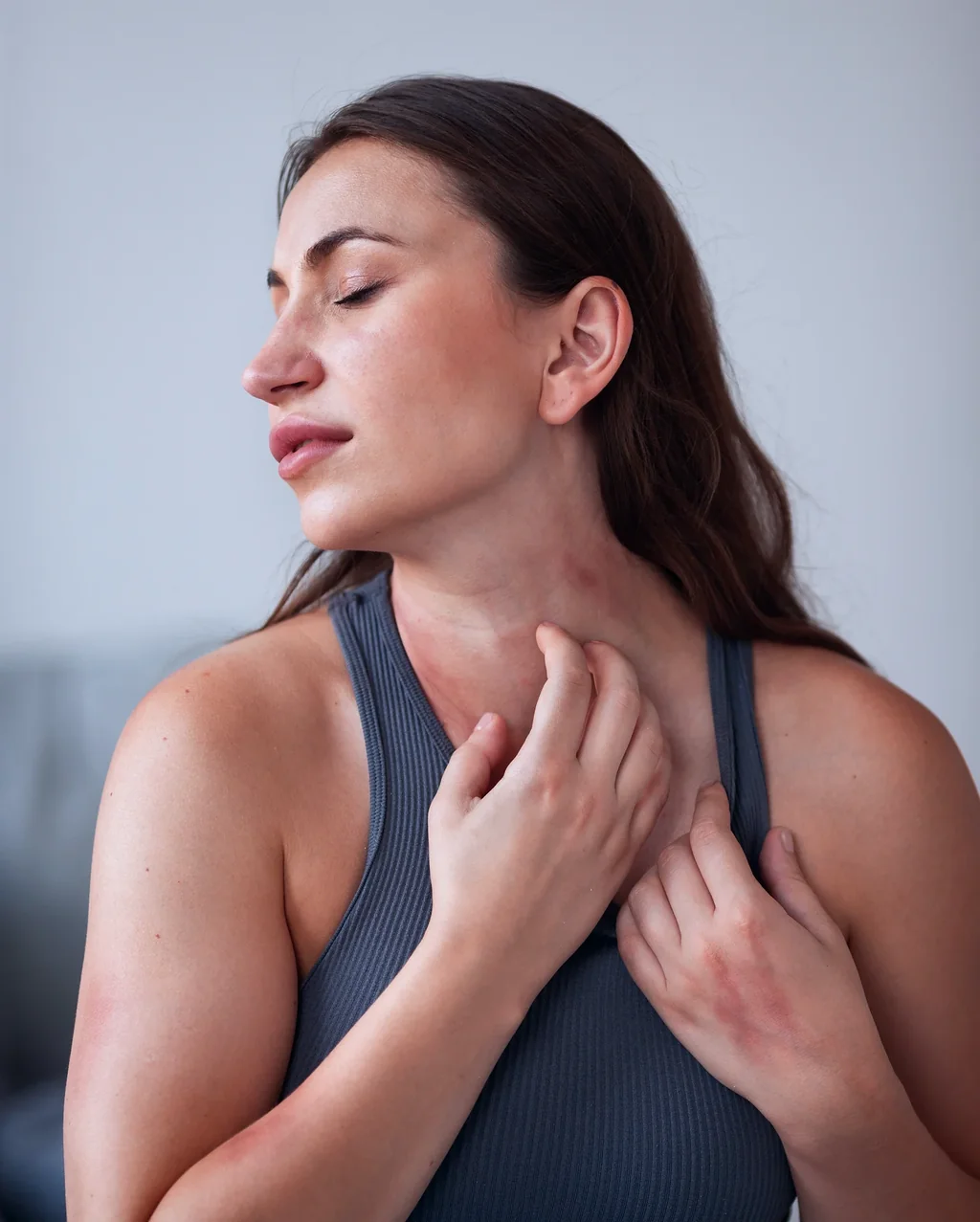
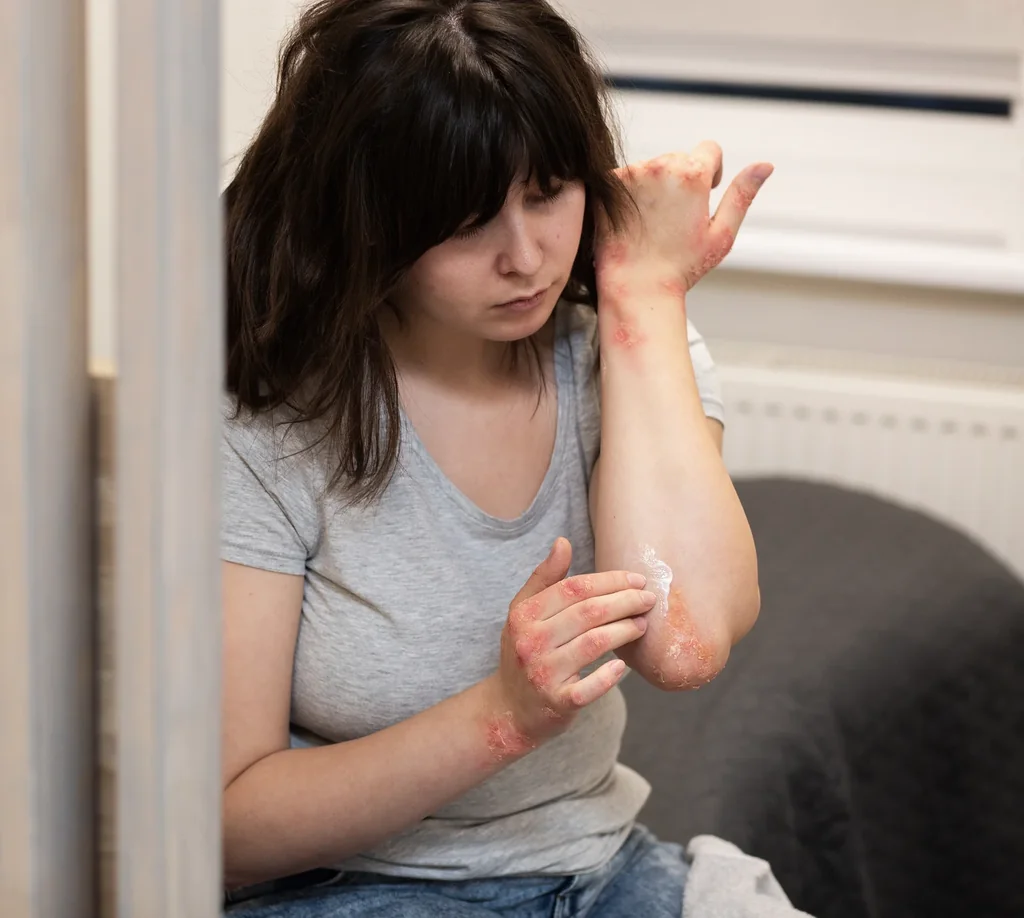
Psoriasis is a chronic autoimmune condition in which the immune system speeds up skin cell turnover, causing cells to pile up into raised, red, silvery-scaled plaques. It most often affects the elbows, knees, scalp, and lower back, and it tends to cycle between flares and remission. It cannot be cured, but it can be managed well.
Understanding Psoriasis
Answer: Psoriasis is a chronic autoimmune disease in which an overactive immune system speeds up skin cell turnover, causing cells to build up faster than they shed and form raised, red, silvery-scaled plaques that itch, crack, and flare.
Plaque psoriasis is the most common form, but the condition can appear in different patterns depending on the areas affected and the type of immune activity involved. It tends to cycle between flares and quieter periods of remission rather than staying constant.
Living with psoriasis usually means managing that cycle. Stress, infection, hormonal shifts, skin injury, and environmental triggers can each restart it. Lasting control comes from understanding what drives an individual's flares, not only treating the visible skin.
What causes psoriasis?
Answer: Psoriasis is caused by an overactive immune system that mistakenly signals skin cells to grow far faster than normal. A genetic predisposition makes this more likely, and specific triggers turn the underlying tendency into a visible flare.
In healthy skin, cells mature and shed over about a month. In psoriasis, that process is compressed to days, so immature cells stack up into thick, scaly plaques. The American Academy of Dermatology notes that psoriasis is an immune-mediated disease, not a problem caused by poor hygiene or anything contagious. Common flare triggers include stress, streptococcal and other infections, skin injury, certain medications, hormonal changes, and cold, dry weather. Identifying your personal triggers is one of the most effective ways to reduce how often flares happen.
What are the symptoms of psoriasis?
Answer: The hallmark sign is raised, red patches covered with thick, silvery scales, most often on the elbows, knees, scalp, and lower back. Many people also have itching, burning, cracked or bleeding skin, and nail changes.
Symptoms vary widely from person to person and from one flare to the next. Some people have a few small patches, while others have plaques across large areas. Nail pitting, ridging, or separation is common, and up to about a third of people with psoriasis develop psoriatic arthritis, which adds joint pain, stiffness, and swelling, as Cleveland Clinic explains in its overview of psoriasis. Because the disease is inflammatory and systemic, the skin is often only the most visible part.
How is psoriasis diagnosed?
Answer: Psoriasis is usually diagnosed by a clinical skin exam, since the plaques and their typical locations are distinctive. A small skin biopsy can confirm the diagnosis when the appearance is unclear or overlaps with other skin conditions.
A thorough evaluation looks beyond the skin. A review of personal and family history, known triggers, and joint symptoms helps gauge severity and rule out psoriatic arthritis. Because psoriasis is associated with systemic inflammation and is linked to metabolic and cardiovascular conditions, lab work and a full health history can reveal contributing factors that a skin-only assessment would miss.
What are the treatment options for psoriasis?
Answer: Treatment ranges from topical creams and light therapy to systemic and biologic medications for severe disease, plus skin-directed regenerative options. The goal is to calm the immune overactivity, slow cell turnover, and extend remission.
No single therapy works for everyone, so plans are built around severity, location, and triggers. The table below compares common approaches by how they work and who they tend to suit.
| Approach | How it works | Often suits |
|---|---|---|
| Topicals (steroids, vitamin D analogs) | Applied to plaques to reduce inflammation and slow cell turnover | Mild to moderate, localized plaques |
| Phototherapy | Controlled UV light slows overactive skin cell growth | Widespread plaques not controlled by topicals |
| Systemic / biologic medications | Target the immune signals that drive the disease body-wide | Moderate to severe or psoriatic arthritis |
| Microneedling and PRP | Controlled micro-injury stimulates healthier turnover and texture | Targeted plaque texture and skin renewal |
| Inflammation and nutrient support | Reduces the systemic inflammation that fuels flares from the inside | Trigger reduction alongside skin care |
Regenerative, skin-directed options can complement medical care. SkinPen microneedling creates controlled micro-injuries that prompt the skin's natural repair response, which can soften plaque texture, while the vampire facial layers platelet-rich plasma into those micro-channels to deliver growth factors that support healthier turnover. Because systemic inflammation frequently drives flares from within, IV therapy can deliver targeted nutrients and antioxidants to support immune balance.
How is psoriasis connected to hormones and inflammation?
Answer: Hormones and systemic inflammation both influence how active psoriasis is. Hormonal shifts during puberty, pregnancy, and menopause can change immune behavior and trigger flares, while chronic inflammation keeps the immune system primed to overreact.
This is why psoriasis is best viewed as a whole-body condition rather than a surface problem. Stress hormones raise inflammation, and unbalanced thyroid or sex hormones can make the immune system more reactive. The National Institute of Arthritis and Musculoskeletal and Skin Diseases notes that psoriasis is linked to other inflammatory and metabolic conditions, which is why addressing internal drivers, not just plaques, matters for long-term control.
Can psoriasis be cured, and what is the outlook?
Answer: Psoriasis cannot be permanently cured because the underlying immune tendency is lifelong, but it can be controlled very well. Many people achieve extended remission with few or no symptoms once triggers are managed and inflammation is reduced.
The outlook today is far better than it once was, with effective options at every severity level. Success usually comes from a sustained plan rather than a single fix: identifying triggers, calming systemic inflammation, and treating the skin consistently. Care here is led by Chief Medical Director Dr. Dawn Ericsson, MD, with a plan tailored to your immune markers, hormone levels, and personal triggers.
When should you see a provider for psoriasis?
Answer: See a provider if plaques are spreading or worsening, if itching or cracking is affecting daily life, if you develop joint pain or stiffness, or if over-the-counter products are not helping. Early evaluation can limit progression.
Joint symptoms deserve prompt attention, since untreated psoriatic arthritis can cause lasting joint damage. A comprehensive evaluation identifies the underlying drivers of your psoriasis and builds a plan that addresses both the skin and the systemic factors behind your flares. You can book an appointment to start with a full assessment.
Common symptoms
Symptoms evaluated at AgeRejuvenation include:
How we treat psoriasis
Care plans are personalized to the root cause. Treatments include:
- SkinPen Microneedling: Microneedling creates controlled micro-injuries that stimulate the body's natural wound-healing response, encouraging new collagen formation and faster cellular turnover. For psoriasis-affected skin this can help reduce plaque thickness and improve overall texture without systemic medications.
- IV Therapy: IV therapy delivers targeted nutrients and antioxidants directly to the bloodstream to support immune balance and reduce the systemic inflammation that frequently drives psoriatic flares from the inside out.
- Vampire Facial: The vampire facial combines microneedling with platelet-rich plasma. The PRP is applied immediately after the needling creates micro-channels, allowing growth factors to penetrate the dermis, reduce inflammation, and promote healthier skin cell turnover in affected areas.