
Functional hormone testing looks at how your hormones work together, not just whether one number sits inside a lab range. By reading patterns across cortisol, thyroid, and sex hormones alongside your symptoms and their timing, it helps explain fatigue, weight changes, and mood shifts that standard panels miss, then points toward the root cause so treatment can be targeted instead of guesswork.
Functional hormone testing is often the missing step for people who feel off but cannot get clear answers. Fatigue that does not resolve, weight changes that feel unexplained, poor sleep, low drive, or shifts in mood are frequently dismissed when standard lab work comes back within range. The issue is not that symptoms are vague. It is that traditional testing often looks at hormones in isolation, instead of how they function together inside a real human system.
This is where functional hormone testing becomes relevant. Rather than asking whether a value is technically normal, this approach looks at patterns, timing, and biological context to understand what your hormones are actually doing day to day. It is also the first step toward our women's hormone and wellness care, where testing leads directly into a treatment plan instead of another inconclusive result.
Why Standard Blood Tests Often Miss the Full Picture
Conventional hormone panels were designed to catch disease, not to explain early dysfunction. They are useful tools, but they work within narrow reference ranges that reflect population averages, not optimal function for an individual.
Hormones do not operate independently. They respond to sleep quality, stress exposure, metabolic demand, inflammation, and nervous system tone. As the Endocrine Society explains in its patient resources, hormones act as an interconnected messaging network, so one signal rarely tells the whole story. A cortisol value drawn at the wrong time of day may look acceptable on paper while signaling disruption in real life. The same applies to thyroid markers, sex hormones, and insulin-related signals.
When testing does not account for these variables, it can miss the root cause of hormonal issues and leave patients managing symptoms without clarity. Many of the complaints people bring in, low energy, stubborn weight, irritability, and disrupted sleep, overlap with what clinicians describe as a hormonal imbalance, which is why a wider testing lens matters.
What Functional Hormone Testing Actually Measures
Functional hormone testing shifts the question from "Is this number abnormal?" to "Does this pattern explain what the body is doing?"
Hormone Patterns, Not Isolated Numbers
Instead of relying on a single snapshot, this testing approach evaluates relationships between hormones. For example, how cortisol interacts with thyroid signaling, or how estrogen and progesterone balance shifts across phases of life. These relationships often explain symptoms that individual markers cannot.
Timing, Stress Load, and Physiological Context
Hormone output follows rhythms. Cortisol changes across the day. Insulin responds to meals and recovery. Sex hormones fluctuate with age, stress, and metabolic health. Functional hormone testing accounts for these variables and places results inside the context of daily demands, including work schedules, travel, training, and sleep disruption.
How Stress Response Patterns Affect Hormone Signaling
Hormones are part of feedback systems regulated by the brain and nervous system. When the sympathetic nervous system stays activated due to chronic stress, hormone signaling adapts in ways that protect survival, not performance. These physiological feedback loops can suppress reproductive hormones, alter thyroid conversion, and disrupt energy regulation even when labs appear stable.
What Hormones Are Included in a Functional Hormone Panel?
A functional hormone panel measures several chemical messengers across the endocrine system at once, then reads them as a group. Depending on your symptoms and goals, it usually screens reproductive, metabolic, and adrenal hormones together so patterns become visible rather than isolated values.
Most comprehensive panels look at three families of markers, as outlined in MedlinePlus guidance on hormones and what they do:
Reproductive and sex hormones: estradiol, progesterone, testosterone, and the pituitary signals FSH and LH that regulate them.
Metabolic and stress hormones: thyroid-stimulating hormone (TSH), cortisol, and insulin, which influence energy, weight, and recovery.
Adrenal and pituitary markers: DHEA-sulfate and prolactin, which round out the picture of how the system is coping.
Thyroid markers deserve particular attention, because an underactive thyroid produces fatigue, weight gain, and brain fog that mirror many other hormone problems, a pattern Mayo Clinic describes in detail for hypothyroidism. Reading these markers together is what separates a functional panel from a single test, and it connects directly to how we approach an underactive or overactive thyroid as part of broader hormone and metabolic health.
When Is the Best Time to Test Your Hormones?
The best time to test depends on the hormone. Cortisol follows a daily rhythm and is usually measured in the morning when it peaks, while female sex hormones are timed to a specific point in the menstrual cycle. Testing at the wrong moment is one of the most common reasons results look "normal" despite real symptoms.
Cortisol is the clearest example. Because levels rise and fall predictably through the day, a cortisol test is interpreted against the time it was drawn, not a flat reference number. For women still cycling, estradiol and progesterone are best read on specific cycle days. A functional approach builds this timing into the plan from the start, rather than retesting after an inconclusive result.
Connecting Test Results to the Root Cause of Hormonal Issues
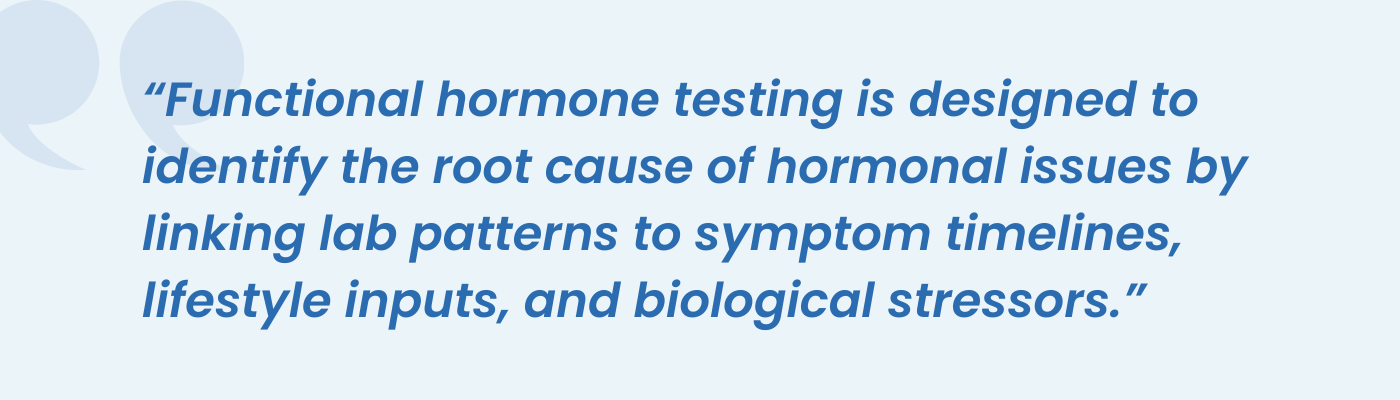
Data alone does not create clarity. Interpretation is what connects results to real decisions. Functional hormone testing is designed to identify the root cause of hormonal issues by linking lab patterns to symptom timelines, lifestyle inputs, and biological stressors.
For some people, the primary driver is nervous system overload. For others, it is insulin resistance, inflammation, or poor sleep architecture. In women, hormone transitions such as the hormonal shifts of perimenopause and menopause can amplify these effects. In men, low testosterone signaling may reflect stress adaptation rather than primary hormone failure.
Understanding the root cause of hormonal issues allows care to focus on correction, not just compensation. When the data points toward declining or imbalanced hormones, the next step is often a personalized hormone replacement therapy plan built around your specific results.
Translating Hormone Data Into Actionable Clinical Decisions
Once patterns are identified, the next step is prioritization. Not every abnormal signal requires immediate intervention, and not every symptom should be addressed directly. Functional interpretation helps determine what needs attention first and what may normalize once upstream stressors are corrected.
This is where testing becomes clinically useful. Results inform pacing, monitoring intervals, and realistic expectations. Instead of chasing multiple targets at once, decisions are sequenced in a way that supports stability and long-term response, especially for patients balancing demanding schedules and high cognitive load.
Signs Your Hormones May Be Out of Balance
Common signs of a hormone imbalance include persistent fatigue, unexplained weight change, low libido, mood swings, poor sleep, and brain fog that does not improve with rest. On their own each is easy to dismiss, but several appearing together is a strong reason to test.
In women, declining estrogen during the menopause transition can add hot flashes, night sweats, and cycle changes, which the Office on Women's Health outlines across the stages of menopause. In men, falling testosterone can show up as low drive, reduced strength, and flat mood. Because these symptoms overlap so heavily, testing the full pattern, rather than guessing from one complaint, is what makes the difference.
Why Professionals Across Central Florida Choose AgeRejuvenation
Access and follow-through matter when care requires monitoring and adjustment. AgeRejuvenation serves patients across Central Florida with locations designed to fit real schedules, not ideal ones.
For patients commuting from Hyde Park or South Tampa, the clinic near North Howard Avenue offers a practical stop before or after work. Those traveling from Brandon or Riverview often use the Nikki View Drive location with direct access from major routes. Patients in Wesley Chapel and New Tampa frequently visit the Bruce B. Downs Boulevard office, while the Winter Garden and Orlando locations support professionals living west and north of Orlando.
Consistency is a clinical advantage. When testing, follow-ups, and adjustments are easy to maintain, outcomes improve.
What the Testing Process Looks Like in Practice
Functional hormone testing begins with understanding the person, not just ordering labs. A clinician reviews symptom patterns, health history, medications, supplements, and lifestyle demands before deciding what to test and when.
The process typically includes:
Targeted lab selection based on symptoms and goals.
Timing considerations to capture meaningful hormone patterns.
Review of results alongside stress load, sleep quality, and metabolic markers.
This evaluation supports decisions that are specific and measurable.
Conclusion
Functional hormone testing offers a clearer way to understand how hormones function in real life, not just on paper. By focusing on patterns, timing, and physiological context, it helps explain symptoms that standard testing often misses and brings clarity to the root cause of hormonal issues without relying on assumptions.
When care is guided by both data and clinical interpretation, decisions tend to feel more grounded and deliberate. If the results call for it, that clarity can lead into physician-guided hormone optimization rather than another round of guesswork.
If symptoms have persisted without clear answers, the next step is not to chase individual numbers but to look at how systems interact over time. When you are ready to move forward, you can schedule an appointment and begin a clinical conversation focused on how your body is functioning today and what it needs next.
Frequently Asked Questions
Why don't doctors always check hormone levels?
Standard primary care often screens hormones only when a specific disease is suspected, using broad reference ranges built to catch clear deficiency or excess. Many people fall inside those ranges while still having symptoms, which is why a functional panel reads the full pattern and timing rather than a single in-range number.
What is included in a functional hormone test?
A functional panel typically measures reproductive hormones (estradiol, progesterone, testosterone, FSH, and LH), metabolic and stress hormones (TSH, cortisol, and insulin), and adrenal markers such as DHEA-sulfate and prolactin. The exact combination is chosen based on your symptoms, sex, and goals.
How is functional hormone testing different from standard lab work?
Standard lab work asks whether each value is technically normal. Functional testing asks whether the pattern across several hormones explains your symptoms, and it factors in timing, stress, sleep, and metabolic context. The goal is to find a root cause rather than simply confirm a value sits inside a range.
When should I get my hormones tested?
Test when persistent symptoms such as fatigue, weight change, low libido, mood swings, or poor sleep do not improve with lifestyle changes. Timing within the day or menstrual cycle matters for accuracy, so the specific schedule is planned around which hormones are being measured.
Can hormone testing help with menopause or low testosterone?
Yes. Hormone testing clarifies where someone is in the menopause transition or whether testosterone has declined meaningfully, which guides whether treatment is appropriate and how it should be monitored. Testing turns vague symptoms into measurable targets that a treatment plan can track over time.
Ready to take the next step?
Talk with the AgeRejuvenation team about a Hormone Replacement Therapy plan built around your labs and goals.